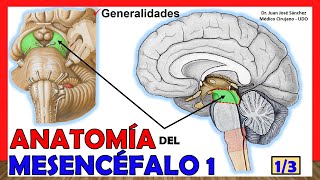
🥇 GENERALIDADES DE ENCÉFALO, Anatomía. (Divisiones - Partes) ¡Explicación Sencilla!
Introduction to Neuroanatomy
Overview of the Brain
- The video introduces neuroanatomy, focusing on the brain as a part of the central nervous system (CNS), which also includes the spinal cord.
- The term "brain" derives from Greek, where "en" means inside and "cephalon" means head, indicating its location within the skull.
- It is emphasized that while colloquially referred to as the brain, anatomically it is only a portion of what constitutes the entire CNS.
Major Divisions of the Brain
- The brain is divided into three major parts: forebrain (prosencephalon), midbrain (mesencephalon), and hindbrain (rhombencephalon).
- Within the forebrain, there are two main structures: telencephalon and diencephalon; telencephalon refers specifically to what is commonly known as the brain.
Structures Within Each Division
Forebrain Components
- The telencephalon consists of cerebral hemispheres with convolutions visible externally; it plays a crucial role in higher cognitive functions.
- The diencephalon contains vital structures such as thalamus and hypothalamus, which regulate sensory information and metabolic processes.
Midbrain Functions
- The midbrain serves as an integration center for visual and auditory information but does not have subdivisions like other divisions.
Hindbrain Subdivisions
- The hindbrain comprises two parts: metencephalon (which includes cerebellum and pons) and myelencephalon (which contains medulla oblongata).
Functional Responsibilities of Brain Parts
Telencephalon Functions
- This region is associated with advanced human capabilities such as language, reasoning, and logic due to its highly developed cerebral cortex.
Diencephalon Importance
- Key regulatory centers for metabolism are located here; notably, hypothalamus regulates bodily functions while pituitary gland secretes hormones affecting various systems.
Midbrain Role in Sensory Integration
- It integrates visual and auditory stimuli; essential for reflexive responses related to these senses.
Medulla Oblongata & Cranial Nerves
Medulla's Functionality
- Contains nuclei for cranial nerves involved in tongue movement and throat innervation; critical for basic life functions including respiration regulation.
Ventricular System Overview
Cerebrospinal Fluid Circulation
- Lateral ventricles are located within cerebral hemispheres; third ventricle primarily resides in diencephalon while fourth ventricle is found in hindbrain.
Concept of Brain Stem
Definition & Structure
- Brain stem includes diencephalon, midbrain, pons, and medulla oblongata—central structures resembling a bush's stem without including cerebellum or telencephalons.
Turn any video into a summary like this
YouTube links, meetings, lectures. With transcripts, search, and chat.