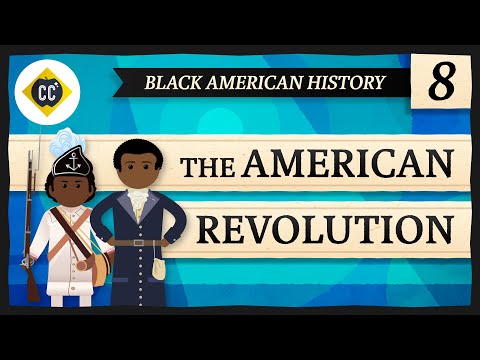
The American Revolution: Crash Course Black American History #8
Crash Course Black American History Introduction to Colonial Grievances
The Context of Colonial America
- Clint Smith introduces the theme of labor exploitation and lack of representation, drawing parallels between the grievances of American colonists and the experiences of Black people.
- He emphasizes the harsh realities faced by individuals under oppressive governance, including surveillance, unjust trials, and economic burdens without representation.
Hypocrisy in the Fight for Independence
- Smith highlights the irony that while colonists fought against British oppression, they simultaneously perpetuated injustices against Black people during and after the revolution.
- The narrative shifts to a Black perspective during the American Revolution, noting that freedom sought by white Americans largely excluded Black individuals.
Participation of Black People in the Revolutionary War
- An estimated 5,000 to 8,000 African descent troops served in the Revolutionary War; some were coerced into service while others volunteered to prove their worthiness for rights.
- Many Black men chose to fight for the British Army due to promises of emancipation, with around 20,000 ultimately joining their ranks.
Crispus Attucks: A Symbol of Sacrifice
- Crispus Attucks is introduced as a pivotal figure who was reportedly the first casualty in the revolutionary cause during the Boston Massacre on March 5, 1770.
- His death became a catalyst for heightened tensions between colonists and British forces; he was described as a sailor and rope maker from Framingham.
The Circumstances Surrounding Attucks' Death
- Two conflicting accounts exist regarding his actions leading up to his death—one portraying him as an innocent victim and another depicting him as an active participant in escalating violence.
- The chaotic scene involved both colonists throwing snowballs at soldiers and miscommunication among British troops leading to gunfire.
Legacy of Crispus Attucks
- John Adams’ description reflects historical dehumanization narratives surrounding Black individuals; despite this bias, Attucks emerged as a symbol of patriotism.
The Role of Black Soldiers in the American Revolution
Initial Exclusion and Changing Perspectives
- George Washington initially prohibited Black men from serving in the military, fearing that arming enslaved individuals could lead to rebellion against their enslavers.
- As the war progressed and white manpower dwindled, Washington reversed his stance on Black military service due to necessity.
Lord Dunmore's Proclamation
- On November 7, 1775, Lord Dunmore promised freedom to enslaved Black people who escaped and fought for the British, declaring martial law in Virginia.
- The proclamation incited outrage among colonists; however, historian Woody Holton noted that many who joined were women and children rather than just men.
The Ethiopian Regiment
- The Ethiopian Regiment consisted of around 300 Black men who fled slavery but faced defeat at the Battle of Great Bridge on December 9, 1775.
- Despite their loss, this unit symbolized resistance and inspired more enslaved individuals to seek freedom through military service.
Shifting Loyalties for Freedom
- In 1778, Rhode Island allowed both free and enslaved Black Americans to join the fight with promises of freedom for those who served.
- Historian Benjamin Quarles emphasized that many Black soldiers' loyalty was driven by a desire for freedom rather than allegiance to any specific side.
Post-War Realities
- The revolution primarily benefited white colonists; full emancipation for all enslaved people would not occur until decades later.
- Many Black loyalists faced re-enslavement after the war ended; despite promises made by the British, few gained true freedom.
Long-Term Implications
- Approximately 15,000 Black loyalists relocated to various places but often encountered new forms of slavery instead of liberation.
Turn any video into a summary like this
YouTube links, meetings, lectures. With transcripts, search, and chat.