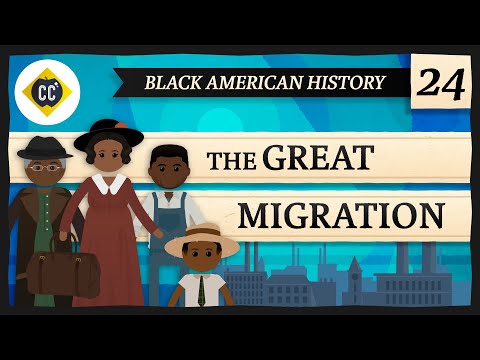
The Great Migration: Crash Course Black American History #24
The Great Migration: Causes and Impact
Introduction to the Great Migration
- Clint Smith introduces the topic of the Great Migration, highlighting that moving can be both an exciting opportunity and a necessity due to adverse circumstances.
- The Great Migration occurred in the early to mid-twentieth century, where many Black Americans left the South for better opportunities in the North and West.
- This migration was driven by a desire for economic mobility and escape from violence, marking one of the largest domestic migrations in U.S. history.
Demographics of Black Americans Pre-Migration
- In 1910, 90% of Black Americans lived in the South; however, by 1940, this number dropped to 77% as approximately 1.5 million migrated northward.
- By 1970, only 52% remained in the South, with major destinations including Chicago, Detroit, Pittsburgh, and New York City.
Push Factors from the South
- After slavery ended, many Black Americans faced sharecropping—a system that kept them economically vulnerable and indebted.
- Sharecropping involved landowners providing resources on credit but often led to cycles of debt due to high interest rates and poor harvests.
- Laws prevented sharecroppers from leaving if they were in debt; this contributed to systemic issues like racialized incarceration.
Pull Factors Toward Northern Cities
- Stories circulated about better job opportunities in northern industries such as auto manufacturing and meatpacking—jobs paying significantly more than those available in the South.
- For instance, wages could increase from $0.75 a day in the South to up to $5 a day in northern cities.
Impact of Jim Crow Laws
- Jim Crow laws enforced segregation and limited access to resources for Black communities while fostering an environment of terror through groups like the Ku Klux Klan.
- Despite constitutional amendments promising rights for Black Americans post-Reconstruction, systemic violence undermined these freedoms.
The Impact of Violence on the Great Migration
The Role of White Supremacy and Violence
- Groups aimed at maintaining White supremacy used violence, including beatings and lynchings, against Black individuals in the South.
- This violence forced many Black people to flee to the North and West, framing the Great Migration as a refugee crisis.
The Journey for Safety
- Isabel Wilkerson describes the Great Migration as akin to movements of refugees fleeing famine or war, highlighting the desperation for safety.
- Informal networks like newspapers and church groups played a crucial role in encouraging Black Southerners to migrate by sharing success stories from the North.
Challenges Faced in New Regions
- Upon arrival in Northern cities, migrants faced poverty and segregation; racism persisted despite being less overt than in the South.
- Southern whites grew anxious about Black migration due to their economic reliance on Black labor, leading to attempts to prevent departures.
Desperation Amidst Economic Pressures
- Efforts were made by white southerners to dissuade migration through negative media portrayals and intimidation tactics against those attempting to leave.
- Leaving home was fraught with emotional difficulty; it represented both pain and a desperate search for better opportunities.
Cultural Transformation Through Migration
- Despite challenges, many found economic opportunities in the North that were previously unavailable; urban centers became hubs of Black culture.
- The Great Migration fostered significant cultural contributions from Black artists, musicians, and writers while reflecting resilience amidst adversity.
Reframing Perspectives on Migration
- Wilkerson suggests that discussions around the Great Migration should focus on migrants' courage rather than solely on societal impacts or motivations.
Turn any video into a summary like this
YouTube links, meetings, lectures. With transcripts, search, and chat.