Regulations Of Aircraft Mass And Balance | Lecture 04
Overview of Mass and Balance Regulations
Operator Responsibilities
- The lesson focuses on EU OPS Section 1 Subpart J, detailing regulations for operators and pilots regarding airplane mass and center of gravity before flight.
- Operators must ensure that the loading mass and center of gravity comply with limitations in the airplane flight manual and operations manual.
- A supervisor must confirm that load distribution aligns with documentation, requiring their name and signature on relevant documents.
- Prior to departure, the commander is responsible for checking and signing off on loading documentation.
Standard Mass Values
- When establishing takeoff mass, operators can use actual weighted masses or standard values defined in EU OPS.
- For crew members, standard masses are set at 85 kg for flight crew and 75 kg for cabin crew including hand baggage; additional baggage must be accounted for.
Passenger Classification
- Passengers are classified into three categories: adults (12+ years), children (2 to under 12), and infants (under 2).
- The operator computes passenger mass either by weighing or using standard values; if fewer than ten seats are available, a verbal statement from passengers may suffice.
Checked Baggage Standards
- Checked baggage must be weighed for airplanes with fewer than 20 seats; otherwise, standard masses from Table 3 can be used.
- Different types of flights have varying checked baggage standards: domestic (11 kg), European region (13 kg), intercontinental (15 kg), and all other flights (13 kg).
Fleet Value Definition
- "Fleet value" refers to an average dry operating mass used across similar aircraft models within a fleet while adhering to specific tolerances outlined in EU OPS.
Loading Supervision Requirements
- Operators must ensure qualified personnel supervise loading operations consistent with calculated mass and balance data.
Operational Center of Gravity Envelope
- The operational center of gravity envelope should account for passenger seating arrangements, cargo distribution, and fuel levels in tanks.
Documentation Responsibilities
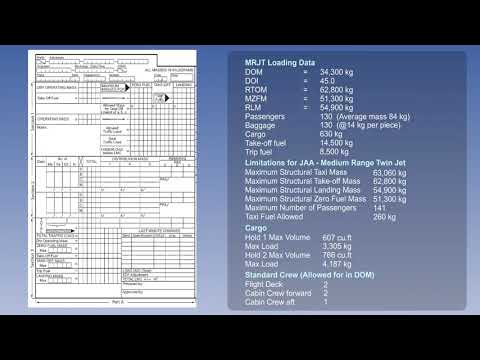
- Operators are required to produce documentation prior to flight that specifies loads ensuring compliance with mass limits.
Last Minute Changes Protocol
- Procedures must accommodate last-minute changes to loads without recalculating entire documents; adjustments have limitations detailed later in the course.
Conclusion of Key Points
- This lesson covered essential aspects of EU OPS regulations concerning operator responsibilities, standard mass values for crew/passengers, necessary documentation, and handling last-minute changes.
Turn any video into a summary like this
YouTube links, meetings, lectures. With transcripts, search, and chat.