(Part 1) Medium Range Aircraft Underloading | Lecture 13
Understanding Underload in Aviation
Definition and Calculation of Underload
- Underload is defined as the difference between allowable traffic load and actual traffic load, representing spare capacity for last-minute loading without exceeding limitations.
- To calculate underload, first determine the maximum allowable traffic load and actual traffic load, then subtract one from the other.
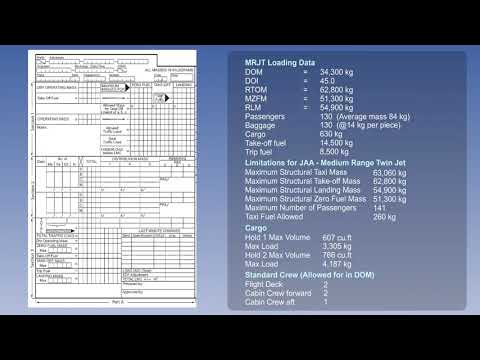
- The calculation involves four formulas: structural takeoff mass, landing mass, taxi ramp mass, and taxi fuel; the lowest result will be the allowable limit.
Steps to Calculate Underload
Step 1: Determine Fuel State
- Start with block ramp fuel (e.g., 32,200 kg), subtract start taxi fuel (500 kg), resulting in a take-off fuel of 31,700 kg.
- Subtract trip fuel (9,000 kg) from take-off fuel to find remaining fuel on landing (22,700 kg).
Step 2: Calculate Limiting Traffic Load
- Dry operating mass is calculated using the formula: Operating Mass = Dry Operating Mass + Takeoff Fuel. Rearranging gives Dry Operating Mass = Operating Mass - Takeoff Fuel.
- Using data table values (Operating Mass = 47,500 kg), subtracting take-off fuel results in a dry operating mass of 35,000 kg.
Step 3: Maximum Allowable Traffic Load
- Construct a table to find maximum allowable traffic loads using three formulas; row calculations yield various limits based on different parameters.
- The lowest value from these calculations determines the limiting allowable load for further analysis.
Final Calculation of Underload
- Actual traffic load is calculated by summing passenger load (11,760 kg), baggage (1,820 kg), and cargo (500 kg), totaling 14,080 kg.
- Finally, underload is determined by subtracting actual traffic load from allowable traffic load (16,000 kg - 14,080 kg = 1,920 kg).
Turn any video into a summary like this
YouTube links, meetings, lectures. With transcripts, search, and chat.