The US Constitution, 3/5, and the Slave Trade Clause: Crash Course Black American History #9
Introduction to Identity and the Constitution
The Disconnect Between Aspiration and Reality
- Clint Smith introduces himself and discusses the gap between who we aspire to be and who we are in reality, using his childhood dream of being a pro wrestler as an example.
- He emphasizes that merely claiming an identity does not make it true, highlighting the disconnect between self-perception and actual status.
America’s Aspirations vs. Reality
- Smith draws a parallel between personal aspirations and America's founding ideals, noting that many people were excluded from the freedoms promised by the U.S. Constitution.
- He points out the irony of Independence Hall's name, where freedom was proclaimed while millions remained enslaved or oppressed.
The Role of Slavery in the Constitution
Foundational Legal Document
- The U.S. Constitution is described as a central legal document intended to establish national principles but failed to abolish slavery.
- Smith references abolitionist William Lloyd Garrison's condemnation of the Constitution as "a covenant with death," illustrating widespread moral outrage over its acceptance of slavery.
Founders' Awareness and Economic Interests
- Many Founders recognized slavery's immorality yet chose not to address it in the Constitution due to economic interests; about half owned enslaved individuals.
- The absence of explicit mention of "slave" in the document reflects their desire to avoid historical judgment for their actions.
The Three-Fifths Compromise Explained
Political Representation Dilemma
- The Three-Fifths Compromise arose from debates on how enslaved individuals should be counted for political representation, revealing deep divisions between Northern and Southern states.
- Northern delegates opposed counting enslaved people fully, fearing increased Southern political power; Southern delegates needed them counted for representation.
Implications of Dehumanization
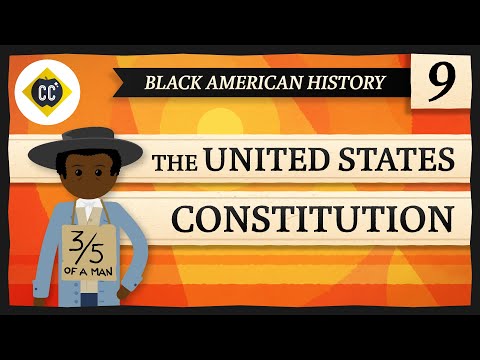
- The compromise defined enslaved individuals as three-fifths of a person, which served as a metaphor for their perceived inferiority within society.
The Constitutional Compromises on Slavery
The Slave Trade Clause
- The Slave Trade Clause is found in Article 1, Section 9, Clause 1 of the Constitution and addresses slavery without explicitly using the term "slave."
- It states that Congress cannot prohibit the importation of enslaved individuals until 1808 but can impose a tax not exceeding ten dollars per person.
- Legal scholars argue that "any such Persons" refers specifically to enslaved people of African descent, highlighting a compromise between Northern and Southern colonies.
- This clause allowed slavery to persist in the South for economic reasons while enabling Northern states to benefit indirectly from slavery's economic impact.
- States like Georgia and South Carolina relied heavily on the transatlantic slave trade due to higher mortality rates among enslaved workers, fearing Union membership would be jeopardized by restrictions.
Implications of the Slave Trade Clause
- The clause effectively stated that until 1808, federal regulation of enslaved individuals' importation was limited, allowing states autonomy for economic decisions favoring White citizens.
- Both Southern and Northern states benefited economically from slavery; this duality contributed to its longevity in American society.
- The Slave Trade Clause delayed action against the transatlantic slave trade for twenty years; it took a Civil War and significant loss of life before substantial change occurred regarding slavery.
Reflections on Founding Fathers and American History
- Nearly half of the delegates at the Constitutional Convention owned enslaved people, raising questions about who was included in their vision for democracy.
- American history embodies complex truths: while it created opportunities for many, it did so at great expense to millions who were marginalized or oppressed.
Turn any video into a summary like this
YouTube links, meetings, lectures. With transcripts, search, and chat.