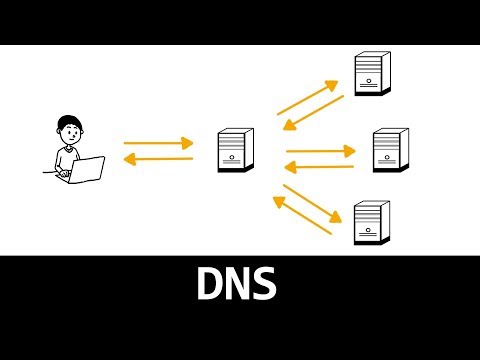
Comprendre le DNS en 5 minutes
Introduction and Charade
The video begins with a charade and introduces the topic of DNS (Domain Name System).
Charade Explanation
- The charade consists of three clues:
- First clue: A small cubic object with numbers used in board games.
- Second clue: The opposite of love.
- Third clue: A Nintendo video game console from the 8-bit generation.
DNS Introduction
- DNS stands for Domain Name System, which translates domain names into IP addresses.
- When accessing a website, we use domain names like cookieconnecte.fr or youtube.com, but browsers need IP addresses to connect to servers.
- IP addresses are unique identification numbers assigned to devices connected to the internet.
Explanation of DNS
The concept of DNS is explained in detail.
Purpose of DNS
- Browsers need to know which server to connect to, so they require the IP address associated with a domain name.
- DNS performs the translation between domain names and IP addresses.
Role of DNS Servers
- DNS servers are responsible for matching domain names with their corresponding IP addresses.
Hierarchy and Resolution of Domain Names
The hierarchy and resolution process of domain names are discussed.
Hierarchy in DNS
- The domain name system has a hierarchical structure, with the root at the top represented by a dot (.).
- Domains below the root are called "top-level domains" (e.g., .fr, .com, .org).
- Subdomains can exist within a domain, allowing for further categorization.
Resolution Process
- When entering a domain name in a browser (e.g., fr.wikipedia.org), the browser needs to resolve it to an IP address.
- The browser communicates with a recursive DNS server, which starts the resolution process.
- The recursive DNS server queries the root DNS server for information about the top-level domain (.org).
- The root DNS server directs the recursive DNS server to the appropriate TLD DNS server (e.g., .org).
- The TLD DNS server provides information about the specific domain (e.g., wikipedia.org).
- Finally, the TLD DNS server gives the IP address of the requested subdomain (e.g., fr.wikipedia.org).
Conclusion
The video concludes by summarizing the content and expressing hope that it was helpful.
Final Thoughts
- Understanding how DNS works enables browsers to display requested web pages.
- If you found this video helpful in understanding DNS, please leave a thumbs-up.
Timestamps are approximate and may vary slightly.
Turn any video into a summary like this
YouTube links, meetings, lectures — with transcripts, search, and chat.