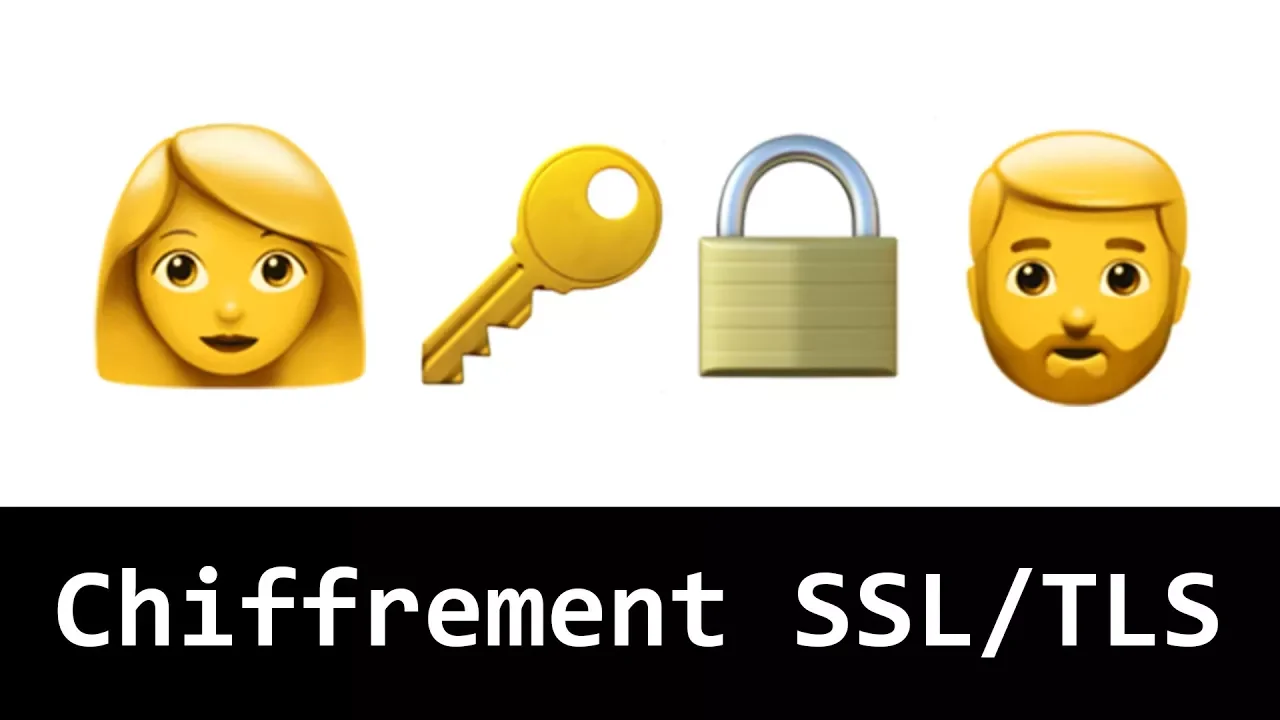
Comprendre le chiffrement SSL / TLS avec des emojis (et le HTTPS)
Introduction to Encryption
In this section, the speaker introduces the concept of encryption and its importance in web communications. The speaker mentions that the video will cover various encryption concepts such as asymmetric and symmetric encryption, encryption keys, certification authorities, and certificates.
Encryption of Web Communications
- HTTPS is recommended for secure web browsing.
- Without HTTPS, information exchanged between a user and a website can be intercepted by malicious individuals.
- HTTPS creates an encrypted tunnel (SSL/TLS) for secure communication.
- SSL stands for Secure Sockets Layer and TLS stands for Transport Layer Security.
Understanding Encryption
This section explains the process of encryption in more detail, including the use of algorithms and encryption keys.
Symmetric Encryption
- Symmetric encryption uses a single secret key to encrypt and decrypt messages.
- Alice encrypts a message using her secret key before sending it to Bob.
- Bob decrypts the message using the same secret key.
Asymmetric Encryption
- Asymmetric encryption involves two keys: a private key and a public key.
- Alice has her own private key and shares her public key with others.
- Bob can encrypt a message using Alice's public key, which only Alice can decrypt with her private key.
- This ensures confidentiality in communication.
Cryptography with Public/Private Keys
This section explores how cryptography with public/private keys works.
Key Distribution
- Alice keeps her private key confidential while sharing her public key with others.
- Bob does the same by keeping his private key confidential while sharing his public key with others.
Secure Communication
- When Bob wants to send a secure message to Alice, he encrypts it using Alice's public key.
- Alice can then decrypt the message using her private key.
- If Alice wants to respond securely, she encrypts the message with Bob's public key, and Bob decrypts it with his private key.
Man-in-the-Middle Attack
- The transmission of public keys is vulnerable to a man-in-the-middle attack.
- An attacker intercepts the communication between Alice and Bob, impersonates one of them, and provides their own public key.
- This allows the attacker to decrypt and read the messages intended for Alice or Bob.
Conclusion
The speaker concludes by highlighting the importance of encryption in ensuring secure communication and warns about potential vulnerabilities like man-in-the-middle attacks.
Importance of Encryption
- Encryption plays a crucial role in maintaining confidentiality during web communications.
- It ensures that only authorized parties can access sensitive information.
- However, precautions must be taken to prevent attacks like man-in-the-middle.
The transcript provided does not cover all parts of the video.
How Man-in-the-Middle Attacks Work
This section explains how a Man-in-the-Middle attack works and how an attacker can intercept and read messages between two parties.
Man-in-the-Middle Attack Process
- When Alice sends a message to Bob, the attacker (M) intercepts the message and decrypts it using their private key.
- To avoid suspicion, the attacker re-encrypts the message using Bob's public key and sends it to Bob.
- Bob can then decrypt the message with his private key and read it.
- This allows the attacker (M) to read conversations between Alice and Bob and gather important information.
Certifying Identity with Certificates
- To prevent Man-in-the-Middle attacks, it is necessary to certify the identity of the key holder.
- Certificates contain public keys along with information that identifies the person, such as name, image, location, etc.
- Certificates also include validity dates and an electronic signature from a certification authority (CA).
- The electronic signature ensures that the certificate has been verified by the CA without any alterations.
Role of Certification Authorities
- Certification authorities are responsible for issuing certificates and guaranteeing their contents.
- To obtain a certificate, Alice must provide her public key to the certification authority along with payment if required.
- The certification authority creates a certificate for Alice with an electronic signature attesting that the public key belongs to her.
SSL/TLS Encryption Process
This section explains how SSL/TLS encryption works when connecting securely to a website.
Connecting to a Secure Website
- When connecting to a bank's website via HTTPS, you send a secure connection request.
- The bank responds by sending its certificate containing its public key.
- Your browser verifies the certificate's signature and validity using pre-existing trusted CA public keys.
- If the verification is successful, your browser and the server negotiate a shared secret key for secure communication.
Secure Communication with Shared Secret Key
- The shared secret key is used for symmetric encryption during the session.
- With this key, you can encrypt and decrypt your communications with the bank securely.
- SSL/TLS ensures that your communication remains confidential and secure.
This summary provides an overview of how Man-in-the-Middle attacks work and how SSL/TLS encryption protects against them. It explains the process of intercepting messages, certifying identities with certificates, and establishing secure connections using SSL/TLS.
Turn any video into a summary like this
YouTube links, meetings, lectures — with transcripts, search, and chat.