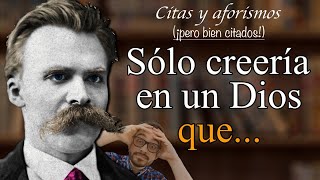
Gracias a Esto Entendí la Filosofía de Nietzsche (y tú también puedes)

Gracias a Esto Entendí la Filosofía de Nietzsche (y tú también puedes)

Nietzsche's New Year Resolutions and Philosophy

Introduction to Nietzsche's Resolutions

  • The video discusses Friedrich Nietzsche's New Year resolutions, highlighting how they differ from typical resolutions people make today.
  • It sets the stage by referencing an aphorism written by Nietzsche in January 1882 titled "Para el año nuevo," which expresses his desires for self-improvement.

Key Insights from Nietzsche's Aphorism

  • Nietzsche wishes to learn to see beauty in the necessity of things, aiming to embrace a philosophy of "amor fati" or love of fate.
  • He emphasizes that he does not want to wage war against what is ugly but instead seeks to affirm life by saying "yes" rather than rejecting it.

The Importance of Affirmation in Life

  • Saying "yes" signifies developing a personality free from resentment towards life; rejecting life is seen as a grave crime according to Nietzsche.
  • He warns that small refusals can lead to hatred towards life, resulting in existential boredom and fatigue.

Embracing Life Despite Suffering

  • Despite his own struggles with health and relationships, Nietzsche argues that those who reject life are ultimately denying themselves.
  • True vitality comes from embracing life's challenges and recognizing the inherent beauty within them.

Understanding Amor Fati and Vitalism

  • Amor fati represents accepting one's destiny and finding beauty in it; this concept aligns with Nietzsche’s vitalism where life is viewed as the highest value.
  • Contrary to being nihilistic or amoral, Nietzsche critiques traditional morality through a lens focused on enhancing life rather than diminishing it.

Critique of Traditional Morality

  • For Nietzsche, anything that strengthens life is deemed good while anything weakening it is bad; this forms his moral framework.
  • He criticizes the Christian God as antithetical to life itself, viewing Him as hostile toward human nature and existence.

The Concept of Eternal Return

  • The idea of eternal return suggests living such that one would willingly relive their experiences without change; this reflects deep acceptance of one's past choices.
  • Ultimately, despite life's pain, he believes it remains a beautiful adventure worth experiencing repeatedly if given the chance.

Conclusion: Living Fully

  • To live fully means embracing every aspect of existence joyfully rather than resigning oneself passively; it's about achieving greatness while alive.
  • Amor fati encourages loving what cannot be changed about one’s past or future—an ideal for achieving true fulfillment at life's end.

Turn any video into a summary like this

YouTube links, meetings, lectures. With transcripts, search, and chat.

Video description

😱 ¿Y si la CLAVE para entender la filosofía de Nietzsche estuviera escondida en sus propósitos de año nuevo? 👇🏾 😎 La Verdad sobre el Eterno Retorno de Nietzsche 👉🏽 https://youtu.be/7jplfKmBmtE 💥 Aprende Filosofía como nunca antes👉🏽 https://link.amazon/B06K6ZtCk 🔴 DALE A LIKE🙏 ⭐️ Descubre los vídeos de mi Curso de Filosofía 👉🏽 https://www.youtube.com/watch?v=33PYT1aIQxI&list=PLilfcYrZp3-IsNzmi5z-p4p6XMWckfYQC&index=1 🤓 Y si te mola la Filosofía y quieres APRENDER MÁS de un modo sencillo, ameno y accesible, consigue MI LIBRO: "¿Hay filosofía en tu nevera?". ¡TE ENCANTARÁ! ¡Hola, filoadictos! Soy Enric, tu profesor de filosofía en Youtube, y esto es Adictos a la Filosofía, el canal en el que amamos a Platón, Aristóteles y todos los grandes filósofos. ¿Sabías que Friedrich Nietzsche también se hacía propósitos de Año Nuevo? ¿Y sabes qué es lo mejor? ¡Que los conservamos! Al menos los que se puso en enero de 1882, porque los escribió en un aforismo de "La gaya ciencia", titulado "Para el año nuevo". Y aunque pueda parecer una tontería sin relevancia para su pensamiento, lo cierto es que este pequeño aforismo contiene la clave para entender buena parte de la filosofía de Nietzsche, en concreto, el núcleo de su vitalismo. ¡Acompáñame para descubrirlo! (Un vídeo ideal como introducción a la filosofía, o para el Bachillerato y la Selectividad) 🕘 ÍNDICE: 0:00 - Los propósitos de Año Nuevo de Nietzsche 1:39 - ¿Qué decía Nietzsche sobre la vida? 3:26 - ¿Qué es el vitalismo de Nietzsche? 4:57 - La crítica de Nietzsche al cristianismo 7:08 - ¿Qué es el amor fati según Nietzsche? Conexión con el eterno retorno 😱 Y si estás leyendo ESTO, es que perteneces al 0.5% de la gente que se lee las descripciones HASTA EL FINAL! 👏 Déjame un comentario con un emoji de león 🦁 para hacérmelo saber; si veo muchos, ¡me alegrarás el día! 😄 📚 FUENTES principales: ► Friedrich Nietzsche, La gaya ciencia (o La ciencia jovial), IV, 276 ❤️ PATREONS y MIEMBROS (¡mil gracias!) Bruce, Elias Aram, Fabrizio Barone, David Castro, Magdalena Villena, Will Luzader, Fabiola L., Juan Diego Sánchez, José Luis Garrido, Juan Ignacio Cantarero, Matías Ochoa, MrNetaar, Andrés E. Castaño, Ana Alvarez, Rodrigo Banegas, Tojo labal, Alfredo Sánchez Si disfrutas de mi contenido y quieres ayudarme a seguir haciéndolo 👇🏾 😍 Apóyame en PATREON 👉 https://www.patreon.com/filoadictos 😎 Conviértete en MIEMBRO del canal 👉 https://www.youtube.com/channel/UCBgi-68fpmF6yIEDOqd4kPw/join 🙃 Dame argo por PAYPAL 👉 https://paypal.me/filoadictos CRÉDITOS Edición ► Santiago 💬 Contacto: adictosalafilosofia@gmail.com 👇🏾 ¡Mira el comentario destacado! 👇🏾