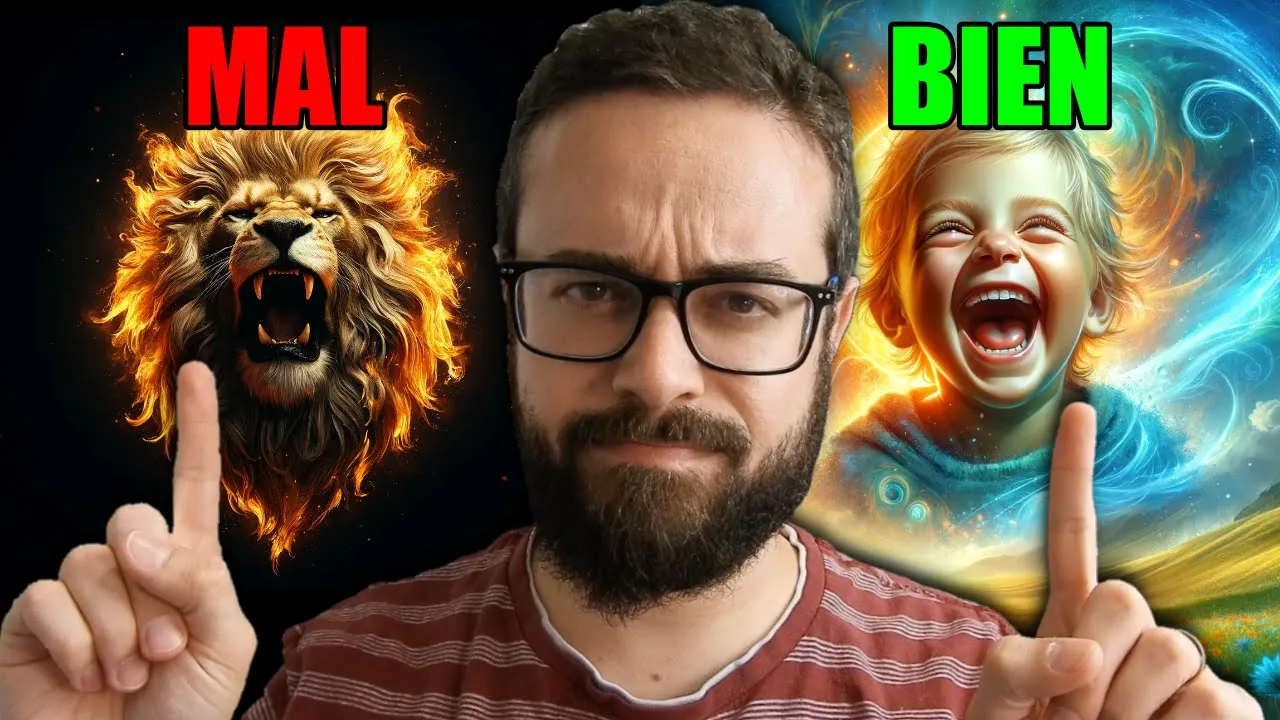
NIETZSCHE: las 3 Transformaciones del Espíritu 🦁 (FÁCIL y en unos 7 Minutos)
Describing Nietzsche's Three Transformations of the Spirit
In this section, the speaker introduces Friedrich Nietzsche's concept of the three transformations of the spirit, drawing on metaphors to depict internal metamorphosis.
The First Transformation: The Camel
- Nietzsche's metaphorical representation begins with the stage of the camel.
- The camel symbolizes accepting external burdens and societal expectations without resistance.
- Individuals in this stage conform obediently to imposed duties and norms, prioritizing external obligations over personal desires.
The Second Transformation: The Lion
- Transitioning from the camel, individuals evolve into the lion phase.
- The lion embodies rebellion against societal constraints and a quest for personal freedom.
- Despite its defiance, the lion remains reactive and tied to past values, lacking originality in creating new ideals.
The Third Transformation: The Child
- Progressing beyond rebellion, individuals reach the child stage.
- The child represents pure authenticity and liberation from societal constructs.
New Section
In this section, the speaker discusses the concept of a child's perspective on life and how it relates to living in the present moment without concerns for the past or future.
The Child's Perspective
- The child lives in the present moment without tension or hope for the future. They do not feel dissatisfaction from placing meaning in a transcendent realm always beyond reach.
- The child symbolizes innocence as there are no external standards to judge them; they set their own standards based on personal desires for eating, sleeping, and playing.
- In "Thus Spoke Zarathustra," Nietzsche uses the image of a child to represent transformation and self-will. Zarathustra is urged to embrace his inner child fully to progress towards becoming a superman.
New Section
This part delves into Nietzsche's portrayal of the child as a symbol of transformation and self-realization, particularly in relation to Zarathustra's journey.
Nietzsche's Concept of Childhood
- The child plays a crucial role in "Thus Spoke Zarathustra," representing self-will and freedom from external standards.
- Zarathustra is advised to embrace his inner child fully without shame, signifying a transition towards self-discovery and overcoming past limitations.
New Section
Here, Nietzsche's idea that embracing one's inner child is essential for personal growth and realization is explored further.
Embracing Inner Child
- Nietzsche suggests that embodying characteristics of a child is akin to aspiring towards becoming a superman, emphasizing misunderstood ideals.
Turn any video into a summary like this
YouTube links, meetings, lectures. With transcripts, search, and chat.