ATBTT - Stat System #1 - Creating a new stat
Introduction to ATBTT's Stat System
Overview of the Stat System
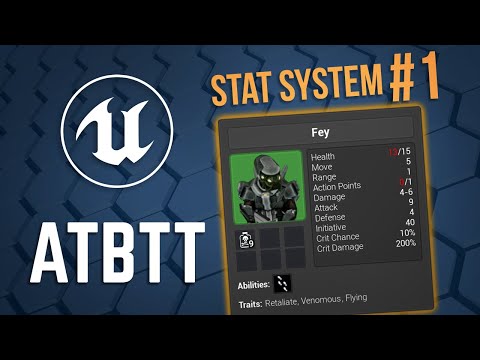
- The stat system allows units and actors to possess various stats, including health, movement, range, action points, and traits like retaliate and flying.
- It creates three main components: stats, status effects (e.g., poison), and traits that provide passive abilities to units.
Consolidation of Systems
- The new stat system consolidates previous systems into one framework, allowing for easier management of attributes without needing separate variables for each stat.
- This consolidation simplifies gameplay updates; changes in unit stats can be sent collectively rather than individually to puppets during actions.
Integration with Event System
- The stat system is designed to work seamlessly with a new event system that allows actors to subscribe to game events (global or local).
- Examples include applying poison when attacking or gaining health at the start of a turn; these will be covered in future tutorials.
Creating and Manipulating Stats
Basic Setup
- The tutorial begins by exploring the experimental setup of the stat system within a strategy RPG map.
- Although fully functional and stable, it is still considered experimental due to potential future changes.
Adding New Stats
- Stats are defined in data tables as gameplay tags. A simple stat can be created by adding a tag without extra information.
- An example given is creating a "damage multiplier" stat that affects how much damage units deal.
Implementing Damage Multiplier
Modifying Unit Data
- To implement the damage multiplier, it must first be added to unit definitions found in data tables.
- After adding the multiplier (set initially at 2), it can be tested by checking its effect on unit damage output during gameplay.
Testing Functionality
- Upon testing, if a heavy unit has a damage multiplier set correctly, its attack should reflect this increase (e.g., from 35 damage to 70).
Updating Stats During Gameplay
Integrating with Abilities
- The next step involves modifying attack abilities so they account for the newly created damage multiplier when calculating total damage dealt.
- A check ensures that if a unit does not have the damage multiplier stat defined, it defaults back to its base damage value instead of multiplying by zero.
Enhancing Readability and Functionality
Adding Descriptive Information
- Additional information can be added to stats in data tables for better readability; friendly names can include spaces for clarity.
- Visual modifiers such as suffixes (e.g., "x" after numbers displayed for multipliers), enhance user understanding during gameplay.
Conclusion on Basics of Stat Creation
Summary of Capabilities
- The basics covered demonstrate how easy it is to create new stats and modify existing ones using this consolidated approach compared to previous methods.
- Future videos will delve deeper into more complex functionalities within the stat system.
Turn any video into a summary like this
YouTube links, meetings, lectures. With transcripts, search, and chat.