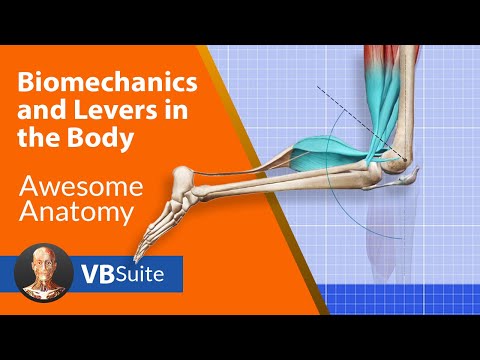
Biomechanics and Levers in the Body
Understanding Lever Systems in Synovial Joints
Overview of Lever Systems
- Synovial joints, such as the shoulder, elbow, knee, and ankle, operate as lever systems in the body.
- A lever system consists of three components: the fulcrum (joint), effort (muscle), and load (weight or body part being moved).
Types of Levers in the Body
First-Class Levers
- In first-class levers, the fulcrum is positioned between the effort and load.
- Example: Neck extension where:
- Fulcrum: Atlanto-occipital joint
- Load: Front of the skull
- Effort: Neck extensor muscles
Second-Class Levers
- In second-class levers, the load is situated between the effort and fulcrum.
- Example: Plantarflexion during a calf raise where:
- Fulcrum: Metacarpophalangeal joint
- Load: Body weight plus any additional weight held
- Effort: Gastrocnemius muscle attached to calcaneus bone
Third-Class Levers
- In third-class levers, the effort is located between the load and fulcrum.
- Example: Elbow flexion during a bicep curl where:
- Fulcrum: Elbow joint
- Load: Forearm plus any weight held (e.g., dumbbell)
- Effort: Bicep muscles
Efficiency of Lever Systems
- The efficiency of a lever system depends on the ratio of effort arm to load arm.
- The effort arm is defined as the distance from fulcrum to effort; conversely, the load arm measures from fulcrum to load.
Muscle Advantage in Lever Systems
- A larger ratio of effort arm to load arm indicates greater efficiency for moving heavier loads with less muscular effort.