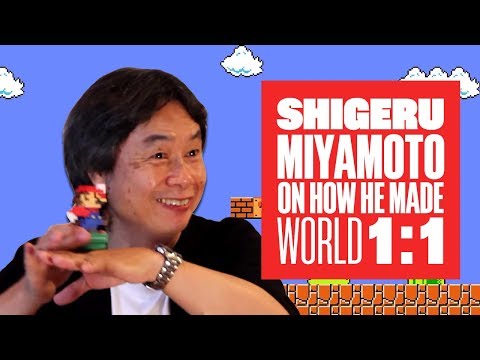
Miyamoto on World 1-1: How Nintendo made Mario's most iconic level
Introduction to Super Mario World Walkthrough
Overview of the Game
- Chris introduces the video, mentioning that he will be watching a walkthrough of one of the most iconic levels in video games, Super Mario World.
- He notes that Shigeru Miyamoto and Takashi Tezuka will discuss their experiences and insights regarding the game.
Design Philosophy Behind Mario's Mechanics
Initial Concepts
- The team aimed to create a sense of satisfaction when players transitioned from small Mario to big Mario, leading to the decision to include a small version first.
- They brainstormed magical items for transformation, concluding that mushrooms found in mysterious forests were ideal.
Gameplay Dynamics
- Players learn about game mechanics through simple interactions like hitting question blocks for coins, which creates an immediate sense of joy and accomplishment.
- The simplicity of early games meant there was no need for elaborate tutorials; players intuitively understood gameplay through experience.
Character Development and Enemy Design
Introducing Enemies
- Initially, Goombas were not part of the design; Bowser was intended as the primary enemy until they realized new players would struggle with complex mechanics.
- To ease player experience, they created simpler enemies (Goombas), allowing players to engage without overwhelming difficulty.
Evolution of Gameplay Elements
- The design process involved iterative changes based on feedback; Goombas evolved from initial concepts into recognizable characters within the game.
Teaching Players Through Gameplay
Gradual Learning Curve
- The game's design encourages natural learning by introducing challenges gradually while ensuring players understand their actions' consequences.
- Early stages are crafted so players can grasp what they are doing before being encouraged to explore freely.
Testing and Iteration Process
Feedback Mechanism
- During playtesting sessions, designers observe how players interact with levels without providing explanations or guidance.
- Observations often reveal unexpected player behaviors that inform future design decisions and adjustments.
Technical Challenges in Game Development
Physics and Movement Mechanics
- Discusses how character movement has evolved over time; earlier versions had limited freedom compared to modern iterations where characters can move mid-air.
- Emphasizes that creating a sense of weight in character movements is crucial for player immersion despite limitations inherent in 2D graphics.
Personal Reflections on Game Development Journey
Nostalgia and Growth
- Reflecting on his journey with Super Mario 3 as a significant milestone where he took on more responsibilities as a designer.
- Shares insights about transitioning into 3D game development with Super Mario 64, highlighting it as an exciting challenge filled with discoveries.
Embracing Innovation
- Stresses the importance of exploring uncharted territories in game design; pursuing unique ideas leads to personal growth and innovation within gaming.
Turn any video into a summary like this
YouTube links, meetings, lectures. With transcripts, search, and chat.