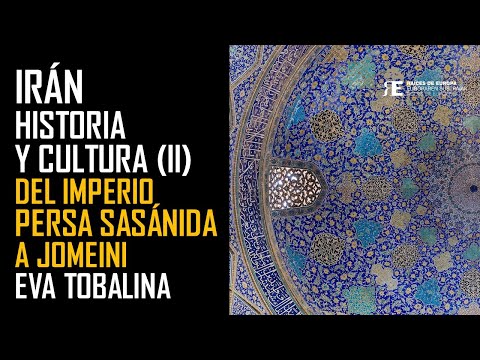
IRÁN: HISTORIA Y CULTURA (II). Del Imperio Persa Sasánida a la Revolución de Jomeini. EVA TOBALINA
Introduction to the Session
Overview of the Discussion
- The session focuses on the history and civilization of Iran, emphasizing its significance.
- Previous discussions covered ancient history up to the arrival of Islam, setting the stage for today's topic.
Transition from Islam to Jomín Revolution
Today's Agenda
- The discussion will cover historical developments from the advent of Islam to the Jomín Revolution. Questions about both historical and current events are encouraged.
Eva's Expertise and Background
Introduction of Speaker
- Eva, a professor of Ancient History, is recognized for her engaging lectures that combine academic knowledge with personal experience in Iran.
Recap of Last Week's Historical Context
Key Historical Events Covered
- A brief overview included five millennia of Iranian history: early civilizations, Indo-Iranians, Medes, Persians, and significant figures like Cyrus II and Darius I.
- Discussed major events such as the Persian Empire's rise and fall, including encounters with Alexander the Great and subsequent Hellenistic rule.
The Sasanian Empire's Importance
Understanding Political Structures
- The Sasanian Empire is crucial for comprehending late antiquity and early medieval transitions but remains largely overlooked in Western narratives despite its extensive influence over 400 years.
Geographical Scope of the Sasanian Empire
Territorial Extent
- The empire spanned from Mesopotamia through parts of modern-day Turkey to Afghanistan, showcasing its vast political reach across significant regions historically tied to Persia.
Conflict with Byzantine Empire
Long-standing Rivalry
- For four centuries, there was continuous conflict between the Sasanian Empire and Byzantium over territories like Syria and Armenia, highlighting their geopolitical struggles.
Cultural Significance of Khosrow II
Notable Figures in Persian Literature
- Khosrow II is celebrated not only as a military leader who expanded territory but also as a romantic figure in Persian literature through tales like "Khosrow and Shirin." His reign coincided with significant Byzantine conflicts led by Emperor Heraclius.
Islamic Expansion During Turmoil
Rise of Islam Amidst Conflict
- As Khosrow II engaged in wars against Byzantium, Muhammad was preaching Islam in Arabia; this context illustrates how Islamic expansion occurred during a period when both empires were weakened by internal strife.
The Expansion of Islam and the Succession Crisis
The Context of Muhammad's Death
- After Muhammad's death in 632, his successors began expanding Islam into the weakened Persian and Byzantine empires, which had been engaged in a prolonged conflict for 400 years.
The Invasion of the Persian Empire
- The invasion of the Sasanian Persian Empire commenced in 636, leading to its fall by 651 when the last king was killed by a miller seeking his possessions. This marked a significant territorial gain for Islamic rule.
Internal Conflicts within the Islamic Community
- As Muslims conquered Persia, internal disputes arose regarding Muhammad's succession. Initially, it was decided that successors should be relatives of Muhammad; thus, two early caliphs were his fathers-in-law.
Diverging Views on Leadership
- There were differing opinions on whether leadership should remain within Muhammad’s family or be given to the most capable Muslim. Some factions supported Ali, while others favored powerful families like the Umayyads.
Ali's Ascension and Assassination
- Ali became caliph in 656 but faced opposition from both Umayyad supporters and those who believed leadership should not be hereditary. He was assassinated in 661 during prayer by an opponent from Kufa, marking a pivotal moment in Islamic history.
Aftermath of Ali's Death
- Following Ali’s assassination, control shifted to the Umayyad dynasty despite ongoing claims from Ali’s descendants for rightful leadership over Islam. His son Hussein led a rebellion but was ultimately defeated at Karbala in 680, resulting in significant loss for his faction.
Legacy of Ali's Descendants
- One son survived the massacre at Karbala and chose to become a spiritual leader rather than pursue political power due to past tragedies within his family lineage. This established a distinct sect known as Shiites (Shia), followers of Ali’s teachings and legacy.
The Rise and Fall of the Umayyad Caliphate
Emergence of Islamic Factions
- The emergence of two main groups within Islam: the followers of Ali (Shia) and the Umayyads (Sunni) led to significant territorial expansion.
- By the 7th century, Muslim conquests included the Persian Sasanian Empire, Egypt, and Libya.
Expansion into New Territories
- In the 8th century, Islamic forces reached Morocco and penetrated into the Iberian Peninsula, even advancing beyond the Pyrenees into southern France.
- The Umayyad caliphs established their capital in Damascus after defeating Ali's supporters.
Cultural Influences on Umayyad Art
- The Umayyads were influenced by Byzantine Hellenistic culture rather than Persian or Mesopotamian traditions, leading to a distinctly Greco-Roman style in their art and architecture.
- An example is the mihrab from one of Iran's oldest mosques, showcasing Corinthian columns and geometric decorations reminiscent of Byzantine aesthetics.
Abbasid Revolution
- Mid-8th century saw a revolt led by the Abbasids against the Umayyads, resulting in their defeat by 750 AD; only one member survived by fleeing to establish an emirate in Córdoba.
- Following this revolution, Abbasids moved their capital from Damascus to Mesopotamia to distance themselves from Umayyad ties.
Establishment of Baghdad
- Al-Mansur founded a new city around his palace called "City of Peace," which later became Baghdad—once considered one of the richest cities globally during its peak in the 10th century.
- This shift sparked renewed interest among Abbasids in Persian culture and history, marking what is known as the Persian Renaissance in the 11th century.
Economic Growth Under Abbasids
- The Abbasid era saw economic revitalization through new agricultural practices and reconstruction along trade routes like Silk Road; this fostered cultural flourishing across Persia.
Key Figures: Avicenna and Ferdowsi
- Avicenna (Ibn Sina), born in present-day Uzbekistan but active in Iran, significantly contributed to medicine and adapted Aristotelian thought for medieval religious contexts—impacting Western philosophy profoundly.
- Ferdowsi authored "Shahnameh" (Book of Kings), narrating Iran's history with legendary tales akin to Arthurian legends; it celebrates Persian heritage through epic storytelling filled with heroes and mythical elements.
Ferdowsi and the Persian Identity
The Essence of the Shahnameh
- Ferdowsi aimed to narrate a story that was exclusively Persian, deliberately avoiding Arabic vocabulary to write in the purest form of Persian possible.
Cultural Pride and Historical Context
- The Shahnameh reflects Persian pride in their pre-Islamic heritage, particularly during the Achaemenid and Sasanian periods, showcasing a cultural identity distinct from Arab influence post-conquest in the 7th century.
Invasions and Cultural Resilience
- The 11th-century renaissance was short-lived due to foreign invasions; Iranian plateaus became entry points for Asian peoples into the Mediterranean and Near East, turning into a significant invasion route.
Turkic Invasions: A Mixed Legacy
The Seljuk Turks' Impact
- The Seljuk Turks invaded Persia in the 11th century but were not overly destructive; they converted to Islam and appreciated Persian culture, leading to a flourishing period marked by impressive architectural achievements like mosques.
Cultural Flourishing Amidst Conquest
- Despite being an era of foreign invaders, it remained culturally vibrant with notable constructions such as prayer halls and domes from the Seljuk period still visible today.
The Mongol Catastrophe
Destruction Under Genghis Khan's Descendants
- In contrast to earlier invasions, the Mongols led by Genghis Khan's descendants devastated Iran in the 13th century, resulting in apocalyptic destruction—cities razed, libraries burned, and populations massacred.
Timurid Conquests: A New Wave of Violence
Tamerlane's Brutality
- Following Mongol conquests, Tamerlane (a descendant of Mongols) further ravaged Persia in the late 14th century. His campaigns were marked by extreme violence against cities like Isfahan that resisted his rule.
The Rise of Safavid Power
Emergence of Safavid Dynasty
- By the early 16th century, Turkish tribes known as Safavids emerged from present-day Azerbaijan under Ismail’s leadership. They played a crucial role in re-establishing an independent Persian state after centuries of foreign domination.
Shah Ismail: A Unique Leader
- Shah Ismail was described as a formidable figure with unique physical traits who led elite warriors into battle without armor. He combined military prowess with poetic talent during his reign.
Cultural Rebirth Under Safavids
Unification of Persian Territories
- With Shah Ismail at its helm, the Safavid dynasty reunified territories within Persia for the first time in over a millennium since Muslim conquest in the 7th century. This marked a significant moment for Persian sovereignty and cultural revival.
The Safavid-Ottoman Conflict and Its Historical Impact
The Rise of the Safavid Empire
- Shai Ismail and his Qizilbash warriors were fierce Shiite fighters who established an independent Persian empire, reclaiming traditional territories from the Sasanian Empire, including Afghanistan, Iran, Mesopotamia, and parts of the Caucasus.
- At this time, the Ottoman Empire was at its peak under Selim I and Suleiman the Magnificent, equipped with advanced weaponry such as cannons and firearms.
The Clash of Faiths
- The Safavids faced defeat against the Ottomans, losing control over Mesopotamia—a region historically significant to Persians since 6th century BC.
- Following this loss, Iraq remained under Ottoman control until the 20th century.
Sectarian Tensions Emerge
- A key factor in their conflict was religious; Ismail's Safavids were fervent Shiites while Suleiman's Ottomans adhered to Sunni Islam.
- Prior to this conflict, Shiites and Sunnis coexisted relatively peacefully across regions like Iran and Iraq but tensions escalated into violent confrontations over territorial disputes.
Escalation of Violence
- Both empires began deporting members of each other's sect—Safavids expelled Sunnis while Ottomans targeted Shiites—leading to widespread violence between these communities.
- This sectarian divide has lasting implications today; approximately 80% of Muslims are Sunni while 20% are Shiite due to historical conflicts stemming from this period.
Architectural Advancements Under the Safavids
- Despite ongoing conflicts, the Safavid era marked a renaissance in Persian architecture beginning in the 16th century with notable structures like mosques featuring traditional elements combined with new styles.
- The architectural style included elements from ancient Sasanian Persia (like iwans), which became prominent features in mosques throughout Iran during this period.
Shah Abbas I: A Modernizer Amidst Conflict
- Shah Abbas I ruled during a transformative period for Persia (16th - 17th centuries), modernizing infrastructure and opening Persia to Western influences through trade.
- However, his reign was also marred by intensified persecution against Sunnis and continued military failures against Ottoman forces in attempts to regain lost territories.
The Architectural Legacy of Shah Abbas
Shah Abbas and the Transformation of Persia
- Shah Abbas was pivotal in opening Persia to European influence and intensifying Sunni-Shia conflicts, while also relocating the capital to Isfahan, initiating monumental architectural projects.
- The move to Isfahan aimed to reflect the empire's grandeur, featuring a vast porticoed square at its center for merchants dealing in carpets, silks, and perfumes.
The Imam Mosque: A Masterpiece of Islamic Architecture
- The Imam Mosque, constructed during the late 16th and early 17th centuries under Abbas's reign, is celebrated as one of the finest examples of Islamic architecture and Persian artistry.
- Its walls are adorned with intricate tile work that combines mosaic techniques with dry cord designs, creating stunning visual compositions reminiscent of carpets.
The Splendor of Isfahan’s Plaza
- Isfahan's grand plaza included not only the Imam Mosque but also Ali Qapu Palace—designed for royal enjoyment—and a private mosque for the Shah’s family connected by a discreet gallery.
- This private mosque features exquisite tile work that remains a sensory delight today.
Gardens and Cultural Flourishing Under Shah Abbas
- Shah Abbas commissioned bridges connecting Isfahan’s banks for trade and cultural events like concerts and plays while enhancing the landscape with beautiful Persian gardens.
- These gardens were meticulously designed in quadrants with fragrant flowers, flowing water features, and artistic embellishments that elevated their aesthetic appeal.
Decline After Shah Abbas: Rise of Agā Muhammad Qājār
- Following Shah Abbas's death in the early 17th century, his successors failed to maintain his legacy leading to decline marked by chaos and civil wars; this culminated in Agā Muhammad Qājār seizing power in 1779.
- Agā Muhammad was physically altered (castrated), which influenced his portrayal as anxious without facial hair typical among rulers; he eventually united opposition against Safavid rule.
Capital Relocation: From Isfahan to Tehran
- One significant act by Agā Muhammad was moving Iran's capital from culturally rich Isfahan to Tehran due to its association with Safavid power dynamics.
- Modern Tehran lacks monuments predating the 18th century because it was a minor settlement until becoming capital during Qājār rule starting in 1779.
The Historical Context of the Qajar Dynasty in Iran
Architectural Developments and Cultural Shifts
- The Qajar period saw significant architectural achievements, such as the Golestan Palace, which exemplified the era's taste for luxury and intricate mirror work.
- There was a shift from tile work to painted decoration and brickwork in architecture, indicating changing artistic preferences during this time.
Territorial Losses and Political Turmoil
- The early 19th century marked territorial losses for Persia, particularly with Russia's annexation of Transcaucasia, including Armenia, Georgia, and Azerbaijan.
- This loss was part of a broader frustration for Persia under the Qajar rule as they struggled to maintain sovereignty against expanding foreign powers.
Geopolitical Dynamics in the 19th Century
- Iran found itself strategically positioned between the British Empire in India and an expanding Russian Empire, leading to increased foreign interest and intervention.
- The discovery of significant oil reserves in southern Iran coincided with Britain's transition from coal to oil for naval power, heightening Western interests in Iranian resources.
Internal Strife and Foreign Influence
- Under Shah Ahmad Qajar, who was seen as a puppet of British interests due to agreements like those with Anglo-Persian Oil Company (APOC), public discontent grew over perceived exploitation.
- Widespread rebellion erupted against Ahmad Qajar’s regime as Iranians felt their wealth from oil was being siphoned off by foreign companies.
Rise of Reza Pahlavi
- To quell unrest, Britain supported Reza Pahlavi's rise to power; he quickly consolidated control over Iran after Ahmad left on a trip abroad.
- The Pahlavi era began with Reza Pahlavi focusing on modernization while simultaneously enforcing strict political control over dissent.
Modernization vs. Oppression
- The Pahlavis aimed to westernize Iran through laws banning traditional attire like veils while promoting education and infrastructure development.
- Despite economic progress during Mohammad Reza Pahlavi’s reign starting in 1941, there were severe political repressions that led to widespread dissatisfaction among citizens.
National Pride Amidst Challenges
- In response to growing discontent, Mohammad Reza sought to invoke national pride by celebrating historical Persian achievements; notably marking 2,500 years of Persian monarchy at Persepolis.
1971 Celebration and the Iranian Revolution
Global Presence at the 1971 Celebration
- The event saw attendance from numerous world leaders, including the Kings of England, Juan Carlos and Sofía of Spain, Nicolae Ceaușescu of Romania, and Ferdinand Marcos from the Philippines. This highlights the global significance of the celebration.
Disparity Between Celebration and Public Struggles
- While elite guests enjoyed lavish festivities with imported champagne and personalized tents near Persepolis, ordinary Iranians faced hunger, persecution, and a demand for democratization that was unmet by Shah Mohammad Reza Pahlavi's regime.
Rise of Ayatollah Khomeini
- Ayatollah Ruhollah Khomeini emerged as a vocal critic against the Shah’s extravagance, secularization efforts, and Westernization. His opposition led to his exile but did not quell growing unrest within Iran.
The Fall of the Shah
- On January 16, 1979, facing terminal illness and loss of control over Iran, Shah Pahlavi fled. Khomeini returned from exile on February 1st to lead the revolution that resulted in a new Islamic Republic constitution approved by over 90% of voters.
Current State of Iran Post-Revolution
- As of 2016, Iran remains an Islamic Republic with nearly 80 million inhabitants. Many citizens are under 40 years old and hopeful for a brighter future despite historical chaos.
Observations on Iranian Society
- Contrary to expectations of oppression under an Islamic state, visitors often find Iranians living with acceptable standards of living and enjoying certain freedoms within controlled limits.
Cultural Richness Beyond Historical Sites
- The most compelling aspect of Iran is its people rather than its historical sites like Persepolis or Isfahan's mosques. Iranians are described as hospitable individuals eager for engagement with foreigners.
Cultural Norms: Dress Code in Iran
Discussion on Dress Codes
- In Iran, women are required to wear hijabs as part of a broader dress code that mandates covering hair and wearing modest clothing. Men also face restrictions regarding their attire.
Impact on Women’s Experience
- The mandatory hijab can be uncomfortable for both locals and tourists; however, some Iranian women express dissatisfaction with this requirement while others accept it based on personal beliefs.
Variability in Adherence
- In urban areas like Isfahan or Tehran, many young women creatively adapt their hijab style—often wearing it loosely—indicating a blend between adherence to regulations and personal expression.
Cultural Perspectives on the Veil in Iran
Women's Attitudes Towards the Veil
- Many women express a desire not to wear the veil, indicating a preference for personal choice over imposed cultural norms.
- Propaganda promoting the veil suggests that there is significant opposition among women who feel pressured to conform to societal expectations.
- The situation reflects broader societal divisions in Iran, with some advocating for reform and others favoring traditional conservatism.
Broader Implications of Gender Roles
- The veil symbolizes deeper issues of gender inequality, as women face restrictions beyond clothing, including limitations on public singing and holding high political positions.
- Despite some access to education and employment, women's roles in politics remain largely symbolic and subordinate.
Societal Dynamics and Modernization Efforts
- The dichotomy between progressive and conservative factions within Iranian society highlights ongoing tensions regarding women's rights and general reforms.
- Personal experiences reveal strict enforcement of dress codes upon arrival in Iran, illustrating the immediate impact of cultural regulations on visitors.
Cultural Restrictions and Social Life
- Current leadership under President Rohani aims to modernize aspects of Iranian life; however, social media remains heavily restricted.
- Control by religious authorities limits reforms, creating a complex environment where change is met with resistance from conservative elements.
Public Perception and Interaction with Foreigners
- Observations indicate that while formal restrictions exist (e.g., women cannot perform music publicly), there is an underlying vibrancy in social interactions among Iranians.
- Visitors often find themselves welcomed warmly by locals eager for connection, contradicting stereotypes about fear or isolation within Iranian society.
Experiences and Observations in Iran
Unique Encounters with Locals
- The speaker shares a personal anecdote about visiting a small village in Iran, where a local man expressed excitement at seeing tourists for the first time and gifted them sweets.
- This highlights the warmth and hospitality of Iranian people despite the political climate.
Perception of Safety in Iran
- Contrary to common perceptions, the speaker does not view life in Iran as oppressive or miserable; instead, there is a sense of security that contrasts with countries like Egypt or Jordan.
- The locals are proficient in English, which facilitates communication and understanding.
Impact of Regional Conflicts
- The discussion shifts to the broader context of Islamic conflicts, particularly between Sunni and Shia factions, with ISIS being a significant player targeting Shia Muslims.
- Iranians feel directly affected by these conflicts due to their identity as the leading Shia nation amidst ongoing violence against their community.
Border Security and Terrorism Concerns
- Iran maintains strict border controls, especially with Iraq, which has helped them avoid terrorism issues that plague Europe and Turkey.
- Many Iranians express fear about traveling to Europe due to potential terrorist attacks, feeling safer within their own borders.
Refugee Policies and Humanitarian Aid
- Despite regional turmoil, Iran does not accept refugees but provides aid and engages in border security efforts.
Understanding Islam's Influence on Society
Complexity of Religious Authority
- The speaker discusses how Christianity has centralized religious authority (like the Pope), while Islam lacks such structure. This leads to diverse interpretations among clerics.
Varied Interpretations Within Islam
- There exists a spectrum within Islamic teachings; some clerics promote extreme views while others advocate for moderate practices adapted to contemporary society.
Misconceptions About Islam
- The violent minority within Islam often overshadows more tolerant interpretations. The speaker emphasizes that many Muslims live peacefully without endorsing extremist ideologies.