Paradigm Shift: An in Depth Explanation
Introduction
The speaker introduces himself and the topic of his presentation. He emphasizes the importance of taking an honest look at one's life and results.
- The speaker shares that he has been looking forward to making this presentation.
- He encourages the audience to take an honest look at their lives and results.
- The speaker notes that people are often conditioned to lie to themselves and not take an honest look at their results.
- He asks the audience if they are living the way they really want to live.
Living the Life You Want
The speaker discusses how most people aren't living the life they want, and how he helps people change their programming in order to achieve their desired results.
- The speaker notes that most people aren't living the way they want to live.
- He asks people what's the most they've ever earned in a year, as a way of understanding where their mind is programmed.
- The speaker explains that he wants to find out what people want so he can help them shift their programming accordingly.
- He emphasizes that changing one's programming is necessary for achieving desired results.
Studying Personal Development
The speaker talks about his personal experience studying personal development for over 50 years, and how it has changed his life.
- The speaker shares that he has been studying personal development for 54 years, starting with reading "Think and Grow Rich" in 1961.
- He notes that studying personal development every day has had a huge impact on his life.
- The speaker suggests that others could also change everything in their lives by committing to study this material every day.
- He emphasizes discipline as a key requirement for making big changes.
Phenomenal Changes
The speaker shares his experience working with tens of thousands of people all over the world, and how he has seen phenomenal changes take place.
- The speaker notes that he has worked with tens of thousands of people all over the world.
- He shares that he has watched kids go from a C and D average to an honors mark almost overnight.
- The speaker emphasizes that making decisions is necessary for change, and encourages the audience to make their own decisions.
Introduction
Bob Proctor talks about his journey of studying and understanding how to live the life you want. He shares that people all over the world essentially want three things: eliminate financial concerns, spend their days doing what they love, and mix with people who are upbeat and creatively productive.
Three Things People Want
- People want to eliminate any financial concerns.
- People want to wake up in the morning excited about how they're going to spend their day.
- People want to mix with people who are upbeat and creatively productive.
Magnifying Results
Bob Proctor talks about a man who helped him magnify the results he was getting in his life by pointing out that we're only limited by weakness of attention and poverty of imagination. He emphasizes that we need to stay focused and use our imagination to build the kind of world we really want.
Results Always Tell The Truth
- Results always tell the truth.
- By their fruits, you'll know them.
- If you're playing golf, the scorecard tells the truth.
Introduction
Bob Proctor talks about how he met a man who changed his life by introducing him to the book "Think and Grow Rich" by Napoleon Hill.
Meeting the Man Who Changed His Life
- Bob Proctor meets a man who tells him that he is one of the most miserable people he has ever met.
- The man advises Bob to change his results and introduces him to the book "Think and Grow Rich".
- The author of the book, Napoleon Hill, spent his whole life writing it and it contains the best thinking of over 500 of the world's most successful people.
- Despite having only two months of high school education, owing $6,000 while earning $4,000 per year, and never having had a decent job, Bob decides to follow the advice in the book.
Changing Results
Bob Proctor talks about how following the advice in "Think and Grow Rich" changed his life.
Following Advice from "Think and Grow Rich"
- The man tells Bob to stop thinking about why he can't succeed and start thinking about how he can.
- One year later, Bob was earning $175,000 by cleaning offices.
- He started with one office where he earned $30 for washing its floor twice a month. He then took over another office for $65 per month.
- In less than five years, he was cleaning offices in Toronto, Montreal, Boston, Cleveland, Atlanta, and London.
Beliefs About Money
Bob Proctor talks about how his beliefs about money were challenged by his success.
Challenging Beliefs About Money
- Bob was raised to believe that you have to be smart to earn a lot of money and that you need a good formal education to have a good job.
- He realized that these beliefs were lies and that there are people who are functionally illiterate but earning millions of dollars.
Introduction to Paradigms
Bob Proctor introduces the concept of paradigms and how they relate to shaping one's future. He shares his personal journey of seeking out mentors to understand why he changed and how he ended up studying with a man in Vancouver who introduced him to the idea of paradigms.
Understanding Paradigms
- Joel Barker wrote a book called "Paradigms" in 1990, where he said that in order to shape your future, you have to be willing and able to change your paradigm.
- A paradigm has something to do with the mind, but Bob Proctor admits that he knew nothing about it until he met a mentor who encouraged him to study it.
- The most powerful idea Bob Proctor has ever learned is understanding the mind and paradigms.
Personalizing Paradigms
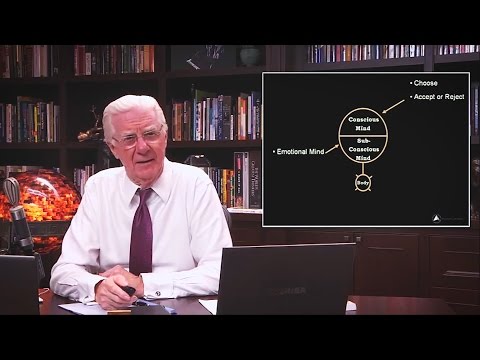
- The mind consists of the conscious mind (thinking mind), subconscious, and body.
- Thinking is a skill that can be learned but is not taught in schools. Most people confuse mental activity with thinking.
- The conscious mind is also known as the educated mind, but Bob Proctor will show later on how far off track we get with this term.
Understanding the Subconscious Mind
This section explains the difference between the conscious and subconscious mind, and how they function differently.
The Conscious Mind
- The conscious mind can think and has the ability to choose.
- You have the ability to reject information in your conscious mind.
The Subconscious Mind
- Your subconscious mind has no ability to reject information, it must accept.
- Whatever is placed in your subconscious mind will dictate your world.
- Your imagination or subconscious mind cannot differentiate between what you imagine and what's real.
Everyone Has the Ability to Originate Ideas
This section emphasizes that everyone has the ability to originate ideas, regardless of their background or circumstances.
Examples of Successful People
- The Wright brothers, Ed Hillary, Steve Jobs, Thomas Edison, Alexander Graham Bell are examples of people who originated ideas.
- These successful people are not different from you and me.
Programming of Our Minds
This section explains how our minds are programmed from a young age by our environment and genetics.
Genetic Programming
- We are genetically programmed with DNA from our parents going back for generations.
- Many beliefs have been passed down from one generation to another.
Self Image Formation
- Our self image is formed when we're young without having the ability to think critically.
- A multitude of ideas form a paradigm which shapes our worldview.
The Importance of Clearly-Defined Goals
This section emphasizes the importance of having clearly-defined goals to avoid becoming enslaved by daily trivia.
Enslavement to Daily Trivia
- In the absence of clearly-defined goals, we become strangely loyal to performing daily trivia.
- Many people are enslaved by daily trivia and never accomplish anything.
Conclusion
This section concludes the talk by summarizing how our minds work and how we can take control of them.
Programming of Our Minds
- We leave our subconscious mind wide open because we're programmed to do so.
- What goes into our subconscious mind dictates what we do.
Taking Control
- We have the ability to choose what information we accept or reject in our conscious mind.
- We can change our paradigm and take control of our lives by setting clearly-defined goals.
The Importance of Paradigms
In this section, Bob Proctor discusses the importance of paradigms and how they control our behavior.
Schooling and Paradigms
- Most people on welfare are fourth or fifth generation welfare recipients.
- We frequently do not do what we already know how to do because school never taught us anything about paradigms.
- Superior knowledge does not equate to superior results because it's the paradigm that controls behavior.
- Changing the paradigm is necessary to change results.
Personal Experience
- Bob Proctor has no formal education or business experience but earns millions of dollars at 81 years old due to his understanding of how to use the mind.
- Visit proctorgallagherinstitute.com for tips, tools, and resources.