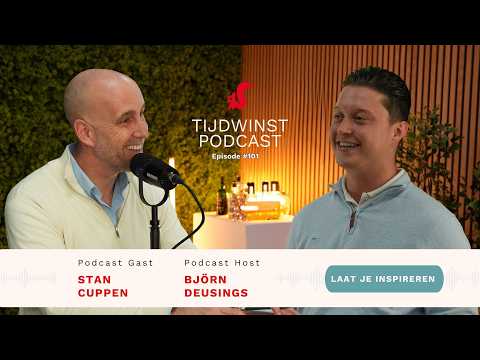
Aflevering #101: 'Van ‘altijd ja’ naar assertief nee en toch klanten behouden.' | Tijdwinst Podcast
Welcome to the Tijdwinst Podcast
Introduction of Guests and Themes
- The host, Buren Deusings, introduces Stan Kuppen, a young entrepreneur who started a vacation rental business that now employs around 60 people.
- Stan's journey is highlighted as a success story characterized by hard work, vision, and staying grounded.
Early Career Decisions
- Stan shares that he left school without a clear plan but was inspired by his father's entrepreneurial background.
- His father sold his previous business in orthopedics and podotherapy to invest in vacation properties in Spain. This shift marked a significant change for both of them.
Business Concept Development
- While completing his studies, Stan decided to create a business plan for Vivi Homes, which focuses on managing vacation rentals. He emphasizes the importance of taking action despite uncertainties.
- The idea stemmed from recognizing the need for services like maintenance and cleaning among neighbors who might also want to rent out their properties.
Personal Motivation and Challenges
- Stan expresses his desire to work with people and create enjoyable experiences through vacation rentals, reflecting on how this aligns with his personal interests.
- He acknowledges the challenges of entering an unfamiliar industry alongside his father but finds it rewarding as they learn together daily.
Transitioning to Spain
- Reflecting on moving to Spain at age 21 with family support made the transition less daunting for him; he had previously visited several times which eased the process.
- Despite missing friends and family back home, he values the quality time spent during visits due to reduced frequency compared to before moving abroad. This perspective enhances their shared moments' significance.
Transitioning to a New Life
Adjusting to Change
- The speaker reflects on how moving from school directly into entrepreneurship led to significant life changes, emphasizing the lack of a fixed career or expertise at that time.
- Building a business and social life simultaneously presents challenges; the speaker notes that most connections were formed through entrepreneurial activities.
Navigating Challenges
- The onset of COVID-19 complicated their transition, leading the speaker to return to the Netherlands briefly for educational commitments before returning to Spain amidst restrictions.
- Establishing work relationships was facilitated by joining an existing office environment, which allowed for networking opportunities after hours.
Social Life Integration
- The speaker describes how their social life developed alongside their professional network, often involving colleagues and family members who also live nearby.
- There is a blending of personal and professional lives; while some advise against mixing them, the speaker finds it beneficial and inspiring.
Building a Business: Insights and Experiences
Early Days in Entrepreneurship
- Initial experiences included navigating conflicts within a new team but ultimately led to shared goals and mutual inspiration as they discussed ideas more openly.
- The importance of finding like-minded individuals with similar ambitions is highlighted as crucial for building a successful venture.
Work-Life Balance Concerns
- The conversation shifts towards maintaining work-life balance in a family business context, questioning whether constant business discussions hinder personal time.
- Despite being immersed in work-related topics, the speaker appreciates having personal downtime after intense days at work.
Challenges Faced During Startup Phase
Overcoming Obstacles
- Acknowledging that starting out can be overwhelming due to lack of experience; however, this challenge is met with enthusiasm rather than discouragement.
- Key challenges included establishing financial credibility and finding reliable accounting support as they built their reputation from scratch.
Reputation Building
- Emphasizes that gaining trust as newcomers in the industry was particularly difficult without prior accomplishments or recognition.
The Journey of Building a Rental Business
Gaining Trust from Homeowners
- The initial challenge was to convince homeowners to rent out their properties, as they are often emotionally attached and protective of their investments.
- Being a small company allowed for flexibility in making promises that larger competitors could not, which helped build trust with homeowners.
Flexibility as a Strength
- The ability to adapt quickly and take on various tasks was crucial during the early stages of the business, contributing significantly to rapid growth.
- Entrepreneurs often start from scratch, needing to establish their reputation and prove themselves, which may lead them to make commitments they later cannot maintain.
Learning When to Say No
- A significant lesson learned was the importance of saying "no" to clients when necessary; initially, there was a tendency to accommodate all requests at any time.
- As the business grew (to managing 50 or 100 properties), it became clear that this approach negatively impacted mental health due to overwhelming responsibilities.
Establishing Boundaries
- Transitioning from being overly accommodating led to setting clear working hours and expectations for clients regarding service availability.
- With an increased number of properties under management (150+), it became essential to communicate what clients could expect without compromising service quality.
Managing Client Expectations
- Clients were informed about operational limits; urgent issues could be addressed immediately, but non-critical problems would be resolved the next day.
- This shift relieved pressure on staff while also helping clients adjust their expectations regarding response times.
Navigating Client Relationships
- Some older clients struggled with changes in service delivery as they had grown accustomed to immediate responses; however, most adapted over time.
- Maintaining client relationships required careful management during transitions, especially when handing off responsibilities within the team.
Reflections on Growth Challenges
- Early-stage entrepreneurs often face challenges related to building reputation and proving reliability while learning how much flexibility is sustainable.
- There were moments where stress levels peaked due to constant notifications and demands; recognizing these signs is vital for long-term success.
Customer-Centric Growth Strategies in Property Management
Understanding the Primary Client Relationship
- The main client for property management services is the homeowner, who has the most direct contact with the service provider.
- As businesses grow towards managing hundreds of properties, it becomes crucial to find efficient ways to manage these relationships without overwhelming staff.
Educating Clients for Better Engagement
- Entrepreneurs often find themselves in a position where they need to "train" or guide their clients on how to interact with their services effectively. This involves ensuring that clients are satisfied while also meeting business objectives.
- By providing clear communication and structure, clients can feel more secure about when and how to reach out for assistance, reducing anxiety around service availability.
Balancing Flexibility and Structure
- A structured approach helps alleviate client concerns by setting expectations about when issues will be addressed, fostering a sense of calm among homeowners.
- It’s essential not to lose sight of customer needs during growth phases; understanding client perspectives is vital for maintaining satisfaction and loyalty.
Importance of Continuous Communication
- Regular engagement with clients through meetings or informal coffee chats can yield valuable feedback, especially from those who may not be fully satisfied with current offerings. This feedback loop is critical for improvement.
- Maintaining genuine contact with customers prevents an over-reliance on metrics alone, which can lead to operational rigidity and disconnect from actual client experiences.
Testing New Systems Responsibly
- When introducing new systems or changes, it's important to involve clients in testing phases and solicit honest feedback in exchange for incentives like discounts or free trials. This collaborative approach fosters trust and improves service quality.
- Keeping the customer at the center of operations ensures that any growth remains sustainable without compromising service quality or customer satisfaction levels.
Managing Growth Without Sacrificing Quality
- Rapid scaling can lead to operational challenges if not managed carefully; businesses must set limits on growth rates to maintain quality standards across all services offered.
- A well-defined plan is necessary when considering expansion; otherwise, there’s a risk of losing established clientele due to declining service quality as demand increases too quickly.
Understanding Growth and Reputation Management
The Impact of Rapid Growth on Reputation
- Rapid growth can lead to a loss of reputation, which is difficult to rebuild once damaged. It’s easier to lose reputation than to maintain it.
- Early customers often drop off if the quality of service declines due to fast expansion, highlighting the importance of maintaining standards during growth.
- Delegation becomes necessary as a business grows, but it poses challenges in ensuring quality control and accountability.
Challenges in Delegation and Quality Control
- Initially, there may be difficulty in trusting others with responsibilities; checking on delegated tasks is crucial for maintaining service quality.
- When tasks are not completed as expected, it's essential to reflect on whether instructions were clear or if additional support was needed.
- Trusting employees is important, but regular checks ensure that customer satisfaction remains high and reputations are protected.
Maintaining Standards Across All Operations
- A single oversight can jeopardize hard-earned reputation; consistency in performance across all tasks is vital for long-term success.
- The principle "how you do anything is how you do everything" emphasizes that lapses in one area can indicate broader issues within the organization.
Navigating Youth and Authority in Business
- Young leaders may struggle for respect from older colleagues; establishing boundaries between personal relationships and professional roles is critical.
- Balancing friendliness with authority helps create a productive work environment while still fostering good relationships among team members.
Strategic Growth Decisions
- Businesses must recognize when they have momentum for growth; failing to capitalize on opportunities can lead to missed chances later.
- The necessity of being perceived as a reputable brand drives the need for continuous improvement and visibility within the market.
How to Navigate Market Saturation and Business Growth?
Understanding Market Dynamics
- The speaker discusses the potential saturation of the market, particularly regarding Dutch buyers purchasing properties along the coast, indicating a shift towards areas like Estepona.
- Emphasizes the importance of continuous customer acquisition; relying solely on satisfied existing customers can lead to stagnation if they leave for personal reasons.
Strategic Decision-Making in Business Expansion
- Highlights the dilemma of whether to expand within existing markets or explore new territories, stressing the need for focus amidst numerous opportunities.
- Introduces vertical growth strategies, such as collaborating with software companies that serve property managers to enhance service offerings.
Diversification and Risk Management
- Discusses diversifying services (e.g., interior design), which has shown promising results due to existing networks and logical business extensions.
- Reflects on challenges faced by entrepreneurs as team size increases, leading to an influx of ideas that may not all be feasible or aligned with core objectives.
Collaborative Decision-Making Processes
- Describes weekly management meetings where feedback from staff is integrated into decision-making processes, fostering a collaborative environment.
- Explores methods for minimizing risks when testing new services, such as informing clients about trials under specific conditions.
Testing New Services Without High Risks
- Discusses how to test new offerings (like interior design services) without significant upfront investment by leveraging existing partnerships and networks.
- Shares success in quickly securing projects through established connections while maintaining low risk during initial phases of service introduction.
Learning from Experience in Service Development
- The speaker reflects on their approach of selling a service before fully developing it, highlighting practical steps taken without incurring costs initially.
- Mentions having experienced personnel guide new initiatives based on their extensive background in relevant fields.
Understanding Real Estate Investment Challenges
The Importance of Proper Planning
- Emphasizes the need for appropriate interior styles in home investments, highlighting that having the right people in place can mitigate risks.
- Discusses common pitfalls where entrepreneurs purchase properties without selling anything first, stressing the importance of infrastructure before investment.
Misconceptions About Easy Money
- Addresses the misconception that buying property in Spain is an easy way to make money, often fueled by social media portrayals.
- Acknowledges that while real estate can grow personal wealth with minimal effort, it does not come without challenges and worries.
Research and Local Knowledge
- Stresses the necessity of thorough research on neighborhoods and local preferences before making a purchase.
- Advises seeking expert guidance from knowledgeable real estate agents to minimize risks associated with property investment.
Managing Rental Properties as Businesses
- Compares rental properties to small businesses requiring maintenance, marketing, and guest screening for successful operation.
- Highlights the extensive responsibilities involved in managing rentals, including cleaning services and financial management tasks.
Financial Considerations and Market Trends
- Warns about hidden costs associated with property ownership that can lead to disillusionment among investors.
- Notes that many new properties may have initial issues despite appearing attractive at first glance.
Current Market Dynamics
- Observes how rising property prices are affecting buyer sentiment and market participation.
- Describes shifts in buyer demographics as they seek more affordable options outside popular areas like Malaga.
Expansion Strategies in the Estpona Region
Exploring New Locations
- Discussion on opening a new location in the Estpona region to capitalize on growing opportunities, particularly due to increasing demand.
- Emphasis on the potential for broader service coverage by tapping into new areas, while acknowledging associated risks if not managed properly.
Quality Management and ISO Certification
- The importance of implementing quality management systems, specifically pursuing ISO 9001 certification to standardize protocols across locations.
- Recognition that as businesses grow, maintaining control over processes becomes challenging; thus, establishing clear protocols is essential for transparency and efficiency.
Financial Oversight and Departmental Accountability
- Monthly financial reviews with department managers are conducted to assess performance and identify areas for optimization.
- Acknowledgment that managing numerous properties (150-170 homes) requires attention to detail in financial oversight to prevent issues from arising.
Balancing Detail Orientation with Autonomy
- Monthly check-ins are seen as sufficient to avoid being perceived as overly controlling while still ensuring accountability within departments.
- There’s an understanding that frequent changes can hinder measurement of progress; hence a balance between autonomy and necessary oversight is crucial.
Clarity in Roles and Responsibilities
- Clear documentation of roles helps define expectations for employees, enhancing understanding of their responsibilities within the organization.
- The process of writing down expectations forces reflection on clarity and alignment among team members regarding their tasks.
Organizational Culture and Team Dynamics
The Role of Managers in Early Stages
- In the initial phase, everyone acts as a manager, taking on various responsibilities. There is a desire for collective awareness while maintaining individual roles.
- Reporting issues is strongly encouraged within the organization; even non-managerial staff are expected to report problems they encounter to enhance guest experience.
Everyone's Contribution to Sales
- A story from a colleague highlights that all employees contribute to sales, not just those in sales roles. This mindset fosters a culture where everyone is responsible for customer satisfaction.
- Employees are reminded that their actions, no matter how small (like ensuring toilet paper is folded correctly), impact the overall guest experience.
Cultivating a Collaborative Environment
- Emphasizing teamwork, it’s important for all members to understand they share responsibility beyond their specific tasks.
- Self-reflection is crucial for personal growth and understanding one's role within the larger team dynamic.
Balancing Work and Personal Life
- The speaker acknowledges their workaholic tendencies but emphasizes the importance of setting boundaries and being present during off-hours.
- They prefer staying informed about ongoing projects without being distracted by social media or unnecessary notifications.
Strategies for Maintaining Productivity
- Key strategies include silencing mobile devices and blocking time in calendars specifically for email management to avoid distractions.
- Structuring one’s day with dedicated time slots helps maintain focus amidst frequent interruptions common in management roles.
This structured approach allows individuals to manage their workload effectively while contributing positively to organizational culture and team dynamics.
Mental Clarity Through Writing
The Importance of Externalizing Thoughts
- The speaker discusses feeling mentally cluttered and finds relief in writing things down, which helps clear their mind.
- They emphasize that the brain is not designed to hold onto everything, advocating for scheduled moments throughout the day to manage tasks effectively.
Managing Digital Distractions
- A notable point is made about a young person choosing to live without social media, highlighting the contrast with peers who frequently share videos and news.
- The speaker reflects on their experience of removing social media two years ago, noting both the initial withdrawal from shared content and the eventual realization of excessive screen time.
Benefits of Reducing Screen Time
- They mention that many people spend around 3.5 hours daily on screens, which negatively impacts attention span.
- Since eliminating social media and news apps, they report feeling significantly happier and more focused on work without constant distractions.
Advice for Young Entrepreneurs
Focusing on Customer Needs
- The speaker advises young entrepreneurs to prioritize customer needs over other plans until a product or service is well-tested.
Experimenting with Feedback
- They suggest conducting trials within a controlled environment with select customers, offering incentives like discounts for participation in testing new ideas.
Conclusion of Discussion
- The conversation wraps up with gratitude for sharing insights about entrepreneurship and personal experiences related to mental clarity and productivity.