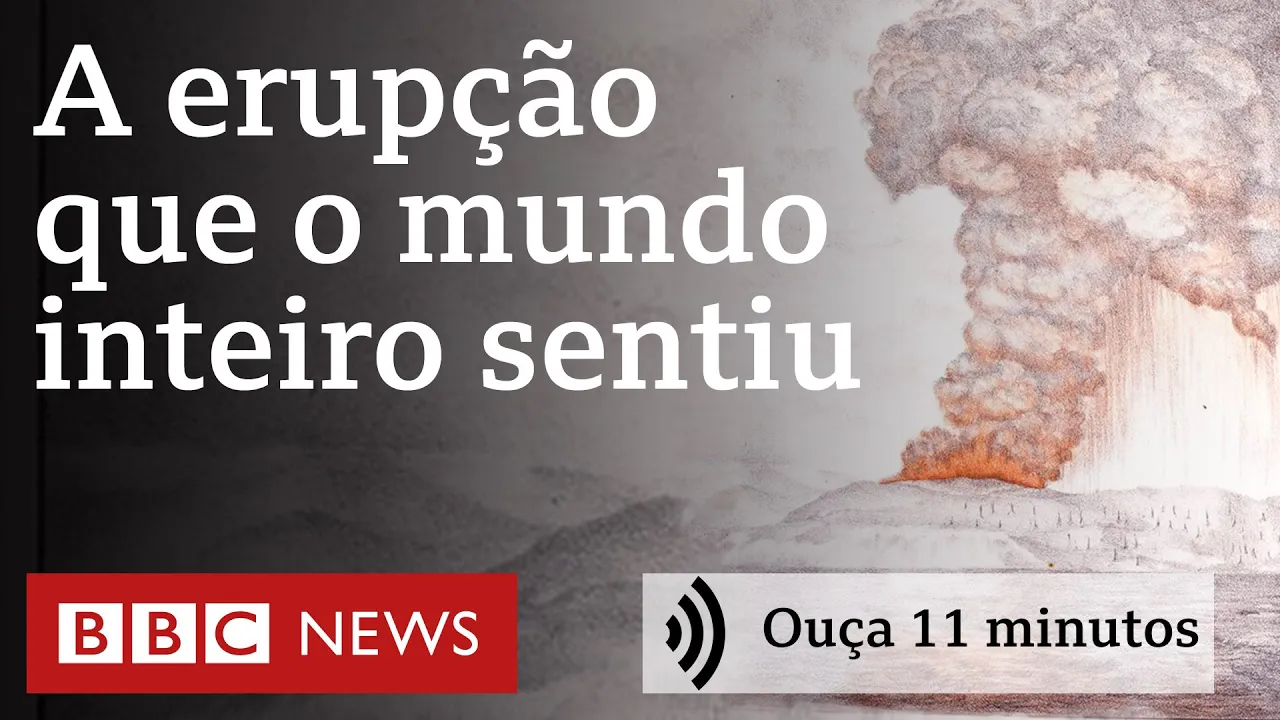
A erupção que o mundo inteiro sentiu
The Eruption of Krakatoa: A Historical Overview
Introduction to the Krakatoa Eruption
- The eruption of Krakatoa in 1883 was a monumental natural event that impacted nearly every inhabitant on Earth.
- Located between Sumatra and Java in Indonesia, the small island of Krakatoa was completely destroyed on August 27, 1883.
The Explosion and Its Impact
- The most violent eruption occurred on Monday, with a sound so loud it was heard 5,000 km away in Mauritius, likened to a cannon shot from a ship.
- This explosion is considered the loudest sound ever recorded in history; reports indicate sailors suffered ruptured eardrums even at great distances.
Eyewitness Accounts
- Sydney Baker's testimony from 1946 describes being aboard his father's ship during the eruption, noting overwhelming darkness and ash falling like rain.
- The ship encountered about 20 centimeters of ash accumulation while navigating through the Indian Ocean near Krakatoa.
Tsunamis and Destruction
- At precisely 10:02 AM local time, an explosion disintegrated the island, launching debris up to 100 km high and creating massive tsunamis that devastated coastal areas of Sumatra and Java.
- Villages were submerged by waves; Baker recalls sailing over what used to be Anger city as it vanished beneath water.
Casualties and Global Effects
- Approximately 40,000 people perished due to the tsunamis that spread across oceans reaching as far as East Africa and impacting places like France and Portland in America.
- The energy released by the eruption was estimated at around 200 megatons—over ten thousand times more powerful than Hiroshima's atomic bomb—creating pressure waves that circled the globe three times.
Atmospheric Changes
- The eruption altered atmospheric conditions globally; sunsets became extraordinarily vivid due to dust particles suspended in the stratosphere affecting light quality for years afterward.
- Artists like William Ascroft captured these stunning sunsets influenced by volcanic dust through numerous watercolor paintings during winter 1883.
Communication Advancements
- The Krakatoa event marked a significant shift towards global communication; news reached London just four minutes after being sent from Java via telegraph technology advancements made since Lincoln's assassination two decades earlier.
Understanding Global Interconnectivity Through Atmospheric Research
The Discovery of Air Currents and Global Forces
- Research led to the discovery of air currents in the atmosphere, revealing that the world operates under global forces.
- This understanding marked a pivotal moment in recognizing Earth as an interconnected entity, which is now commonly accepted concepts like global warming and rising sea levels.
The Impact of the Krakatoa Eruption
- The perception of a connected world was significantly influenced by the eruption of Krakatoa on August 27, 1883.
- The effects of this explosion were long-lasting, including a drop in average global temperatures in the following year.