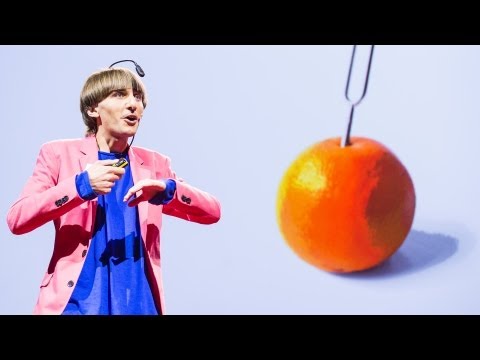
Neil Harbisson: I listen to color
Understanding Color Through Sound
Introduction to Achromatopsia
- The speaker introduces their condition, achromatopsia, which results in total color blindness, describing their world as grayscale.
- They explain that since the age of 21, they have been able to "hear" colors instead of seeing them.
Development of the Electronic Eye
- Collaboration with computer scientist Adam Montandon led to the creation of an electronic eye that detects color frequencies and transmits them as sound through bone conduction.
- The speaker shares examples of sounds corresponding to different colors, illustrating how they have learned to associate specific notes with colors.
Transformation of Perception
- Over time, the perception evolved from memorizing notes to feeling and dreaming in color, indicating a deep integration between the software and their brain.
- The speaker describes feeling like a cyborg as the device became an extension of their senses and even part of their identity.
Impact on Daily Life
- Experiencing art galleries is transformed into auditory experiences where paintings can be "listened" to like music.
- Shopping in supermarkets becomes akin to being in a nightclub due to the variety of melodies associated with different products.
Changes in Personal Expression
- The way they dress has shifted from aesthetics based on appearance to choices based on how clothing sounds; for example, dressing in C major for happiness.
- Food presentation now allows them to compose music visually; meals can represent songs or musical themes.
Unique Artistic Expressions
- The speaker creates sound portraits by translating people's appearances into musical notes rather than visual drawings.
- They humorously note that if a concert doesn't sound good, it's not their fault but rather the audience's faces contributing negatively.
Expanding Color Perception
- Normal sounds began transforming into colors; for instance, telephone tones felt green while listening experiences were colored by classical music.
Exploring the Limits of Human Perception
Enhancing Sensory Perception
- The speaker discusses a color-to-sound scale that allows them to hear colors beyond human visual perception, such as infrared and ultraviolet. This capability aids in detecting movement and assessing sunbathing conditions.
- The concept of ultraviolet light is highlighted as potentially harmful, emphasizing the importance of perceiving elements that are typically undetectable by humans.
- The speaker advocates for extending human senses through technology, suggesting that enhancing our sensory experiences can lead to greater knowledge and excitement in life.
Vision for the Future
- The creation of the Cyborg Foundation is introduced, aimed at helping individuals become cyborgs by integrating technology with their bodies to enhance sensory perception.
Turn any video into a summary like this
YouTube links, meetings, lectures. With transcripts, search, and chat.