Madera Laminada (I parte)
Madera Laminada Encolada: Historia y Proceso
The video discusses the history and process of glued laminated timber, highlighting its stability, structural benefits, and manufacturing techniques.
Early History and Development
- Glued laminated timber originated in the 16th century when French architect Liberto de Loja adapted stone construction techniques to wood.
- This marked the transition from stone to wood construction without using glue.
- In 1906, German carpenter Carl Friedrich Otto Netzer introduced a method for producing glued laminated timber using casein instead of traditional fasteners like bolts and nails.
- This innovation revolutionized the concept of glued laminated timber.
Characteristics and Applications
- Glued laminated timber is popular due to its low weight compared to steel or concrete, making it competitive for covering large spans.
- Countries like Germany and Finland are among the highest consumers per capita.
- The material offers design flexibility with large pieces, minimal defects, variable cross-sections, curved profiles, and decorative value.
- It is widely used in an innovative industry with strict quality control measures.
Manufacturing Process
- Engineers determine beam sections and design structures using sophisticated computer tools before fabrication begins.
- Detailed calculations are essential for all components including hardware like bolts and screws.
- Metal elements undergo production calculations at the workshop before being assembled into final products.
- Steel parts receive protective treatments such as autoclave coating when exposed outdoors.
Wood Processing and Assembly
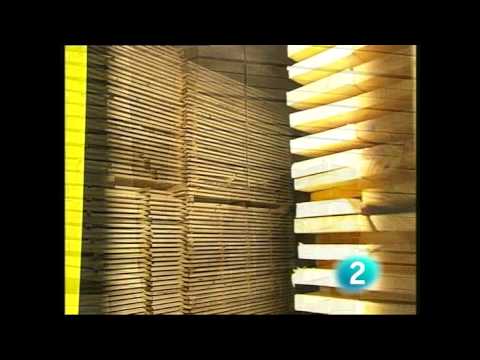
- The journey from raw wood to finished product starts with storing sawn wood in a warehouse followed by drying to achieve optimal moisture content.
- Moisture levels are crucial for preventing structural variations within laminated pieces.
- Sawn wood undergoes meticulous inspection for defects before machining into long pieces required for glued laminated timber production.
- Large components necessitate specialized machinery for precise cutting and shaping processes.
Gluing Process and Quality Control
- After machining, pieces are coated with adhesive before assembly under pressure parallel to the grain direction.
- Proper gluing ensures structural integrity with specific pressure requirements based on wood species used.
- Timely bonding following machining allows for subsequent processing while adhesive curing times dictate production efficiency during profiling stages.
Provocar una Adherencia Deficiente
The process of creating adherence in woodworking involves mechanical and pneumatic or hydraulic pressure application, especially when dealing with curved pieces. The assembly is done on a metal frame, with specific techniques for different types of curves.
Creating Adherence Process
- Woodworking adherence begins by assembling lines on a metal frame.
- Mechanical and pneumatic or hydraulic pressure is applied during the process.
- For curved pieces, the assembly frame is horizontal, allowing movement on rails or anchoring to the ground.
Presión Durante el Proceso de Fraguado
Pressure mechanisms play a crucial role in woodworking processes. After applying pressure using pneumatic or hydraulic methods, maintaining pressure through pins or threaded rods is essential until the pressing phase completes.
Pressure Mechanisms
- Pneumatic or hydraulic pressure mechanisms are used in woodworking.
- Once pressing is done, maintaining pressure with pins or threaded rods is necessary.
Control de Temperatura Durante el Proceso
Temperature control is vital during woodworking processes to ensure proper curing and bonding. Monitoring and adjusting temperature as wood settles are key aspects. Ideal workshop conditions include specific temperature and humidity levels for optimal results.
Temperature Control Importance
- Monitoring temperature ensures correct process completion.
- Workshop conditions should maintain around 20 degrees Celsius temperature and less than 30% relative air humidity.
Finalización del Proceso y Acondicionamiento de Piezas
Post-process conditioning involves returning pieces to eliminate excess glue before proceeding with hardware installation. Optimal resistance of lines can be achieved by conditioning pieces at temperatures similar to the workshop environment.
Post-Process Conditioning
- Pieces undergo conditioning after completing the main process.