SISTEMA RENINA ANGIOTENSINA ALDOSTERONA || Morfofisiología
Explanation of the Renin-Angiotensin-Aldosterone System
In this section, the speaker explains the basic concepts of the renin-angiotensin-aldosterone system, starting with the role of the kidney in producing renin and its subsequent effects on blood pressure regulation.
Renin Production and Angiotensin Formation
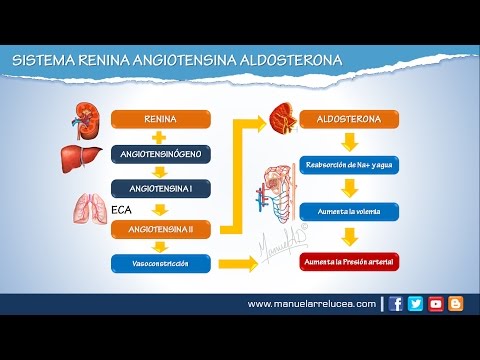
- Renin is produced by specialized cells in the kidney called juxtaglomerular cells. It acts on angiotensinogen to form angiotensin I.
Angiotensin Conversion and Effects
- Angiotensin I is converted to angiotensin II by an enzyme called ACE (Angiotensin-Converting Enzyme), primarily found in lung tissues.
Actions of Angiotensin II
- Angiotensin II causes vasoconstriction, leading to an increase in blood pressure.
Aldosterone Production and Water Reabsorption
- Angiotensin II stimulates the adrenal glands to produce aldosterone, which promotes sodium reabsorption along with water in the distal convoluted tubule and collecting duct.
Clinical Application: Medications for Hypertension
This part discusses how medications that target components of the renin-angiotensin-aldosterone system can be used to manage hypertension effectively.
Mechanism of Action of ACE Inhibitors
- Drugs like captopril and enalapril belong to a class known as ACE inhibitors. They prevent the conversion of angiotensin I to angiotensin II by inhibiting ACE.