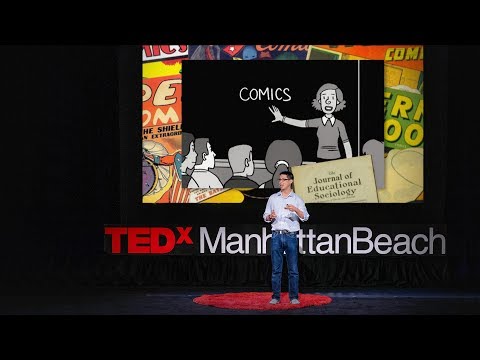
Comics belong in the classroom | Gene Luen Yang
The Impact of Comics on Education
Introduction to Comic Books
- The speaker recounts a pivotal moment in fifth grade when they purchased "DC Comics Presents #57," which sparked a lifelong passion for comics.
- Despite becoming an avid reader, the speaker felt that comic books were not appropriate for school, influenced by parental and teacher attitudes against them.
Transition to Teaching
- After becoming a published cartoonist and high school teacher at Bishop O'Dowd High School, the speaker taught various subjects including computer science for 17 years.
- Initially, the speaker attempted to impress students by sharing their identity as a cartoonist but faced ridicule instead due to the cultural perception of comics in the '90s.
Realization of Comics' Educational Potential
- Students used comic book discussions as distractions during challenging lessons, leading the speaker to separate teaching from cartooning.
- A turning point occurred when asked to substitute for an Algebra 2 class; realizing traditional video lectures failed, they sought alternative methods.
Innovative Use of Comics in Lectures
- To maintain consistency while substituting, the speaker created engaging video lectures with special effects but received negative feedback from students.
- In response, they began drawing lecture content as comics quickly and without extensive planning. These comic lectures became popular among students.
Understanding Student Engagement with Comics
- Surprisingly, students preferred learning through comics over videos or live instruction. This led to insights about how visual culture impacts learning preferences.
- The permanence of comics allows readers control over information flow—students could reread sections at their own pace compared to other formats like video or live lectures.
Research into Historical Resistance Against Comics in Education
- Motivated by this experience, the speaker focused their master's project on understanding why educators have historically resisted using comic books in classrooms.
The Impact of Comic Books on Juvenile Delinquency
Dr. Wertham's Argument and Its Consequences
- Dr. Wertham claimed that comic books were a cause of juvenile delinquency, despite his good intentions and background working with delinquents.
- His observations were flawed; in the 1940s and '50s, nearly every child in America read comic books, which skewed his conclusions.
- The Senate held hearings based on Wertham's claims for two months but concluded without definitive evidence, damaging the reputation of comic books significantly.
Resurgence of Comics in Education
- In recent years, comic books and graphic novels have gained acceptance in American classrooms again, including at Bishop O'Dowd High School.
- Educators like Mr. Smith use Scott McCloud's "Understanding Comics" to help students analyze the interplay between text and images effectively.
- Ms. Counts has developed a notable graphic novel collection at Bishop O'Dowd, highlighting librarians' advocacy for comics since the early '80s.
Educational Content in Comics
- There is a growing trend among American cartoonists to create educational content specifically for K-12 students across various subjects.
- STEM-focused comics represent an emerging area ripe for exploration, demonstrating that comics can be valuable educational tools beyond language arts.
Conclusion: A Shift in Perception
Turn any video into a summary like this
YouTube links, meetings, lectures. With transcripts, search, and chat.