How Amazon, Apple, Facebook and Google manipulate our emotions | Scott Galloway
Understanding Our Instincts and Modern Society
The Need for a Superbeing
- The speaker introduces the concept that humans have a fundamental need for a "superbeing" to provide answers to life's difficult questions, as our brains lack the processing power to do so.
- Prayer is described as sending queries into the universe, hoping for divine intervention from an all-knowing entity.
Trust in Technology Over Traditional Authority
- The speaker highlights how modern parents often turn to Google for urgent questions about their children’s health, indicating a shift in trust from traditional authorities (like priests or teachers) to technology.
- A striking statistic reveals that one in six queries posed to Google has never been asked before, emphasizing its role as a contemporary source of knowledge.
Love and Longevity
- Discussing human relationships, the speaker notes that affection can outweigh nutrition in determining children's outcomes.
- Three signals indicate potential longevity: genetics (less important than believed), lifestyle choices (avoid smoking and obesity), and most importantly, the number of people one loves.
Consumption Patterns and Business Strategies
- The instinctual drive for consumption is explored; humans are hardwired to seek more due to survival instincts against starvation.
- Companies like Amazon thrive on this instinct by offering "more for less," appealing directly to our innate desires.
Reproductive Instinct and Market Value
- The discussion shifts towards reproductive instincts, suggesting businesses should target these irrational organs for profit maximization.
- Historical trends show that appealing emotionally rather than technologically has driven significant shareholder value creation.
Disruption of Identity by Major Corporations
- Major companies such as Apple, Amazon, Facebook, and Google have redefined aspects of human identity—love, consumption, sex—by commodifying them.
- These corporations now hold market capitalizations comparable to entire nations' GDPs, reflecting their immense influence on society.
Growing Concerns About Corporate Ethics
The Impact of Corporate Behavior on Society
The Burden of Taxation and Market Capitalization
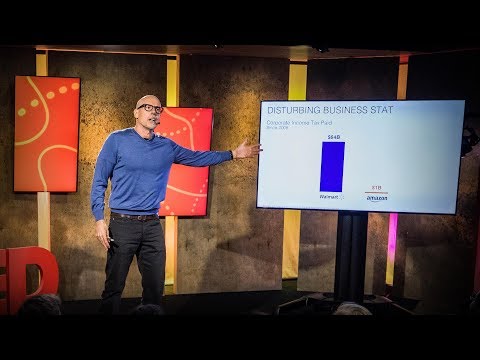
- The disparity in tax contributions from successful companies like Amazon leads to increased financial burdens on less successful businesses.
- Regulatory failures are highlighted, with a focus on how elected officials lack the resolve to challenge major corporations effectively.
Anticompetitive Practices and Consequences
- Facebook's deceptive practices during its acquisition of WhatsApp exemplify anticompetitive behavior, resulting in minimal fines that do not deter misconduct.
- Companies are incentivized to engage in dishonest practices due to lenient penalties, leading to significant job losses across various sectors.
Job Displacement Due to Corporate Growth
- Amazon's growth is projected to displace approximately 53,000 retail jobs as it becomes more efficient than traditional retailers.
- The media industry faces similar threats, with potential job losses for around 150,000 creative professionals attributed to the dominance of Facebook and Google.
Media Responsibility and Misrepresentation
- Facebook's claim of being a technology company rather than a media company raises questions about accountability for content dissemination.
- A comparison is drawn between corporate misrepresentation and consumer expectations; if McDonald's served fake beef, they would be held accountable unlike tech giants.
Cultural Idolatry and Innovation Worship
- There is criticism of society’s idolization of innovation over character or ethical behavior among corporate leaders.
- The discussion touches upon the perceived weakness of progressives in confronting powerful corporations compared to past regulatory actions against less favorable companies.
Consumer Behavior and Market Manipulation
- Apple products are likened to religious artifacts, illustrating society's obsession with technology at the expense of personal values.
- Amazon’s market influence allows it to manipulate stock prices across industries simply by entering new markets or making acquisitions.
Predictions Based on Market Trends
- An anecdote about predicting Amazon's acquisition of Whole Foods showcases insights into market behaviors prior to major business moves.
Understanding the Disappointment in Technology
The Shift from Humanity to Shareholder Value
- Scott Galloway humorously discusses a mix-up with purchasing Whole Foods, highlighting the absurdity of technology's role in everyday life.
- He reflects on societal disappointment with technology, attributing it to a shift where 1% focuses on shareholder value and 99% on humanity's betterment.
- Galloway emphasizes historical technological achievements, like the Manhattan Project and moon landing, showcasing how collective human effort once prioritized global welfare over profit.
Current Technological Missions
- He critiques modern tech companies for lacking noble missions, stating their primary goal is often just selling products rather than enhancing human connection or knowledge.
- Galloway asserts that despite having immense talent and resources, these companies are primarily focused on maximizing profits.
Accountability and Regulation
- In response to Chris Anderson's questions about empathy towards tech leaders, Galloway argues that while they may not be bad people, they operate within a flawed system prioritizing shareholder value.
- He stresses the need for society to hold these companies accountable through regulation since they prioritize profit over public welfare.
Unintended Consequences of Technology
- Anderson presents an alternative view suggesting that many tech leaders have good intentions but face unintended consequences from their innovations.
- Galloway counters this by asserting that while individuals may have good intentions, the overwhelming market power leads to corrupt practices.
The Role of Government and Consumers
- He highlights the importance of government intervention as a check against corporate power and urges consumers to demand accountability from tech giants.
Turn any video into a summary like this
YouTube links, meetings, lectures. With transcripts, search, and chat.