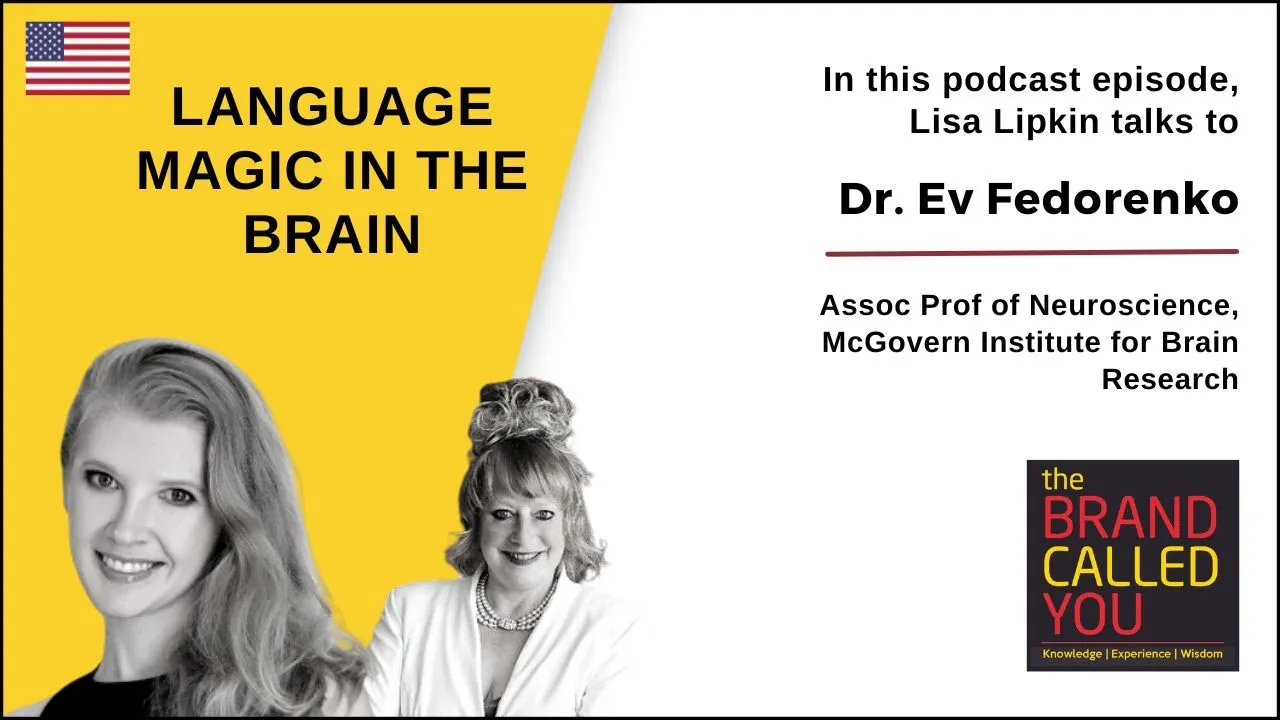
Decoding the Brain's Language Symphony | Dr Ev Fedorenko | TBCY
Introduction to Language and Communication
The Speaker's Background
- The speaker introduces themselves as a talkative individual, sharing anecdotes from their past about being told to be quiet by classmates and teachers.
- They mention a humorous remark from their Hungarian grandmother about the finite number of words one can use in a lifetime, highlighting their love for language.
Guest Introduction: Ev Fedorenko
- Ev Fedorenko is introduced as a cognitive neuroscientist specializing in language studies, serving as an associate professor at MIT's McGovern Institute for Brain Research.
- The speaker expresses excitement about discussing language with Fedorenko, despite admitting they are not a scientist but have familial ties to science.
Understanding Language Models
What is a Language Model?
- Fedorenko explains that language models are advanced statistical learners capable of processing vast amounts of linguistic data.
- Different types of models exist for various inputs; visual models process images while language models analyze text data.
Training Language Models
- Language models are trained on extensive corpora (billions or trillions of words), learning to predict subsequent words based on context.
- This predictive capability mirrors human brain functions, which also strive to anticipate future events for preparedness.
Evolution and Impact of AI in Language Processing
Historical Context
- Initially, the speaker notes that early language models were rudimentary and limited compared to modern advancements seen around 2017–2019.
Current Capabilities
- Modern AI models can generate coherent text, answer questions fluently, and even produce humor, showcasing significant progress in natural language processing.
Understanding Language and Thought
Chomsky's Perspective on Language and Thought
- The speaker references Noam Chomsky, who posited that language and thought are closely linked.
- The speaker challenges this view, acknowledging that many scientists have held similar beliefs, including early Wittgenstein.
Neuroscientific Methods to Explore Language
- Two primary methods exist in neuroscience to investigate the relationship between language and thought: functional imaging (like fMRI) and behavioral tasks.
- Functional imaging measures brain activity by detecting blood flow changes when neurons require more oxygen and sugar during cognitive tasks.
Distinction Between Language Processing and Other Cognitive Functions
- Research indicates distinct brain regions are activated solely for language production and comprehension, separate from those used for math or reasoning about others' thoughts.
- The findings suggest that while there may be some overlap in cognitive resources, the systems responsible for language are unique to linguistic tasks.
Evolution of Brain Structures Related to Language
- Human brains have evolved with expanded areas dedicated to high-level functions beyond basic perception and motor control, allowing for complex reasoning and communication.
- This evolution has led to a significant increase in non-perceptual brain functions, which support advanced cognitive abilities like knowledge acquisition and social understanding.
Future Implications of Language Evolution
- The discussion shifts towards how modern inputs (e.g., social media) might influence our use of language; however, predicting these changes is challenging due to inherent limits in human memory processing.
Understanding Language Processing and Emotion
Specialization in Society
- The concept of specialization and division of labor is discussed, highlighting how individuals excel in specific fields such as medicine, craftsmanship, or philosophy.
Brain Functionality and Information Processing
- A question arises about the potential expansion of brain regions responsible for processing information, suggesting that this could occur at the expense of other functions. Survival advantages are considered crucial for such changes.
Language Processing: Orality vs. Literacy
- The speaker emphasizes the differences between spoken and written language, questioning whether different brain regions are activated during reading versus speaking.
- It is noted that the language system engages similarly when listening to sentences, reading them, writing, or speaking them; it stores linguistic knowledge representations.
Memory and Meaning Storage
- The discussion includes how learning a new language involves understanding sounds, meanings, and grammatical rules. This system links sounds or visual inputs to abstract meanings stored elsewhere.
- It is highlighted that significant meaning can be conveyed without language itself; thus, an abstract code must exist beyond mere words.
Aphasia and Understanding
- Individuals with aphasia may lose parts of their language system but often retain their ability to understand concepts and reason about events in the world despite losing verbal expression capabilities.
Emotional Links to Language Recall
- The speaker discusses how attaching deep emotions to stories aids memory recall. This raises questions about activating certain brain regions through emotional connections.
Long-term Memory Centers Involvement
- Emotional processing related to memory likely occurs within long-term memory centers like the hippocampus and amygdala. Bilingualism is mentioned as a factor influencing emotional responses tied to language use.
Native Language's Impact on Emotion
- Research indicates that native languages evoke stronger emotional responses compared to foreign languages; therapy effectiveness may also vary based on the language used due to emotional detachment levels.
Stress Effects on Language Processing
Language and Thought: A Reflection of the Mind
The Connection Between Language and Thought
- Language serves as a mirror reflecting our inner thoughts, leading to the belief that proficiency in language correlates with intelligence.
- Psychotherapy utilizes language to help individuals process difficult experiences, highlighting the therapeutic role of communication.
Polyglots and Language Acquisition
- Some individuals can learn multiple languages effortlessly; research is ongoing to understand why this occurs.
- Efficient language processing in polyglots may stem from their unique brain structures or extensive practice rather than innate ability.
- There is insufficient evidence to definitively claim genetic predispositions for polyglot abilities; larger studies are needed for meaningful conclusions.
Diversity Among Polyglots
- Polyglots exhibit diverse learning styles; some thrive on social interaction while others prefer solitary study methods.
- Individual experiences vary greatly; some find language acquisition easy, while others attribute success to dedicated practice.
Brain Regions Involved in Language Processing
- Sign languages engage similar brain regions as spoken languages, but gestures do not activate these areas in the same way.
- Different mediums (e.g., pictures, gestures) can convey meanings that words sometimes cannot capture, emphasizing the multifaceted nature of expression.
Cultural Perceptions of Language Beauty
Exploring Language and Environment
The Influence of Climate on Language
- Recent studies suggest that environmental factors, such as climate, can shape language characteristics. For instance, in arid climates, languages may avoid certain consonant sounds due to the effort required to produce them.
- Initial skepticism surrounded the idea that language features could be influenced by environmental conditions; however, accumulating evidence supports these relationships.
Shifting Perspectives in Linguistic Research
- Historically, linguistic research has been Anglo-centric, focusing primarily on a limited number of languages like English and Germanic languages. This narrow focus has restricted broader scientific understanding.
- English is not representative of the world's 7,000 spoken and signed languages; it gained prominence due to historical colonization rather than its linguistic typicality.
Expanding Linguistic Studies Beyond English
- There is a growing recognition of the need to generalize findings across diverse languages with different phonetic inventories and vocabularies.
- The potential impact of global warming on language processing raises intriguing questions about future linguistic evolution.
Personality Traits and Language Processing
- A personal observation highlights that individuals from a family of scientists tend to provide brief responses. This raises questions about whether personality traits influence language processing differently among people.
- The speaker expresses interest in exploring how introverts and extroverts experience language differently based on their social interactions and exposure.
Developmental Aspects of Language Acquisition
- Studying language development over a lifetime reveals how increased exposure shapes linguistic capabilities. Unlike other cognitive functions that decline with age, language acquisition continues throughout life.
- Despite extensive research into aging and language retention, there remains little systematic investigation into how personality traits affect linguistic experiences.
The Power of Descriptive Language
- Storytelling techniques demonstrate how vivid descriptions can evoke sensory responses in an audience. For example, describing eating a lemon can trigger salivation through motor neuron activation.
Understanding the Interplay of Language and Brain Systems
The Connection Between Language and Other Brain Systems
- Language interacts with various brain systems, including emotion centers, olfactory, visual, and auditory systems. This interconnectedness allows for comprehensive environmental interaction.
- The flexibility of language enables communication about diverse topics, suggesting a partnership between language and other cognitive functions.
Future Directions in Research
- There is an ongoing curiosity about advancements in machine learning and AI within the context of understanding brain functions. Despite progress, many aspects remain unexplored.
- A significant challenge lies in studying how different brain systems share information; current tools are inadequate for this level of investigation.
Technological Advancements in Neuroscience
- High-density neural recordings are necessary to study representation transfer between brain areas. Current technology does not yet support this even in animal studies.
- Computational models can simulate parts of the human brain by integrating language modules with reasoning capabilities to explore their interactions during problem-solving tasks.
Intracranial Recordings: A New Frontier
- Researchers are conducting intracranial recordings from patients undergoing surgeries for tumors or neurological conditions. These recordings provide high-quality data on language processing.
- Intracranial data offers precise temporal and spatial resolution compared to non-invasive methods like fMRI, allowing researchers to track real-time brain activity during language tasks.
Patient Studies During Surgical Procedures
- During surgical procedures, electrodes can be placed in the brain while patients are awake. This setup allows researchers to gather valuable data as patients engage with language stimuli.
- In cases where epilepsy surgery is performed, researchers can analyze patient responses while monitoring seizure origins through implanted electrodes.
Conclusion: Excitement for Future Discoveries