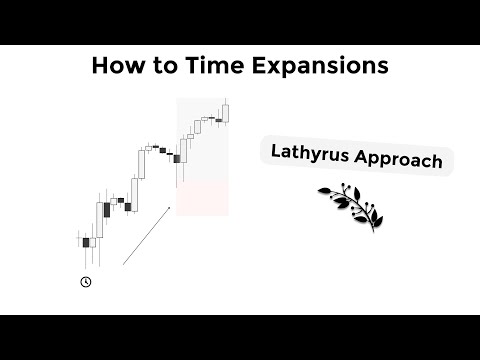
How to Time Expansions | Part 1; Reversals
Masterclass on Timing Expansions and Reversals
Introduction to the Masterclass
- The speaker welcomes viewers back to the channel, indicating a focus on timing expansions and reversals in trading.
- Acknowledges audience patience and support while introducing the two-part masterclass format.
Key Concepts Overview
- The lecture will cover swing formations, market maker models, and liquidity distribution.
- Emphasizes three main ways price behaves: expansion into retracement, internal retracement, and external reversal signatures.
Understanding Market Dynamics
- Discusses how price interacts with gaps and inefficiencies in previous swing highs/lows.
- Clarifies what constitutes a reversal versus consolidation; highlights importance for trading strategies.
Mechanics of Reversal Signatures
- Introduces key mechanical aspects of reversal sizes based on candle depth from opening prices.
- Explains how to filter candles by size to determine potential reversals leading into expansions.
Practical Examples of Trading Strategies
- Provides an example of using lower time frames (4-hour or 30-minute charts) for identifying universal model variants.
- Highlights the significance of candle size in determining successful trades during reversal phases.
This structured approach captures essential insights from the transcript while providing clear timestamps for easy reference.
Understanding C3 Reversal Mechanics
Key Concepts of Candle Analysis
- The discussion begins with the importance of wick size in candle analysis, leading into the final form of C3 reversal.
- Candle 2's opening price is highlighted as a critical reference point, emphasizing that it must close within the range of candle 4 for a valid reversal to occur.
- There is uncertainty about whether closing above candle 4's opening price will indicate continuation; further framework is needed to confirm this within the context of C3 reversal.
Engaging with Candle Patterns
- Emphasis on engaging with candle 3 while trusting previous lows before candles close, indicating a focus on swing points.
- A question arises regarding market maker models and their influence on swing point closures and reversals, stressing the need for confidence in signatures before candle closure.
Divergence and Correlation Insights
- The next chapter discusses reversals prior to candle closures, linking them to swing formations and highlighting the significance of highs and lows in these patterns.
- The relationship between various assets (e.g., indices like S&P, GC, GU) is explored, introducing concepts such as simple SMT divergence among correlated assets.
Cracks in Correlation
- Introduction to "Kraken correlation," which involves analyzing consecutive candles' highs and gaps; this concept will be elaborated upon in future lectures.
- A specific example illustrates how one asset can close bearish while another closes bullish at extremes, showcasing cracks in correlation.
Validating Precision Swing Points
- Discussion on validating precision swings through PSP SMT fills; observing strength switches helps identify manipulation by assets making higher highs or lower ranges.
- An explanation follows about how an asset sweeping a high can lead to displacement lower while maintaining validity through order strength switches.
Understanding Reversal Logic
- The session concludes with insights into faster reversals forming from internal to external range liquidity dynamics.
- Observations are made about bullish cases where an asset closes down after sweeping out a high, indicating potential shifts in market sentiment.
This structured summary captures key discussions around C3 reversals and related concepts from the transcript. Each bullet point links back to its respective timestamp for easy reference.
Understanding Market Dynamics and Reversals
Candle Patterns and Market Manipulation
- The discussion begins with the concept of a candle sweeping out highs, indicating market manipulation that can lead to new swing formations.
- Emphasis is placed on not overanalyzing SMT (Smart Money Technique) divergence, which can signal cracks in market structure during swing formations.
Sequence Types and Asset Synchronization
- Introduction of two types of sequences: simple reversals leading to SMT and correlation, alongside asset synchronization that creates opposing swing highs and lows.
- Understanding reversals as sequences or trades into key levels like fair value gaps is crucial for identifying potential market movements.
Trading Strategies and Examples
- A universal model is defined where a PSP (Price Swing Point) confirms an SMT at the low of a candle, guiding trading decisions based on specific candle closures.
- Discussion on continuation trades formed from order blocks, highlighting the importance of analyzing different time frames for effective trading strategies.
Fractal Analysis in Trading
- The analysis includes fractal patterns where confirmation of strength leads to potential higher expansions within price ranges.
- Internal range closing as a PSP validates SMT; traders are encouraged to wait for confirmations before executing trades.
Risk Management and Trade Logic
- Key takeaways include filtering candle characteristics by correlation to determine valid trade setups while managing stop-loss placements effectively.
- The hierarchy in trading logic emphasizes understanding cracks in correlation and ensuring precision when closing swings or entering continuations.
Advanced Concepts: Asset Synchronization
- Introduction to asynchronous delivery methods related to SMT breaks, focusing on how assets behave together during market movements.
- Explanation of how assets manipulate each other within key levels, showcasing examples from real-time market scenarios.
Understanding Asset Manipulation and Strength Switching
Key Concepts of Asset Behavior
- The discussion begins with the importance of leading assets at a distributed level, highlighting how other assets manipulate key levels.
- Observations are made about asset behavior during specific time frames, particularly noting that 6 a.m. closes often indicate continuation patterns for certain assets.
- The concept of strength switching is introduced, where assets may retrace near opening prices while others break through significant market structures (SMT).
- A typical trigger for bullish movements is identified as the formation of a two-stage SMT, which occurs frequently when assets expand or contract around key price levels.
- The speaker emphasizes the significance of lower time frames in identifying consolidation and retracement patterns that lead to strength switches among different assets.
Mechanisms Behind Price Movements
- An explanation is provided on how leading and lagging assets interact during price manipulation phases, particularly focusing on two-stage cracks forming within candle structures.
- The necessity for initiation in trading strategies is discussed, emphasizing the role of high or low failures in creating new price phases.
- A detailed analysis reveals how deep discount premiums can signal potential reversals when combined with strength switching dynamics among multiple assets.
- Examples illustrate how proximity to key levels influences asset synchronization and expansion behaviors within market cycles.
- A schematic representation shows the process of manipulating above key levels followed by strength switches that lead to SMT formations.
Practical Applications and Takeaways
- Key takeaways include recognizing candle formations that reverse at critical points and understanding decoupled triad expansions in asset behavior around 6 a.m. and 10 a.m. market openings.
- Insights into asset interactions reveal that sometimes one asset manipulates another's highs or lows, affecting overall market dynamics through strength switches and SMT breaks.
- The discussion highlights scenarios where leading assets fail to establish new price phases, indicating potential reversal opportunities based on previous patterns observed in the market structure.
- Case studies are presented showing instances where large switches lead to reversals or form SMT structures indicative of broader market trends.
- Emphasis is placed on practical chart examples demonstrating these concepts in action, providing viewers with actionable insights for their trading strategies.
Chart Analysis Examples
- Specific trade recaps are shared illustrating two-stage formations within NASDAQ and ES markets, showcasing real-time application of discussed theories.
- Further analysis includes confirmation signals from PSP alongside daily low formations to validate trading decisions based on prior discussions about SMT structures.
- Continuity across various time frames is emphasized as crucial for successful trades; examples highlight effective entry points aligned with established patterns.
Market Analysis and Trading Strategies
Overview of Market Movements
- Discussion on a 4-hour market maker sell at daily high, indicating a true reversal and distribution gap that suggests a retracement.
- Identification of an SMT (Smart Money Technique) reversal at 6 a.m., confirming fractal patterns and leading to new internal swings in the ES (E-mini S&P 500).
- Explanation of two-stage models in trading, highlighting the formation of internal swings and their significance for future price movements.
Reversal Patterns and Trading Signals
- Mention of type one reversals with examples; potential for backtesting these strategies is suggested.
- Observation of out-of-sync markets between Dow, S&P, and NASDAQ; emphasis on bearish down close candles forming amidst lower time frame expansions.
Key Timeframes and Price Action
- Noting significant lows in NASDAQ at 10:00 a.m. that align with previous lows observed in other assets.
- Description of YM (Dow futures) expanding higher while forming two-stage divergence signals; importance of candle formations discussed.
Strength Switching Dynamics
- Analysis of strength switching between YM and ES during consolidation phases; highlights the relevance of timing around key market hours like 6 a.m. and 10 a.m.
- Examination of how external highs are manipulated as markets open, particularly focusing on NASDAQ's performance against others.
Trading Strategies Based on Market Behavior
- Emphasis on waiting for confirmations before entering trades based on PSP (Price Swing Point); discusses trading C3 setups without needing protected lows.
- Insight into candle formations indicating accumulation phases; strategies for engaging with market dynamics during consolidations are outlined.
Manipulation Phases in Trading
- Discussion about manipulation phases where traders can capitalize on price movements following failed attempts to manipulate highs or lows.
- Importance of recognizing all-time high levels alongside relevant low closures to inform trading decisions.
Final Thoughts on Market Synchronization
- Recap on how NASDAQ forms its high while confirming SMT signals; emphasizes understanding fair value gaps within market structures.
- Insights into how markets may resync or reverse based on prior price actions, stressing the need for strategic entries around critical times like 9:30 a.m.
This structured summary encapsulates key insights from the transcript while providing timestamps for easy reference.
Understanding Market Dynamics and SMT Breaks
Analyzing Lower Time Frames
- The discussion begins with the importance of analyzing lower time frames in trading, emphasizing how traders can manipulate charts to identify potential market reversals.
- A specific asset is examined, highlighting its movement within a premium discount zone. The speaker questions why it isn't breaking lower, attributing this to confirmations from the SMT (Smart Money Technique).
- The concept of external highs and lows is introduced, explaining that certain assets fail to break these levels while confirming bullish trends through SMT breaks.
- The speaker notes a bearish candle formation after an SMT break, indicating a shift in market sentiment and potential reversal points.
- Acknowledgment of audience anticipation for the lecture leads into discussions about strength switches and their implications on price movements.
Key Concepts in Trading Strategies
- Emphasis on recognizing bullish reversal candles as critical indicators for traders when assessing market conditions.
- Discussion on bearish closures serves as a warning sign for potential downward movements despite previous bullish signals.
- Introduction of consolidation phases as significant moments where traders should reassess their strategies based on market behavior around key levels.
- Highlighting the importance of understanding price action following an SMT break to anticipate future movements effectively.
- Reinforcement of the need for synchronization between different assets to validate trading decisions based on observed patterns.