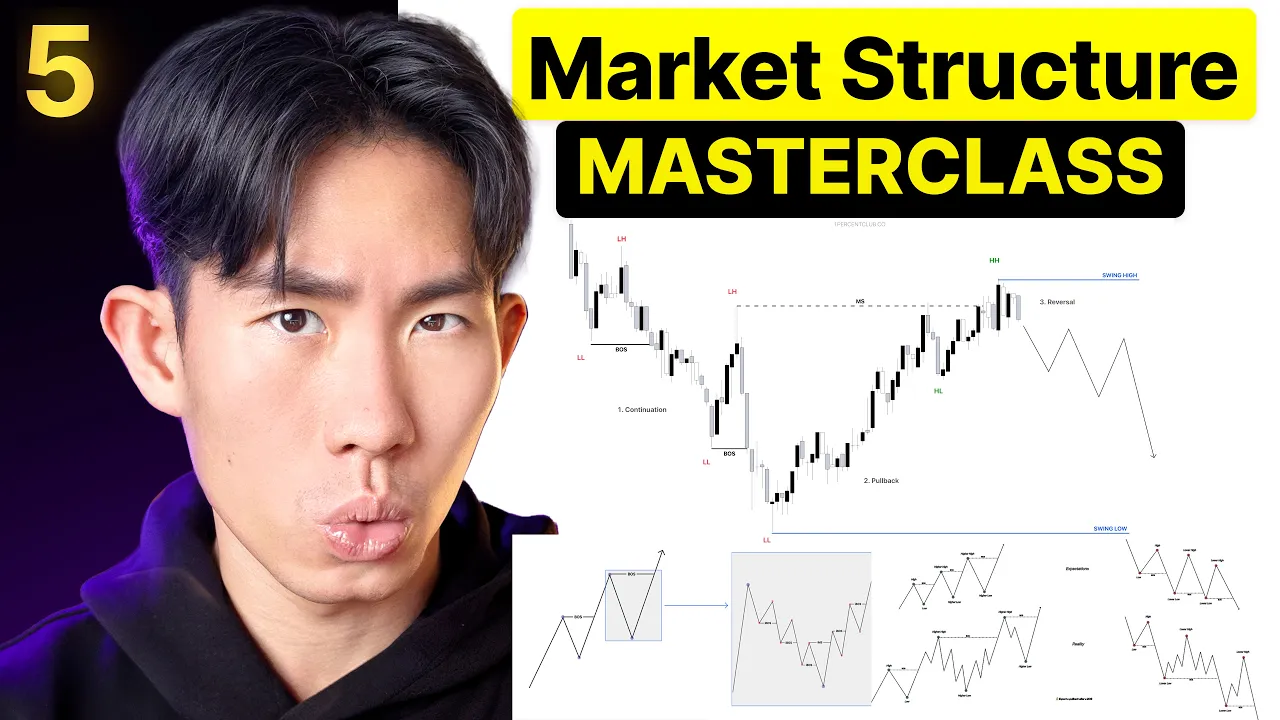
Market Mechanics Ep 2: How Price Really Moves
Understanding Market Movements
The Illusion of Randomness
- Most traders perceive market movements as random, driven by news and emotions, but they actually follow repeatable patterns.
- Recognizing these patterns allows traders to read price action with clarity and confidence.
Introduction to the Mentorship Series
- Welcome to the first episode of the Market Mechanics Mentorship Series, aimed at teaching how markets move and how to trade like a professional.
- Emphasis on watching lessons in sequence without distractions for maximum understanding.
House Rules for Learning
- Focus is crucial; avoid distractions such as social media or food during lessons.
- Application of learned concepts is essential; mere information will not lead to profitability.
The Logic Behind Price Movement
Importance of Understanding Price Action
- Before diving into trading strategies, it's vital to grasp how markets actually move.
- Many retail traders focus on memorizing patterns rather than understanding the underlying mechanics of price movement.
Imbalance Between Buyers and Sellers
- Price movements are driven by imbalances between buyers and sellers; when one side dominates, prices expand.
- Markets oscillate between imbalance (expansion phase) and balance (consolidation phase).
Fair Value Concept
Seeking Fair Value
- Markets constantly seek fair value through cycles of imbalance and balance.
- An efficient market has equal buyers and sellers until demand or supply shifts create an imbalance.
Dynamics of Imbalance
- When demand exceeds supply, prices rise; conversely, when supply exceeds demand, prices fall.
- This tug-of-war leads to periods where price cannot maintain its direction indefinitely.
Capturing Imbalance Moves
Retail Trader's Goal
- Traders should aim to capitalize on moves caused by imbalances before they happen for maximum profit potential.
Four Stages of Price Movement
- Prices exist in four stages: expansion (strong directional move), pullback (retracement), consolidation (indecisiveness), and either reversal or continuation.
Applying Concepts on Charts
Identifying Phases on Charts
- Observing charts helps identify phases of imbalance versus balance effectively within seconds if understood correctly.
Market Structure Basics
Three Directions of Market Movement
- Markets can only move up, down, or sideways—no other patterns exist.
Uptrend Characteristics:
- In an uptrend, higher highs and higher lows indicate strength from buyers.
Downtrend Characteristics:
- In a downtrend, lower highs and lower lows suggest weakness from sellers.
Consolidation Phase:
- Consolidation represents indecisiveness in the market where neither buyers nor sellers dominate.
The Role of Liquidity in Trading
Understanding Liquidity's Impact
- Liquidity acts as fuel for market movements; it’s necessary for aggressive price changes.
Spotting Liquidity Zones:
- Key liquidity areas include above swing highs or below swing lows which can trigger significant moves.
Common Mistakes Among Beginners
Emotional Trading Pitfalls
- Beginners often chase after price during expansions due to fear of missing out leading to poor entry points.
- Panic selling during pullbacks occurs when traders fail to trust their analysis leading them out prematurely before profits materialize.
- Entering too early during reversals without confirmation results in losses due to misunderstanding market structure dynamics.
Understanding Market Movements in Trading
Misconceptions About Trading Losses
- Many traders believe they lose due to emotions, but the real issue is often a misunderstanding of market movements and viewing the market through a limited perspective.
Changing Perspectives for Better Results
- To achieve different results, traders must change their perception of the markets; this involves adopting a new lens or framework for analysis.
Analyzing Price Movements
- When analyzing charts, traders should ask if the price is expanding, pulling back, or consolidating. This helps in understanding current market conditions.
- In an uptrend scenario, identifying higher highs and higher lows can indicate potential future movements and retracement phases.
Identifying Imbalance and Control
- Recognizing when price transitions from imbalance to balance is crucial; currently, it indicates that price has broken out of consolidation during an uptrend.
- Traders need to assess who controls the market at any given time—buyers or sellers—by observing recent price actions and supply-demand dynamics.
Key Questions for Chart Analysis
- Five essential questions should guide traders when analyzing charts: Is the market continuing or preparing to shift? Who is in control? What are the obvious highs and lows?
Rewiring Your Trading Mindset
- The goal over 30 days is to reprogram your mindset away from retail trading habits towards professional trading strategies for consistent profits.
Understanding Market Logic
- Acknowledging that market movements are not random but follow logic and structure allows traders to read charts with clarity rather than reacting blindly.
Next Steps in Learning Forex Trading
- Future lessons will cover foundational aspects of Forex trading including currency pairs movement, optimal trading times, and necessary knowledge before placing trades.
Turn any video into a summary like this
YouTube links, meetings, lectures. With transcripts, search, and chat.