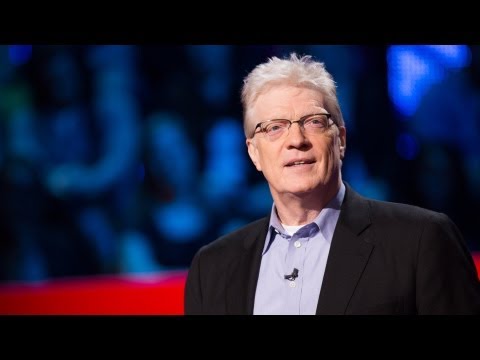
How to escape education's death valley | Sir Ken Robinson | TED
Understanding American Education and Irony
Introduction to the Speaker's Background
- The speaker, who moved to America 12 years ago with his family, humorously notes that they initially thought Los Angeles was representative of America.
- He mentions a common belief that Americans do not understand irony, which he disputes based on his experiences traveling across the country.
Debunking Cultural Myths
- The speaker argues against the stereotype that Americans lack an understanding of irony, comparing it to other cultural myths like British reserve.
- He highlights the ironic nature of the "No Child Left Behind" legislation, which paradoxically leaves many children behind despite its title.
The Dropout Crisis in Education
- The speaker discusses alarming dropout rates in various demographics, including Native American communities where up to 80% drop out.
- He emphasizes the economic implications of this crisis, suggesting that reducing dropout rates could significantly benefit the U.S. economy.
Misconceptions About Educational Spending
- Despite high spending on education in America compared to other countries, he asserts that money alone is not solving educational issues.
- The current educational culture promotes conformity rather than celebrating individual differences among students.
Diversity vs. Conformity in Education
- The speaker bets that parents with multiple children recognize their distinct personalities and abilities.
- He criticizes "No Child Left Behind" for narrowing educational focus primarily on STEM subjects at the expense of arts and humanities.
Importance of a Broad Curriculum
- Acknowledging ADHD diagnoses among children, he suggests these may stem from disengagement rather than actual psychological conditions.
- Children thrive best when exposed to a diverse curriculum that nurtures various talents beyond just academic skills.
Curiosity as a Driver for Learning
- Curiosity is identified as essential for learning; when sparked in children, it leads them to learn independently.
Role of Teachers in Education
- The speaker stresses that teachers are crucial for student success and should be seen as mentors rather than mere information deliverers.
Conclusion: Focus on Learning Over Teaching
The Role of Education in Fostering Learning
Understanding the Essence of Teaching
- The primary goal of education is to facilitate learning, not merely engage in teaching activities.
- A teacher may be present and performing tasks but if students are not learning, the teaching role is unfulfilled.
- Testing should serve as a diagnostic tool to support learning rather than dominate educational culture.
The Impact of Standardization on Creativity
- Current educational practices often prioritize compliance over creativity, stifling imagination among students and teachers.
- Human life is inherently creative; education should nurture this creativity instead of enforcing standardization.
Lessons from Finland's Educational System
- Finland excels in math, science, and reading due to its broad approach to education that includes various disciplines beyond standardized testing.
- There is minimal emphasis on standardized testing in Finland; it does not drive student motivation or engagement.
Individualized Learning and Teacher Support
- High-performing educational systems individualize teaching by engaging students' curiosity and creativity.
- Successful countries invest significantly in professional development for teachers, recognizing it as an essential investment rather than a cost.
Autonomy in Education Systems
- Effective education requires devolving responsibility to schools rather than imposing top-down control from government bodies.
Understanding Education as a Human System
The Nature of Education
- Education is fundamentally a human system, not a mechanical one. It involves people who have varying desires to learn and unique personal experiences that influence their educational journey.
- Each student's decision to drop out stems from individual reasons tied to their life stories, such as finding the material boring or irrelevant, highlighting the need for personalized approaches in education.
Alternative Education Programs
- Alternative education programs aim to re-engage students with education through personalized support, community links, and diverse curricula that often extend beyond traditional classroom settings.
- Evidence suggests that if mainstream education adopted the principles of alternative programs, there would be less need for these specialized options, indicating a potential shift in educational practices.
Conditions for Thriving
- Just like organic systems require specific conditions to flourish, so do educational environments. A supportive school culture is essential for student growth and success.
- The example of Death Valley illustrates that even seemingly barren environments can thrive under the right conditions; similarly, schools can transform when provided with opportunities and positive expectations.
Leadership in Education
- Effective leadership in education should focus on creating an environment conducive to possibility rather than exerting control. Leaders must foster climates where innovation and creativity are encouraged.
Turn any video into a summary like this
YouTube links, meetings, lectures — with transcripts, search, and chat.