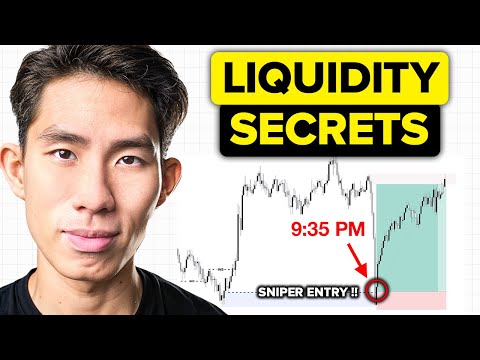
Liquidity + Timing = Profit (YOU’RE MISSING THIS!!)
Understanding Liquidity in Trading
The Importance of Timing and Liquidity
- Understanding that losses in trading often stem from poor timing rather than ineffective strategies. Mastering liquidity and timing is crucial for successful trading.
- Brett Go, an experienced trader with over $2.2 million in profits last year, emphasizes the need for discipline and consistency in trading practices.
- Conventional trading advice often benefits wealthy traders by exploiting retail traders' lack of understanding about liquidity dynamics.
How Smart Money Operates
- Institutions require liquidity to execute large trades; they do not manipulate the market out of greed but to fulfill their orders effectively.
- For example, if institutions want to sell a billion dollars worth of short orders, they need buyers on the other side to match those orders at the right time.
Defining Liquidity
- Liquidity is defined as resting orders (pending orders and stop losses) that provide the necessary fuel for price movements in desired directions. Institutions must "sweep" this liquidity before significant price changes can occur.
Identifying Available Liquidity
Key Areas to Spot Liquidity
- Support and Resistance Levels: Retail traders often place stop losses above resistance or below support levels, creating available liquidity that institutions can target before price reversals occur.
- Swing Highs and Lows: Buy stops are typically placed above swing highs while sell stops are found below swing lows, both representing areas where liquidity can be swept by smart money actions.
Additional Sources of Liquidity
- Equal highs/lows create clusters of liquidity that institutions may target during market moves.
- Consolidation zones also indicate areas where liquidity exists both above and below, which can be exploited for pullbacks or breakouts.
Conclusion on Market Dynamics
- Traders who cannot identify where liquidity resides risk becoming the very source of it themselves—leading to repeated stop-outs as prices move against them.
- A solid understanding of market structure and liquidity is essential for developing effective trade ideas regarding entry points into the market. This knowledge forms just one part of a comprehensive trading strategy needed for success in volatile markets.
Understanding Timing in Trading
The Importance of Timing in Trading
- Success in trading is defined as the combination of strategy and timing; being right on trend direction does not guarantee profit if entry timing is incorrect.
- Entering a trade too late can lead to significant pullbacks that may stop out traders, even if they initially identified the correct market direction.
- An old Wall Street adage states that "being early is just as bad as being wrong," emphasizing the critical role of timing in executing trades effectively.
Identifying Optimal Trading Times
- Effective timing involves understanding when institutional investors are active, rather than arbitrary personal schedules or routines.
- Recognizing liquidity patterns helps traders identify when institutions will influence price movements significantly.
Key Trading Windows
- In forex trading, two primary windows present the most opportunities: the London Open and New York Open sessions.
- The London session runs from 3:00 a.m. to 11:00 a.m. Eastern Standard Time (EST), with the London Open being particularly favorable for liquidity entry into the market.
Overlap Between Sessions
- There is an overlap between the London and New York sessions from approximately 8:00 a.m. to 11:00 a.m. EST, which creates heightened volatility and trading opportunities.
- This overlap period sees increased trading volume due to participation from both European and American traders, leading to significant price movements.
Impact of Session Dynamics
- During this overlap, banks execute orders, structure forms, and price seeks liquidity—making it an ideal time for traders to engage.
- The New York session can either extend moves initiated during the London session or reverse them; thus, many daily moves are confirmed during this time frame.
Understanding Trading Sessions and Their Impact on Price Movements
The Concept of Q Zones
- The trend direction established during the New York session influences the entire daily candlestick.
- "Q zones" are not magical but represent periods when liquidity and market participation overlap, allowing for significant price movements.
Session Dynamics
- The London session opens at 3:00 a.m. EST, often leading to a breakout from Asian session consolidation.
- Upon opening, the London session can create long wicks that sweep available liquidity before pushing prices upward.
Characteristics of Different Trading Sessions
- During the Asian session, trading volume is low, resulting in small candlesticks and price consolidation rather than expansion.
- Trading in the Asian session may lead to being "chopped out" due to lack of volatility or holding trades too long without movement.
Recommendations for Beginners
- For beginners unaccustomed to high volatility, the Asian session provides a suitable environment for practice and acclimatization.
- This period is likened to "the calm before the storm," with significant movements expected as sessions transition.
Transitioning Between Sessions
- The New York session begins around 8:00 a.m. EST and can either continue trends set by London or reverse them.
- A typical pattern observed is an uptrend during London followed by a downtrend in New York; this highlights how timing affects trading strategies.
Personal Trading Strategy Insights
- Most trading occurs around the London open; preparation includes analyzing charts and marking key levels before 3:00 a.m. EST.
- Successful trading hinges on waiting for A+ setups rather than engaging in subpar trades; discipline is crucial.
Utilizing Technology for Discipline
- Edge Flow app allows traders to limit their trading windows, promoting discipline by restricting access outside chosen times.
- This feature helps maintain focus on specific sessions (e.g., 8:00 a.m. - 11:00 a.m.) while preventing impulsive trades outside those hours.
Understanding Market Liquidity and Timing in Trading
The Importance of Liquidity and Timing
- Professionals do not trade constantly; they wait for market conditions that can yield profits. Just having liquidity does not guarantee price movement, as it may remain inactive without participation.
- Significant price movements occur when institutions actively engage with available liquidity, particularly during key trading sessions like the London or New York opens.
- Entering trades at optimal times (e.g., during major market openings) is ineffective if there are no resting orders nearby; prices may stagnate or fluctuate without direction.
- Mastering both liquidity and timing is crucial for effective trading. This combination can lead to significant price changes, akin to a powerful explosion fueled by oil (liquidity) and fire (timing).
Steps to Combine Liquidity and Timing
Step 1: Identify Trend Direction and Structure
- Begin by analyzing charts to determine the trend direction. For instance, recognizing a bearish trend involves identifying breaks in structure where lower highs and lower lows are established.
Step 2: Locate Available Liquidity
- Assess where liquidity exists in relation to the identified trend. If the market is trending downwards, look for potential areas above swing highs where liquidity might be swept before further downward movement.
Step 3: Wait for Active Trading Sessions
- Timing is critical; wait for active trading sessions such as the London or New York opens to see if price will sweep identified liquidity levels before moving in your anticipated direction.
Bonus Tip: Mark Supply Zones
- Identify supply zones that correspond with previous breaks of structure. These zones indicate potential areas where sell orders could emerge as prices approach them.
Final Considerations Before Trading
- Recognize that certain zones act as critical points of resistance or support. If prices breach these levels, it may signal a shift from bearish to bullish trends, prompting a reevaluation of trading strategies.
Understanding Price Movement and Entry Confirmation
Analyzing Price Behavior at Points of Interest
- The speaker discusses the importance of monitoring price movement around marked points of interest, indicating that price may rise slightly before the London market opens to determine which point will be respected.
- When the London market opens, there is potential for price to sweep available liquidity from a high, leading to a downward movement. This could provide an entry confirmation for a sell position.
- Alternatively, price might pull back to create a new higher low due to bullish internal structure before moving deeper into another point of interest.
Entry Confirmation and Market Structure
- The speaker emphasizes the need for entry confirmations and models before executing trades, as predicting exact reversal points is uncertain.
- Two types of reactions are highlighted: a V-shaped reaction indicating liquidity manipulation by smart money and a break in structure confirming bearish market shifts.
Identifying Bullish and Bearish Structures
- The internal structure shows higher highs and lows, suggesting bullish conditions; however, breaking this structure is necessary to confirm that the pullback has ended.
- A confirmed break below the last higher low signals that price may continue with its bearish trend after sweeping liquidity.
Execution Strategy and Risk Management
- Once confirmation occurs through defined risk parameters (typically 1% of account), execution of sell orders can take place effectively.
- The speaker mentions various scenarios traders should consider within their mentorship program, emphasizing adaptability in trading strategies.
Importance of Discipline in Trading
- Discipline is identified as crucial for successful trading; many retail traders fail due to premature entries or impatience during market inactivity.
- A quote about humanity's problems being linked to patience is adapted to highlight traders' issues stemming from their inability to wait quietly while markets fluctuate.
Tools for Enhancing Trading Discipline
- The speaker stresses that waiting for ideal setups rather than forcing trades leads to better outcomes; discipline is key in recognizing optimal trading windows.
- Introduction of "Edge Flow," described as a trading super app designed to improve trader behavior by enforcing timing and risk limits automatically.
Understanding Trading Psychology and Strategy
Importance of Journaling in Trading
- Journaling helps traders avoid losing more money during losing streaks and prevents giving back profits during winning streaks. It tracks adherence to trade plans and entry confluences.
- The journal also records the trading session, allowing traders to identify their best-performing sessions and average trade durations.
Features of Edge Flow Application
- Edge Flow is designed not to predict market movements but to help traders wait for high-quality setups that can lead to profitability.
- The app has been under development for 12 months with an investment of $300,000. Users are encouraged to join a waiting list or check if the app is already available.
Concept of Liquidity and Timing
- Understanding liquidity and timing is crucial; identifying trend direction (bullish or bearish) sets the stage for entering trades.
- Traders should recognize where liquidity sits by observing price pullbacks and reactions, which indicate potential market movements.
Identifying Available Liquidity
- Price action reveals where liquidity has been swept, indicating institutional points of interest. This knowledge aids in determining future price movements.
- Consolidation patterns signal available liquidity below swing lows, as retail traders often place stop-loss orders there, creating opportunities for informed trading decisions.
Execution During Market Sessions
- Patience is emphasized; traders should wait for key market sessions (e.g., London open) before executing trades.
- Upon session opening, price may sweep available liquidity above swing highs, which serves as a critical moment for potential sell entries based on market objectives.
High Probability Entry Points
- After sweeping liquidity, traders can enter sell positions targeting the next point of interest where institutions might look to buy again.
- Recognizing when prices mitigate demand zones after sweeping liquidity allows traders to identify high-probability buy entries as internal structures shift bullishly.
Trading Strategy Insights
Key Trading Concepts
- The importance of understanding higher time frame structures in trading is emphasized. Traders can enter long positions aggressively, placing stop losses below significant candles or demand zones.
- Liquidity combined with timing is crucial for successful trades. Quick price movements demonstrate the power of liquidity when executed at optimal times.
- Entering trades during key market sessions, such as the London open, enhances confidence and potential profitability due to increased market activity.
The Golden Bullet Strategy
- The five steps of the "Golden Bullet" strategy are outlined:
- Identify trend direction and structure.
- Locate where liquidity resides.
- Wait for an active trading session.
- Observe price reactions to available liquidity.
- Execute trades with defined risk.
- Emphasis on simplicity in trading: success comes from executing fewer but more strategic trades at the right time and place.
High Probability Points of Interest
- Understanding high probability points of interest is essential; timing and liquidity must be paired with ideal entry locations for effective trading strategies.
- Mastery over three critical factors—trade idea, location, and timing—can lead to consistent profits in trading, referred to as the "holy trinity" of successful trading practices.