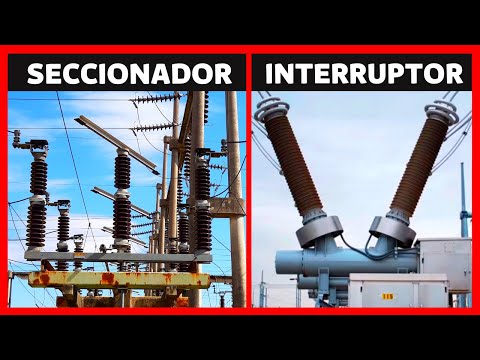
✅🔥DIFERENCIA entre SECCIONADOR electrico e INTERRUPTORES DE POTENCIA SF6 en SUBESTACIONES eléctricas
What Are the Differences Between a Switch and a Disconnecting Device?
Overview of Equipment Functions
- The discussion begins with an introduction to the differences between disconnectors (seccionadores) and switches (interruptores), both commonly found in transformer stations for operational maneuvers and protection.
Key Functional Differences
- Both devices can operate electrical circuits, meaning they can open or close them. However, the main distinction lies in their operation under load conditions.
- A switch can operate while current is flowing through the circuit, effectively opening or closing it under nominal current. In contrast, a disconnector opens without any load or current present.
Operational Context
- For safe operation of a disconnector, prior action must be taken to cut off the current using a switch. This ensures that when the disconnector is opened, there is no risk of electric shock.
- An example scenario illustrates how one would work on a transformer: first ensuring that the switch is open before operating the disconnector.
Safety Mechanisms
- The importance of using disconnectors for safety is emphasized; they provide visible confirmation that a circuit is deactivated before maintenance work begins.
- The visual aspect of disconnectors allows operators to see whether they are safe to proceed with maintenance tasks.
Limitations and Capabilities
- Disconnectors cannot interrupt circuits under load due to their inability to manage electrical arcs produced during such operations. They are designed solely for use when no current flows.
- Conversely, switches can handle nominal currents but are not equipped to deal with overload or short-circuit situations effectively.
Advanced Switching Devices
- Automatic circuit breakers (interruptores automáticos), unlike standard switches, can handle various conditions including overload and short circuits while providing protection mechanisms.
Turn any video into a summary like this
YouTube links, meetings, lectures. With transcripts, search, and chat.