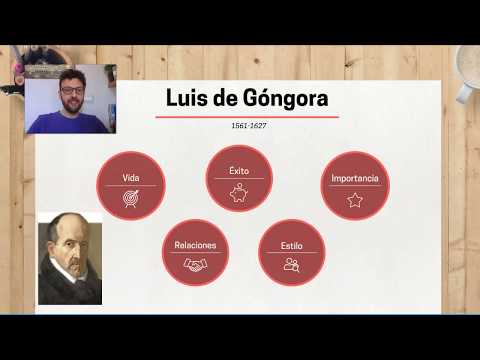
Luis de Góngora - biografía
Introduction to Luis de Góngora
Overview of Góngora's Life
- Luis de Góngora was born in 1561 in Córdoba, Andalucía, and had a deep affection for his hometown despite not living there all his life.
- He studied at the prestigious University of Salamanca, one of Spain's two famous universities during that era.
- Initially pursued an ecclesiastical career for financial stability while maintaining his passion for literature and art; he became known as the royal chaplain under King Philip III.
- His later life was marked by misfortune after the king's death, leading to loss of political support and public favor, compounded by personal vices like gambling.
- Góngora died in 1627 in Córdoba, experiencing solitude and sadness towards the end of his life.
Character and Relationships
- Known for a libertine youth, Góngora had a generally haughty demeanor which reflected in his satirical works; he was critical and often created rivalries with other authors.
- His most notable feud was with Francisco de Quevedo, highlighting their contrasting artistic philosophies—Góngora favored elitism while Quevedo embraced popular art forms.
- Initially celebrated as "the prince of light" due to his linguistic prowess early in his career but faced criticism later on for obscurity in style.
Evolution of Style and Reception
- In the latter half of his career, Góngora’s complex syntax and language led to him being dubbed "the prince of darkness," indicating a shift from admiration to misunderstanding among audiences.
- He took pride in being misunderstood by the masses, believing that true understanding required high cultural literacy; this elitist view shaped his literary approach significantly.
Contribution to Baroque Literature
- Considered a father figure of culteranismo (or Gongorismo), which emphasized intricate language reflecting broader Baroque themes such as disillusionment.
- His works are characterized by elaborate metaphors and classical references requiring significant cultural knowledge to comprehend fully; they often include Latinisms and complex syntax structures.
Legacy and Posthumous Recognition
- Despite dying poor and alone without widespread acclaim during his lifetime, Góngora's literary genius gained recognition posthumously around 1927 when young poets honored him at the University of Seville.
- This homage led to the formation of the Generation of '27—a pivotal poetic movement influenced heavily by Góngora’s innovative use of metaphorical language.
Turn any video into a summary like this
YouTube links, meetings, lectures. With transcripts, search, and chat.