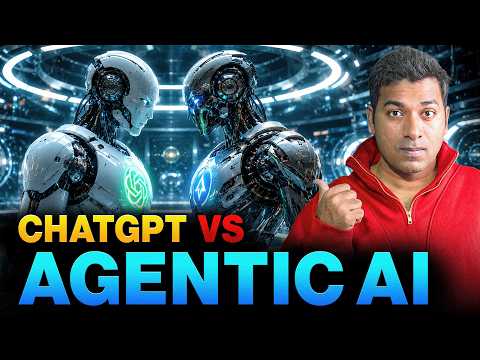
🚨Generative AI vs AGENTIC AI | The Future of Autonomous AI Explained | Software Jobs | VR Raja
The Shift in Engineering Education and Industry Needs
Outdated Curriculum vs. Current Technology
- Many engineering graduates find that the technology they learned during their studies has become obsolete by the time they enter the workforce, as colleges often stick to outdated syllabi from 1995.
- The focus of most engineering colleges in India is on theoretical classes and outdated programming languages, failing to keep pace with advancements like generative AI.
Emergence of Generative AI
- Generative AI models can provide accurate answers to questions or draft important emails, showcasing a significant shift in capabilities compared to previous technologies.
- The global tech industry is transitioning from basic generative AI towards a new trend called Agentic AI, which promises to revolutionize how tasks are performed autonomously.
Understanding Agentic AI
Definition and Functionality
- Agentic AI refers to systems that can think independently and make decisions, functioning similarly to human thought processes when given tasks such as app development.
- Unlike traditional software engineers who must manually fix bugs after code generation, agentic systems can autonomously identify and resolve issues within their own code.
Practical Applications
- An example illustrates how an agent can design an e-commerce website's architecture based on simple prompts without human intervention.
- These autonomous systems replicate experienced human decision-making processes, indicating a profound change in operational efficiency.
Industry Investment in Autonomous Systems
Major Companies' Involvement
- Leading companies like HP and NVIDIA are investing heavily in developing supercomputers necessary for running agentic AI technologies.
- This investment indicates a clear industry shift towards adopting autonomous systems capable of handling complex engineering tasks efficiently.
Impact on Job Market
- As these technologies advance, there is growing concern about the future job market for software engineers; many may find themselves replaced by these autonomous agents.
The Future of Software Engineering Roles
Demand for New Skills
- While traditional coding roles may diminish, there will be increased demand for professionals who can create and manage these intelligent agents effectively.
Educational Gaps
- Current educational institutions are not adequately preparing students for this shift; many still focus on outdated curricula rather than relevant problem-solving skills needed in today's tech landscape.
Solutions Through Innovative Education
Introduction of New Programs
- Institutions like the Scalar School of Technology (SST), located in Bangalore, aim to bridge this gap by offering practical programs designed by industry leaders focused on current demands such as artificial intelligence and machine learning.
Hands-On Learning Approach
- SST emphasizes real-time implementation over theoretical knowledge; students engage directly with projects that reflect actual market needs rather than rote learning from textbooks.
Preparing Students for Real World Challenges
Focus on Practical Skills
- Students at SST work on numerous real-world projects throughout their education, ensuring they develop applicable skills that enhance employability upon graduation.
Direct Industry Engagement
- Regular mentorship from top engineers helps students understand emerging trends and necessary skills required in the evolving tech landscape.
This structured approach ensures that graduates are well-equipped not only with technical knowledge but also with practical experience relevant to current industry standards.