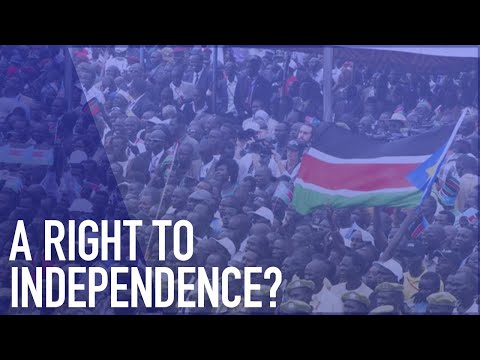
What is Self-Determination? | The most misunderstood idea in International Relations
Understanding Self-Determination in International Politics
Introduction to Self-Determination
- Self-determination is often misunderstood and misused in international politics, with the speaker aiming to clarify its meaning.
- James Ker-Lindsay introduces the concept as a powerful idea in modern international relations, frequently cited by groups seeking independence.
Misconceptions About Self-Determination
- The mere mention of self-determination does not guarantee a group's right to independence; it requires deeper consideration.
- Historically, self-determination emerged in the 19th century but gained prominence after World War I, particularly through President Woodrow Wilson's advocacy.
Historical Context and Challenges
- Wilson emphasized that national aspirations must be respected and that peoples should govern themselves with their consent.
- Despite its noble intentions, applying self-determination faced significant challenges regarding which groups qualify for statehood and how boundaries are defined.
Post-War Developments
- After World War II, the United Nations enshrined self-determination in its Charter, creating a tension between this right and respect for existing borders.
- The UN's Articles highlight both the importance of equal rights and the need to refrain from disrupting territorial integrity.
Refinement of Self-Determination Concepts
- A contradiction arose: how can people have self-determination while states maintain their borders? This led to further refinement of the concept.
- In 1960, UN Resolution 1514 established two forms of self-determination: one leading to independence (External Self-Determination), applicable mainly in cases of colonialism or foreign occupation.
Distinction Between Forms of Self-Determination
- External self-determination applies only at the moment of independence; once a new state is formed, this right ceases for communities within that state.
Understanding Internal Self-Determination
The Concept of Internal Self-Determination
- Internal self-determination is a form of self-governance applicable to peoples within established states, distinct from the right to independence.
- This concept allows for varying degrees of autonomy, which can manifest in different ways, such as language rights or extensive self-government arrangements.
- The confusion between internal self-determination and the right to independence often leads people to mistakenly equate these two concepts.
Distinction Between Forms of Self-Determination
- There are two primary forms of self-determination: one that leads to independent statehood (applicable mainly in cases of colonialism or military occupation), and another that pertains to autonomy within existing states.
Turn any video into a summary like this
YouTube links, meetings, lectures — with transcripts, search, and chat.