Gender in 19th century Britain
The Changing Education of Middle-Class Girls in the 19th Century
New Educational Needs
- Middle-class girls required a new type of education to adapt to their evolving lifestyles, particularly as they no longer assisted with household chores due to the presence of servants.
- With fathers' businesses located far from home, these girls spent their days at home and needed skills for future roles, primarily focused on marriage.
Skills for Marriage
- The primary goal for middle-class women was to marry a suitable man—solvent and healthy—with parental approval.
- To attract potential husbands, girls learned accomplishments such as conversational French, piano playing, and social etiquette.
Limitations on Learning
- While education was encouraged, there were strict limits; becoming a "blue stocking" (a woman overly educated or intellectual) was frowned upon.
- A blue stocking was seen as undesirable because she might engage in political discussions or read classical texts in original languages.
Societal Expectations and Consequences
- There were concerns that excessive reading could lead to physical changes perceived as masculine, resulting in societal rejection.
- Women faced a double bind: they had to be attractive yet not overly concerned with their looks or express sexual desire.
Fashion's Role in Identity
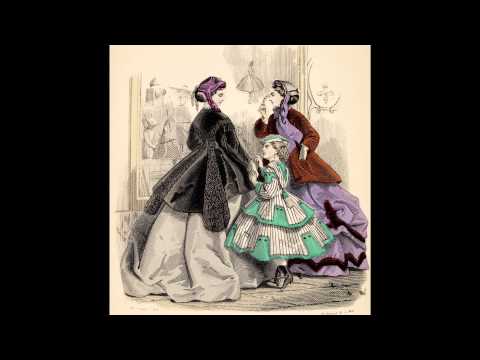
- Fashion significantly influenced the identity of middle-class women; impractical clothing like the crinoline emerged when women retreated into domesticity.
- The crinoline restricted women's mobility and functionality, symbolizing societal constraints placed on them during this period.
Personal Struggles of Educated Women
- Many educated women felt suffocated by societal expectations; Florence Nightingale experienced hysteria due to her constrained lifestyle despite coming from a loving family.
- Elizabeth Barrett Browning sought creative expression through poetry but faced pressure to conform to domestic roles expected of well-off women.
Exploring the Life of a Poet
The Impact of Illness on Creativity
- The subject becomes ill and withdraws to a room at the top of her family's house in Wimpole Street, effectively becoming a "professional invalid."
- This withdrawal allows her to escape normal household duties, creating an environment conducive to creativity.
- During this period, she enjoys long hours for reading and writing, which leads to the production of some of her best poetry.
- Her illness serves as an unconscious catalyst for her artistic output, highlighting how personal struggles can influence creative processes.
- The arrival of Robert Browning, a handsome young poet, marks a significant moment in her life that intertwines with her creative journey.