DOCUMENTAL: HISTORIA Y GEOGRAFÍA DE QUINTANA ROO.
Introduction to Quintana Roo
Overview of Quintana Roo's Significance
- Quintana Roo is presented as a unique region in Mexico, celebrated for its natural beauty and cultural diversity.
- The state is noted for being the cradle of significant civilizations, particularly the Mayans, and boasts diverse landscapes and ecosystems.
Historical Context
- The region has experienced historical interactions between Mayans and Caribbean inhabitants, Spanish conquistadors, and pirates, leading to rich cultural exchanges.
- Quintana Roo became one of the 32 federal entities of Mexico with several municipalities contributing to its identity.
Geographical Features
Formation and Composition
- The Yucatán Peninsula was formed approximately 2 million years ago from limestone rock dating back to the Cretaceous period.
- The state features a tropical climate characterized by summer rains that have become increasingly irregular over time.
Natural Disasters
- Hurricanes are a significant concern in Quintana Roo, occurring between May 15 and November 30 each year; they are referenced in the Popol Vuh as "heart of the sky."
Water Bodies and Ecosystems
Notable Water Features
- Bacalar Lagoon, known as "Laguna de los Siete Colores," is famous for its seven distinct shades due to cenote formations.
- The Hondo River serves as a natural border with Belize and is recognized as one of the largest rivers in Mexico.
Biodiversity
- Quintana Roo hosts around 1,500 species of vascular plants including notable ones like achiote and various mangroves.
- It also supports over 100 mammal species along with numerous bird species such as herons and reptiles facing threats from human activities.
Ecosystem Diversity
Types of Ecosystems
- Various ecosystems exist within Quintana Roo including savannas, mangroves along riverbanks, jungles categorized by leaf retention during dry seasons, coastal areas bridging land and sea.
Marine Life
- The coral reef system extends throughout the Caribbean coast providing essential habitats for marine biodiversity shared with neighboring countries.
Ancient Civilizations
Maya Civilization Overview
- The ancient Maya civilization thrived through different periods; early inhabitants were primarily hunters, fishers, and farmers.
Religious Practices
- Early religious practices involved creating clay figures symbolizing fertility; later periods saw kings claiming divine intercession on behalf of their people.
Mayan Civilization: Development and Decline
Rituals and Early Occupation
- The Maya civilization was already established in the Preclassic period, with evidence of domestic activities in caves, which served as sacred entrances to the underworld.
- Population growth and innovation led to increased productive activities across nearly all territories known as the Maya area.
Classic Period Flourishment (200 - 900 AD)
Agricultural Advancements
- The Classic period is marked by agricultural innovations such as terracing in mountainous regions of Guatemala and Belize, along with irrigation channels.
- Key crops included tobacco, cotton, henequen, cacao preparation reached its peak, and beekeeping emerged during this time.
Economic Exchange
- Trade primarily involved luxury items for adornments and ritual attributes for the ruling minority during the Late Classic period.
- Teotihuacan culture influenced architecture through trade; notable construction techniques like false arches were introduced.
Architectural Achievements
- By the Late Classic period, impressive structures such as pyramids (up to 70 meters high), temples, palaces with numerous rooms, ball courts, observatories, and luxurious tombs were built without wheels or metal tools.
Intellectual Developments
Writing and Astronomy
- The Maya developed a hieroglyphic writing system alongside advancements in astronomy and mathematics.
- They created a complex calendar system that surpassed those of earlier civilizations.
Artistic Expression
- Early Classic art featured jade sculptures made from various materials; refined artistic techniques flourished by the Late Classic despite a decline in urban centers.
Cultural Decline
Abandonment of Cities
- As cities were abandoned due to environmental changes or conflicts between rulers and citizens, new inhabitants formed smaller communities until Spanish arrival.
Postclassic Period (900 - 1521 AD)
External Influences
- Non-Maya groups entered during the Early Postclassic; notably, Nagua imposed dominance through tributes while introducing new architectural styles exemplified by Chichen Itza's structures.
Economic & Political Disintegration
- The disintegration of Maya culture was evident economically and politically; Chichen Itza's fall halted extensive regional influence throughout Mesoamerica.
Religious Beliefs
Cosmology
- Mayan religion was polytheistic with a dualistic view of nature; they believed in an interconnected world comprising earth (flat surface), underworld (Xibalbá), and celestial realms above.
Deities & Their Roles
- Major deities included Kukulcán (feathered serpent god associated with rain), representing life sources. Other gods governed aspects like agriculture (maize god).
Social Structure
Class Hierarchy
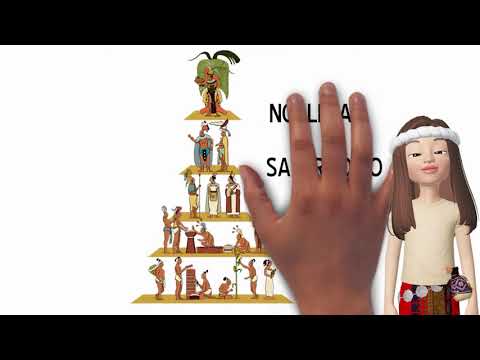
- Upon Spanish arrival, social classes existed within Maya society: nobles held higher status due to land ownership while merchants played crucial roles in economic networks.
This structured overview encapsulates key insights into the development and decline of Mayan civilization based on provided timestamps.
History of Conquest and Colonization in Yucatán
The Social Structure and Labor of Indigenous Peoples
- The majority of the population was composed of the plebeian class, responsible for agriculture, hunting, fishing, gathering, salt extraction, beekeeping, forestry, and construction of residential buildings and monuments for the ruling class.
- Slaves had no rights and worked on private properties; they were often victims used for human sacrifices and engaged in heavy labor with minimal sustenance.
Christopher Columbus's Expeditions
- In 1492, Christopher Columbus set sail under Spanish royal support to find a new trade route to India but inadvertently discovered America.
- Following Columbus's initial voyages, the Spanish crown allowed other navigators to explore without royal funding; these expeditions led to increased knowledge about American territories.
Early Spanish Contacts with Indigenous Cultures
- In 1500, Juan de Valdivia was commissioned to travel to Hispaniola but ended up shipwrecked near Jamaica; survivors reached Yucatán where they encountered Maya culture.
- Two survivors became integrated into Maya society: Jerónimo de Aguilar served as an interpreter for Hernán Cortés while Gonzalo Guerrero chose to remain among the Mayans.
Conquest Efforts in Yucatán
- Subsequent expeditions by Francisco Hernández de Córdoba and others familiarized Spaniards with local territories and established alliances with indigenous groups.
- The conquest of Yucatán was primarily executed by two families: the Montejos (Old Man, Young Man, Nephew), who conducted their efforts in three phases from 1527 to 1547.
Resistance and Cultural Impact During Colonization
- The Pacheco family exhibited extreme cruelty during their conquests; Fray Diego de Landa imposed Catholicism through severe methods including torture and destruction of sacred Mayan texts.
- Pirates from France, England, and Holland disrupted Spanish trade routes leading Spaniards to build fortifications while various indigenous groups resisted colonization efforts.
Colonial Administration in Yucatán
- Movements for independence emerged as indigenous peoples sought autonomy amidst colonial pressures; this period saw significant cultural exchanges affecting language, religion, arts, medicine, and festivities.
- The colonial era spanned from Tenochtitlan's fall until Mexico's independence in 1821. For Yucatán specifically it began around 1547 after its conquest.
Urban Development Under Colonial Rule
- By 1548 Spaniards organized conquered areas into four districts: Mérida-Campeche-Valladolid-Bacalar. This organization included a system where indigenous people worked for colonizers under protection agreements known as encomienda.
- Demographic expansion occurred in Mérida during the early 17th century alongside urban structure development that led to racial segregation within society.
The Development of Arts and Independence in Mexico
External and Internal Factors Influencing Change
- The development of arts, such as literature and sacred art, during this period was influenced by both external factors like French Enlightenment thought and internal discontent among criollos and mestizos who felt marginalized in society.
- The implementation of Bourbon reforms exacerbated social inequalities in New Spain, leading to increased taxation and laws favoring European territories. This fueled the desire for independence among figures like Miguel Hidalgo and José María Morelos.
The Path to Independence
- Following Mexico's independence from Spain, there were significant discussions in Yucatán regarding local governance, leading to the declaration of independence for Tabasco amidst military, civil, and religious authorities' debates.
- A division emerged between conservatives advocating for a monarchical order and liberals seeking a government similar to that of the United States, which included reducing church influence in politics. This ideological conflict led to liberal exiles from the country.
Indigenous Struggles and Regional Conflicts
- Santiago Imán emerged as a leader against Antonio López de Santa Anna's socialist policies; he gained support from indigenous chiefs leading to Yucatán declaring independence from Mexico in 1840.
- Tensions escalated into the Caste War (1847–1902), driven by land invasions for sugar cultivation, mandatory taxes, church contributions, land dispossession, and exploitation of indigenous labor during conflicts between liberals and conservatives.
Key Events During the Caste War
- After Manuel Antonio Ay's assassination sparked further unrest among indigenous groups; they attacked Mérida but faced setbacks after key leaders were killed around 1849. This led Yucatán’s government to seek reintegration with Mexico for assistance against indigenous uprisings.
- The climax of the war occurred between 1957–1967 with divisions among Maya factions over peace treaties versus continued resistance against Mexican forces under Porfirio Díaz’s administration.
Consequences of Conflict
- By May 3rd, 1901, Mexican forces officially ended the Caste War with significant territorial changes including economic devastation but also some positive developments like Campeche becoming a sovereign state in 1857 and new ports being established by early 1900s.
- Despite destruction caused by war leading to poverty and disease outbreaks, notable advancements included establishing Quintana Roo as a territory needing sufficient population density for statehood while focusing on resource exploitation through migration initiatives post-war recovery efforts began around 1913–1915 when political pressures reshaped regional governance structures again.
History of Quintana Roo: From Territory to Statehood
Early Governance and Territorial Changes
- The presidency of Pascual Ortiz Rubio led to the annexation of Yucatán and Campeche, with Quintana Roo reintegrated in 1935 at the request of the Pro-Territory Committee.
- Governor Margarito Ramírez Miranda attempted to establish Quintana Roo as a state despite lacking minimum requirements, manipulating various committees to maintain power.
Development Initiatives and Tourism Growth
- In 1958, Ramírez Miranda ceded government to Aarón Merino Fernández, who focused on modernizing infrastructure and supporting economic sectors.
- Subsequent governors aimed to attract residents by developing tourism, particularly through the creation of Cancún under President Gustavo Díaz Ordaz's administration (1964-1970).
Economic Foundations and Statehood
- By 1974, both Quintana Roo and Baja California Sur achieved statehood after meeting population requirements; key economic projects included sugarcane industry and tourism.
- The construction project for Cancún began in 1970; privatization of the sugar mill occurred in 1998, contributing significantly to national sugar production.
Constitutional Establishment and Educational Advancements
- The Political Constitution of the Free Sovereign State of Quintana Roo was established on January 12, 1975, marking a shift from military territorial governance to constitutional governments.
- Jesús Martínez served as the first constitutional governor (1975-1978), focusing on investment in agriculture, forestry, tourism infrastructure, and education initiatives that achieved significant coverage by 1980.
Urbanization and Cultural Diversity
- Under Pedro Joaquín Coldwell's governorship (1980), urbanization efforts expanded with investments in public services while addressing needs within Maya communities through ethnodevelopment programs.
- Miguel Borge Martín’s term (1987–1993) saw further development in telecommunications alongside increased tourist revenue from areas like Riviera Maya; Tulum became a major tourist destination during this period.
Recent Developments and Demographic Changes
- Mario Villanueva Madrid's tenure (1993–1999) marked significant growth in southern tourism infrastructure but faced allegations related to narcotrafficking despite popularity among locals.
- By 2010, over half of Quintana Roo's population were non-natives due to migration driven by economic opportunities; however, educational attainment remained low with high rates of illiteracy still present today.
Health Care System Overview
- As of 2009, there were only 121 doctors per 100k inhabitants in Quintana Roo; healthcare access remains an ongoing challenge amidst demographic changes affecting service delivery capabilities.