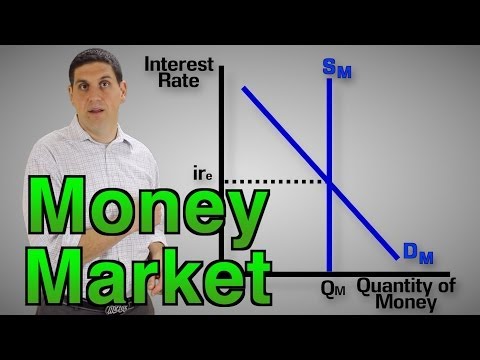
The Money Market (1 of 2)- Macro Topic 4.5
Understanding the Money Market Graph
Introduction to Money
- Mr. Clifford introduces the topic of money and its significance in economics, particularly for AP macro exam preparation.
- Defines M1 money, which includes cash, traveler's checks, and checkable deposits (money in checking accounts), emphasizing that money is more than just physical cash.
Distinction Between Money and Wealth
- Clarifies that wealth (assets like houses and cars) is not the same as money; these assets have low liquidity compared to M1 money, which has high liquidity.
Demand for Money
- Introduces the demand curve for money, which slopes downward due to two main reasons: transaction demand (for purchases) and asset demand (preference for liquid assets).
- Discusses how interest rates affect the quantity demanded; higher interest rates lead to lower demand for holding cash due to opportunity costs.
Shifters of Demand
- Identifies factors that can shift the demand curve:
- Increase in price levels raises transaction demands.
- Higher income increases overall demand for money.
- Technological changes (e.g., credit card usage) can decrease demand.
Supply of Money
- Explains that the supply of money is vertical on the graph because it is controlled by a country's central bank (e.g., Federal Reserve in the U.S.) and does not depend on interest rates.
Monetary Policy Implications
Understanding Monetary Policy
- Differentiates between monetary policy's role versus other economic graphs like aggregate demand or Phillips curve; focuses on how it affects interest rates rather than showing economic conditions directly.
Types of Monetary Policy
- Describes expansionary monetary policy where increasing the money supply lowers interest rates, boosting investment and aggregate demand.
- Contrasts with contractionary monetary policy aimed at fighting inflation by decreasing the money supply, leading to higher interest rates and reduced investment.
Shifters of Money Supply
- Mentions three key shifters affecting the money supply:
- Reserve requirement,
- Discount rate,
- Open market operations.
This concludes an overview of key concepts related to understanding the money market graph as presented by Mr. Clifford.