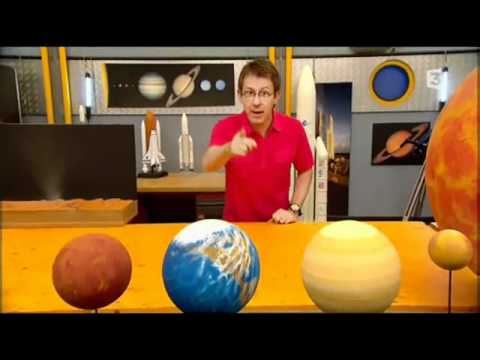
C'est pas sorcier Le systeme solaire 1
Where is Sabine?
Introduction to the Location
- The speaker expresses confusion about Sabine's whereabouts, noting that she is usually grounded and present.
- They mention being at the Observatoire Astronomique on the island of La Palma in the Canary Islands, which is ideal for observing planets.
Arrival at the Observatory
- Upon arrival, they admire the beauty of their surroundings and confirm that it’s a suitable location for sky observation.
- The speaker emphasizes starting with a local orientation before delving into solar system observations.
Understanding the Canary Islands and Their Significance
Overview of the Canary Islands
- The speaker describes the Canary Islands as an archipelago off Morocco, consisting of seven distinct islands. They are currently on La Palma near a major observatory.
- At 2400 meters above sea level, this location offers clear skies free from light pollution, making it perfect for astronomical studies.
The Solar System: Planets and Their Characteristics
Listing Planets in Order
- The speaker lists planets starting from Mercury to Neptune, categorizing them into rocky (Mercury, Venus, Earth, Mars) and gas giants (Jupiter, Saturn, Uranus, Neptune). They note Jupiter as the largest planet known for its rings.
Planetary Distances and Orbits
- Each planet orbits at different speeds; those farther from the Sun take longer to complete their revolutions due to gravitational influences. For example:
- Mercury: 80 days
- Earth: 365 days
- Neptune: 165 years .
Asteroids and Comets in Our Solar System
Asteroid Belts
- Between rocky and gas planets lies an asteroid belt containing remnants from planetary formation that never coalesced into full planets. This includes materials dating back to early solar system history.
Kuiper Belt and Comet Formation
- Beyond Neptune exists the Kuiper Belt made up of icy bodies extending far beyond Earth's distance from the Sun; comets originate here when they break away towards Earth creating visible trails as they approach our atmosphere.
Pluto's Classification Change
Pluto's Status Update
- In August 2006, Pluto was reclassified as a dwarf planet after debates regarding its orbit among other celestial bodies in its vicinity within the Kuiper Belt were concluded. It does not clear its orbital path like traditional planets do.
Other Dwarf Planets Identified
- Other significant bodies such as Eris and Haumea have also been identified within similar classifications due to their size but inability to dominate their orbits like classical planets do.
Observing Celestial Bodies Tonight
Visibility of Planets
- The speaker notes that some planets can be seen with naked eyes under certain conditions; Venus is highlighted as an example often referred to as "the evening star." However visibility varies based on planetary positions relative to Earth during their orbits around the Sun.
Tools for Observation
- To enhance viewing experiences tonight—specifically mentioning Jupiter—the use of binocular telescopes or larger telescopes like Liverpool’s two-meter diameter mirror telescope is recommended for clearer images of celestial objects rather than just points of light in the sky.( t =397 s)
Exploring the Atmospheres of Mars and Venus
The Nature of Planetary Atmospheres
- Mars, known as the red planet, can be observed in detail using space probes, revealing surface features like craters.
- Venus has a thick atmosphere composed mainly of gases, which is a significant factor in its extreme conditions.
- The origins of planetary atmospheres include gases released from meteorite impacts and volcanic activity on the planets themselves.
- A planet's ability to retain its atmosphere depends on its mass; larger planets like Earth and Venus can hold onto their atmospheres better than smaller ones like Mercury.
Atmospheric Conditions on Venus
- On Venus, average temperatures reach 450 degrees Celsius with atmospheric pressure 93 times that of Earth's at sea level.
- If one could walk on Venus, they would experience immense pressure due to the dense atmosphere compared to Earth’s normal conditions.
- Despite forming around the same time as Earth, Venus developed a vastly different atmosphere due to its proximity to the Sun affecting water states.
- Water vapor on Venus remains gaseous because of high temperatures; unlike Earth where it formed oceans allowing CO2 absorption.
The Unique Characteristics of Venus
- Today, 95% of Venus's atmosphere consists of CO2 leading to severe greenhouse effects resulting in extremely high temperatures.
- Unlike other planets, Venus rotates in reverse direction causing unique sunrise and sunset patterns (sun rises in the west).
- Active volcanoes may still exist on Venus; however, studying them is challenging due to harsh atmospheric conditions.
Mars: A Thin Atmosphere
- Mars has an extremely thin atmosphere with negligible pressure compared to Earth; this raises questions about its formation and retention capabilities.
- The lack of a magnetic field on Mars contributes significantly to its inability to maintain a thicker atmosphere over time.
Geological Features and History of Mars
- Historical geological activity suggests that liquid water may have existed on Mars at some point but is now mostly found as ice at the poles.
- Surface features include impact craters, sand dunes, valleys, and massive canyons indicating past geological activity despite current conditions being less hospitable.
Exploring the Canary Islands and Astronomy
Introduction to the Location
- The discussion begins in the Canary Islands, a Spanish archipelago located off the coast of Morocco, consisting of seven distinct islands.
- The specific location is at an altitude of 2400 meters on La Palma, known for its clear skies and minimal light pollution, making it ideal for astronomical observations.
Overview of the Observatorio del Roque de los Muchachos
- This site hosts the largest astronomical observatory in the Northern Hemisphere, featuring 12 telescopes aimed at celestial bodies.
- The presenter engages with planetary names within our solar system, emphasizing their order from the Sun: Mercury, Venus, Earth, and Mars.
Structure of the Solar System
- The solar system consists of four terrestrial planets followed by gas giants: Jupiter (the largest), Saturn (known for its rings), Uranus, and Neptune.
- Planetary orbits vary in duration; for instance, Mercury completes its orbit in about 80 days while Neptune takes approximately 165 Earth years.
Asteroids and Comets
- Between rocky and gas planets lies the asteroid belt—remnants from planet formation that never coalesced into a full planet.
- Beyond Neptune is the Kuiper Belt composed of icy bodies; occasionally these objects break away to become comets as they approach Earth.
Pluto's Classification Change
- Historically considered a planet until August 2006 when it was reclassified as a "dwarf planet" due to its orbit being influenced by other celestial bodies.
- Other dwarf planets like Eris and Haumea exist within similar regions but are not classified as traditional planets because they share their orbital space with numerous other objects.
Understanding Celestial Visibility
- Our solar system resides in one arm of the Milky Way galaxy which contains around 400 billion stars; visibility varies based on planetary positions relative to Earth.
- Some planets can be seen without telescopes; Venus is noted as "the evening star," reflecting sunlight. However, visibility fluctuates with their orbits around the Sun.
Observational Tools and Techniques
- For better observation beyond mere points of light, tools such as binoculars or telescopes are recommended. An example given is Liverpool's telescope with a two-meter diameter mirror.
- Space probes provide detailed images of planets like Mars while highlighting differences between rocky surfaces versus thick cloud layers on Venus.
Atmospheric Composition Origins
- The dense atmosphere on rocky planets partly originates from meteorite impacts during their formative years.
The Origins and Conditions of Planetary Atmospheres
The Release of Gases and Gravity's Role
- At the moment of impact, gases contained in meteorite rocks were released and spread across planetary surfaces. This is one source of atmospheric gases, while volcanic activity on planets contributes another.
- A planet can only capture and maintain its atmosphere if it possesses sufficient mass; this is true for Mars, Earth, and Venus but not for Mercury.
- Even if Mercury had more mass, retaining an atmosphere would be challenging due to its proximity to the Sun.
Atmospheric Conditions on Venus
- On Venus, average temperatures reach 450 degrees Celsius with a pressure of 93 bars—93 times heavier than Earth's atmospheric pressure at sea level.
- Both Earth and Venus likely started with similar atmospheres composed of nitrogen, carbon dioxide, and water vapor; however, their conditions diverged significantly over time.
- Due to its closer proximity to the Sun, water on Venus exists only as gas; unlike Earth where cooler temperatures allowed liquid water to form oceans that absorbed CO2. As a result, Venus's atmosphere now contains 95% CO2 leading to extreme greenhouse effects.
Unique Characteristics of Venus
- Unlike other planets in the solar system, Venus rotates in the opposite direction (retrograde rotation), causing the Sun to rise in the West and set in the East. Its day is longer than its year due to slow rotation speed.
- The surface features include extensive lava flows and possibly active volcanoes; some regions may have geological formations less than 10 million years old indicating volcanic activity could still occur today.
Mars: A Thin Atmosphere
- Mars experiences significant seasonal temperature variations ranging from -100°C in winter to +27°C at the equator during summer; however, its atmosphere is extremely thin at just 0.007 bar pressure.
- The thin Martian atmosphere results from loss due to solar winds—particles emitted by the sun that strip away atmospheric components when a planet lacks a protective magnetic field like Earth's does.
Consequences of Atmospheric Loss on Mars
- Without a strong magnetic field due to inactivity in its metallic core, Mars has lost much of its atmosphere over time through solar wind erosion which also led to reduced water retention capabilities on the planet's surface.
- Consequently, any remaining water has mostly evaporated except for ice concentrated at polar regions; thus transforming Mars into a desert-like environment characterized by iron oxide-rich soil giving it a reddish appearance with various geological features including craters and canyons like Valles Marineris which reaches depths of 7 km.
Exploring Water on Mars
The Discovery of Liquid Water
- The narrator discusses the seasonal transformation of water on Mars, noting that it can fall as snow in winter.
- There is speculation about the presence of liquid water in Mars' past, raising excitement about potential discoveries.
- The narrator emphasizes the importance of leaving familiar surroundings (the Canary Islands) to gather more information about Mars.
- A journey is planned to France, specifically to the Paris Observatory located in Meudon, where specialists on Mars will be met.
- The narrator expresses a personal reaction to an image depicting what appears to be a riverbed formed by flowing water on Mars.