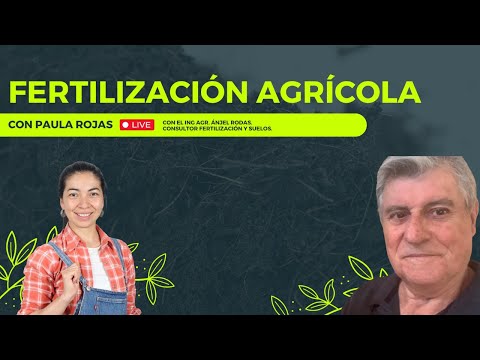
Fertilización Agrícola - con el Ing. Ánjel Rodas y Paula Rojas Microbióloga Industrial.
Introduction to Fertilization Evolution
Overview of the Live Session
- The session begins with excitement about discussing fertilization, its evolution, and organic matter.
- Introduction of Engineer Ángel Rodas, a specialist in fertilization and organic matter, who is joining from Alicante.
- Viewers are encouraged to prepare for an engaging discussion by having their favorite drink and taking notes.
Engineer Ángel Rodas' Background
- Engineer Rodas is introduced as an agronomist with extensive experience in foliar and soil fertilization across various crops globally.
- He has been focusing on soil carbon management and nutrient handling over his 25+ years of experience.
The Evolution of Fertilization
Historical Context
- The presentation outlines the historical changes in fertilization practices, emphasizing the importance of understanding these shifts.
- Fertilization is categorized into three phases: original conventional verticalization starting around the 1950s.
Key Developments in Fertilization Practices
- Early conventional fertilization minimized or overlooked organic components, which remains a critical issue today.
- In 1968, U.S. agricultural officials coined the term "Green Revolution," highlighting significant productivity increases due to new agricultural practices.
Challenges Faced by Conventional Agriculture
- The oil crisis of 1973 revealed vulnerabilities in agricultural models reliant on energy-intensive practices.
- Rising fertilizer costs during this period prompted discussions about alternative farming methods like zero tillage advocated by pioneers such as Carlos Croveto.
Agricultural Evolution and Sustainability
Impact of Urbanization and Deforestation
- The migration from rural to urban areas in Latin America and Africa is significant, leading to increased deforestation.
- Criticism arises regarding the quality of food produced by modern agricultural practices, highlighting concerns over sustainability.
Emergence of Alternative Agricultural Practices
- The early stages of biodynamic and organic agriculture begin to surface, alongside innovations like hormone use and bio-stimulants.
- A pivotal shift towards sustainability emerges around the late 1990s, influenced by global warming discussions.
Technological Advancements in Agriculture
- Between 2007 and 2010, technological revolutions occur that significantly impact agriculture, including social media platforms and mobile technology.
- The reduction in costs for genetic coding opens new avenues for scientific research in agriculture.
Transition to Direct Seeding Techniques
- A notable change is observed with a shift from plowing to direct seeding methods; Argentina exemplifies this trend with millions of hectares adopting these practices.
- In Europe, traditional plowing equipment becomes obsolete as new machinery for direct seeding gains prominence.
Rise of Organic and Regenerative Agriculture
- There is a growing emphasis on organic farming practices, regenerative agriculture, and the use of humic acids across agrochemical companies worldwide.
- Precision agriculture introduces sensors that monitor plant health closely; robotics also begins to play a crucial role in mechanization.
Addressing Global Challenges through Sustainable Practices
- Discussions about sustainability and climate change become central themes within agricultural discourse.
- Agronomist Ratan discusses the importance of preserving healthy soil as part of humanity's heritage.
Historical Context of Agricultural Models
- Biodynamic agriculture emerges in 1924 before the Green Revolution; Rudolf Steiner emphasizes microbial life measurement in soil.
- Various models such as biological farming (1951), organic farming (1930), natural farming (post-WWII), and agrobiology (1960) highlight diverse approaches to sustainable agriculture.
Reflection on Conventional Fertilization Practices
- The historical dominance of conventional fertilization overlooks organic components emphasized by earlier agricultural models.
- This raises questions about why conventional methods overshadowed previous organic-focused approaches despite their foundational significance.
Agricultural Innovations and Challenges
Integration of Technology in Agriculture
- The discussion highlights the integration of various technologies in agriculture, including mechanization, motorization, precision agriculture, and robotics. These tools are essential for future agricultural management.
- Emphasis is placed on the importance of high productivity and profitability alongside agro-economic components to ensure sustainable agricultural practices.
Urban Impact on Agriculture
- The speaker notes that urban areas are increasingly drawing resources away from agriculture, which poses a challenge for rural production systems.
- There is a mention of urban factories producing vegetables like lettuce, indicating a shift in how food is sourced within cities.
Importance of Smallholder Farmers
- The significance of small-scale farming is emphasized as crucial not only for family sustenance but also for broader food security.
- Examples from countries like China (average land ownership less than 3 hectares), Japan, and South Korea illustrate successful smallholder farming models that contribute significantly to national food supplies.
Global Perspectives on Smallholder Farming
- Brazil's Japanese community showcases organized small farmers who have established supermarket chains, demonstrating the potential for smallholders to thrive through cooperation.
- In Argentina's Buenos Aires region, most vegetable producers are tenants rather than landowners, highlighting diverse ownership structures in agriculture.
Gender Roles in Agriculture
- In Uruguay, while large landowners dominate 96% of farmland, women play a vital role in marketing and selling produce from smaller plots.
Future Directions for Agricultural Development
- The speaker advocates for children of small farmers to pursue professional careers that can support agricultural development through technology transfer and innovation.
Challenges Facing Agricultural Productivity
- Despite increasing global food demand due to population growth, the availability of productive land remains stagnant. Water scarcity is also highlighted as a critical resource issue.
Biological Approaches to Fertilization
- A shift towards biological fertilization methods is discussed as an alternative to synthetic fertilizers. This includes using humic acids and biofertilizers to enhance soil health.
Energy Consumption in Modern Agriculture
- The concept of "invisible energy expenditure" related to modern maize cultivation illustrates the hidden costs associated with conventional farming practices.
Energy Consumption in Plant Growth
Energy Requirements for Nitrogen Transformation
- Conventional agriculture example shows 800,000 plants per hectare requiring 140 units of nitrogen with a 75% efficiency, leading to each plant needing to convert inorganic nitrogen into organic forms at an energy cost of 823 kilocalories.
- The source of the 8.23 kilocalories energy expenditure per plant is detailed, emphasizing the transformation from inorganic nitrate to amino acids or proteins.
Total Energy Consumption in Crop Production
- A hectare of maize consumes no less than 1000 kWh throughout its growth cycle when considering both plant count and chemical transformations from inorganic to organic nutrients.
- Kilowatt (kW) is used as a relatable measure for energy consumption, linking it to household electricity usage for better understanding.
Comparison with Other Crops
- For crops like potatoes, the total energy requirement may be around 500 kWh over a production cycle of approximately three to four months depending on location.
- The concept of "invisible energy expenditure" is introduced; while not directly observable, it is crucial for the chemical transformations that occur within plants.
Understanding Energy Transformation
- Albert Einstein's principle that "energy cannot be created or destroyed; it can only be transformed" underlines the importance of recognizing how producers manage this transformation in agricultural practices.
Efficiency in Nutrient Application
- When substituting nitrates with amino acids, similar growth results can be achieved without additional energy costs; however, it's essential to track where this saved energy manifests in plant development metrics such as leaf size and number.
Amino Acids vs. Nitrates: Implications for Agriculture
Role and Selection of Amino Acids
- The discussion emphasizes careful selection when using amino acids instead of nitrates; mixing them improperly can lead to inefficiencies rather than synergies in nutrient uptake.
- Combining amino acids with synthetic nitrogen sources often leads to inhibition rather than enhancement due to chemical interactions within the soil environment.
Benefits of Proper Combinations
- Correctly pairing amino acids with humic acids enhances nutrient absorption and overall effectiveness—yielding greater benefits compared to traditional methods involving nitrates alone.
Production Methods and Sources of Amino Acids
Characteristics Required for Effective Use
- Amino acid products should ideally contain at least 16 essential amino acids required by most plants; variations exist based on specific species needs.
Production Techniques
- Plants do not differentiate between animal-derived or plant-derived amino acids; they absorb whatever form is available without discrimination regarding origin.
- Various methods exist for producing amino acids including synthetic processes via microorganisms, chemical hydrolysis, and enzymatic hydrolysis—illustrated through practical examples like blending meat with water.
Sources and Composition of Amino Acids
Raw Materials Utilization
- Animal by-products such as pig waste are highlighted as rich sources of amino acids alongside various plant materials like maize leaves.
This structured approach provides clarity on key concepts discussed in the transcript while ensuring easy navigation through timestamps linked directly back to relevant sections.
Understanding Plant Amino Acids and Fertilization Techniques
The Role of Glutamic Acid in Plants
- Glutamic acid is the first amino acid synthesized by plants, playing a crucial role in their physiological functions and subsequent nutrient requirements.
Types of Nitrogen Molecules for Plant Use
- There are six different nitrogen molecules available for plant use: nitrate, ammonium, slow-release ammonium additives, chelated ammonium, amino acids, and natural biofertilizers.
- The last three types (amino acids and biofertilizers) do not require energy expenditure for utilization, making them preferable alternatives to conventional fertilizers.
Urea as an Organic Substance
- Urea is an organic substance produced naturally; a 60-year-old person can produce approximately 600 kg of urea over their lifetime.
- Some organic farmers view urea negatively, similar to nitrates. However, it’s important to differentiate between synthetic and natural sources of urea.
Historical Context of Urea Production
- Historically, urea was not synthesized from ammonia but derived from other products. Modern methods utilize ammonia or natural gas combined with carbon.
Organic Application Methods for Urea
- Emphasizes that there are organic methods to treat urea for foliar application based on water quality; using acidic water generates CO2 while less acidic does not.
Preparing Foliar Applications with Urea
- For effective foliar application of urea, it should be prepared immediately before use with a chelate at a ratio of 20 grams per liter.
Importance of Chelates in Fertilization
- Chelates encapsulate inorganic components; using organic chelates like glycine enhances the effectiveness of nutrients when mixed with urea.
Enhancing Nutrient Absorption in Plants
- Discusses the relationship between root density and leaf absorption capacity; both soil cation exchange capacity and root/leaf capacities are critical for nutrient uptake.
Comparative Analysis Between Different Plants
- Compares wheat (and similar crops like maize and barley), which have lower root density but higher leaf absorption capacity compared to woody fruit trees like mangoes or grapes.
Advocating Foliar Fertilization Strategies
- Promotes foliar fertilization as a compensatory tool alongside maintaining healthy soil through organic matter renewal.
This structured summary provides insights into key concepts discussed regarding plant nutrition and fertilization techniques while linking back to specific timestamps for further exploration.
Intervención Fisiológica en Agricultura
Uso de Aminoácidos como Sustitutos
- El uso de aminoácidos como elemento sustitutivo en la fertilización permite un menor requerimiento de fósforo, lo que puede ser consultado para mayor información científica.
- Al utilizar aminoácidos, las plantas no gastan energía en el proceso, ahorrando ATP (adenosín trifosfato), que es esencial para sus transformaciones.
- Cada kilo de aminoácido puede reducir el requerimiento de fósforo del cultivo hasta un 26%, lo cual es significativo para la intervención fisiológica.
Recapitulación y Aspectos Clave
- Se enfatiza la importancia de entender cómo utilizar adecuadamente los insumos dentro del proyecto agrícola sin desviarse hacia prácticas ineficaces.
- La discusión incluye tres momentos clave en la agricultura: convencional, transición y sustitutiva, destacando la necesidad de alternativas viables.
- Es crucial no mezclar insumos sin comprender sus beneficios individuales; cada ingrediente debe aportar al éxito del proyecto agrícola.
Beneficios y Alternativas
- El uso de herramientas sustitutivas es una intervención fisiológica que no debería causar preocupación; son inocuas y pueden ser adaptadas según las necesidades del cultivo.
- Existen múltiples fuentes para obtener ácidos húmicos y mejorar compostajes, lo que demuestra que el concepto sustitutivo abarca más allá de una sola línea o método.
- La investigación actual se está alejando del enfoque exclusivo en fertilizantes químicos hacia modelos más integrados que combinan diferentes enfoques agrícolas.
Cambio Cultural en Prácticas Agrícolas
- Hay un cambio notable hacia métodos agrícolas más sostenibles y menos dependientes de productos químicos sintéticos, reflejando una evolución cultural significativa en el campo agrícola.
Understanding the Integration of Nutrients in Agriculture
The Concept of Duality in Nutrient Management
- The discussion emphasizes that agricultural practices should not be viewed as strictly one way or another, but rather as a combination of various perspectives to enhance project outcomes.
- It is highlighted that if certain nutrients or products are unavailable, alternatives must be sought, suggesting flexibility and adaptability in nutrient management.
Historical Context and Modern Techniques
- Reference is made to Rudolf Steiner's teachings on agriculture, indicating a long-standing relationship between non-interventionist practices and understanding natural processes.
- The integration of modern technologies such as sensors and artificial intelligence into agriculture 4.0 is discussed as essential tools for analyzing and improving farming practices.
Challenges with Conventional Practices
- A slide presented illustrates the hesitance among producers regarding nutrient substitution formulas, particularly concerning nitrogen requirements.
- The speaker explains that while there are formulas for substituting nitrogen with amino acids, these do not account for the complexities of biological systems in nature.
Biological vs. Chemical Approaches
- Emphasis is placed on the idea that organic practices cannot be reduced to simple formulas like conventional methods; they require a deeper understanding of biological interactions.
- Working with biology is portrayed as not only healthier but also more practical compared to traditional chemical approaches.
Dynamics Below the Soil Surface
- Attention is drawn to the "dynamic role" of soil, emphasizing an unseen world beneath the surface that plays a crucial role in agricultural success.
- The complexity of soil life is discussed, including microorganisms and their interactions which are vital yet often overlooked by conventional farming methods.
Microscopic Insights into Root Systems
- A detailed description follows about root structures and their microscopic components, highlighting how small-scale interactions can significantly impact nutrient absorption.
- The importance of understanding particle sizes—from centimeters down to atoms—is stressed as critical for grasping soil dynamics and plant health.
Visualizing Biological Interactions
- A photograph illustrating colonized root hairs within the rhizosphere showcases millions of bacteria at work, contrasting it with less healthy root systems lacking microbial support.
- This visual comparison serves to underline the benefits of biological diversity versus modern agricultural techniques reliant on pressurized irrigation systems.
By structuring these notes around key themes from the transcript while providing timestamps for reference, readers can easily navigate through complex discussions related to agriculture's evolving landscape.
Understanding Soil Dynamics and Organic Matter
The Impact of Synthetic Fertilizers
- The excessive use of synthetic fertilizers leads to soil degradation, as the root density of cultivated plants is already weak. This creates a dilemma regarding substitution methods in agriculture.
Dynamics of Organic Matter
- The presentation discusses the dynamic role of organic matter in soil health, highlighting its benefits for cultivated soils and how it interacts with carbon content.
- Various forms of organic matter, such as compost and vermiculture, contribute different phases of carbon—biological, slow, and stable—which eventually mineralize into humic acids that enhance soil quality.
Biofertilization Process
- Oxidation processes involving enzymes from soil biota are crucial for biofertilization. These processes generate nutrients that interact positively with plant roots.
- By increasing the application of humic acids alongside other natural fertilizers, farmers can better meet the nutritional needs of their crops.
Importance of Humic Acids
- Humic acids serve as a primary carbon source for soil biota; they are essential for reinforcing agricultural systems. Comparatively, chitosan has significantly less carbon content and is less effective as a food source for beneficial microorganisms.
- Natural sources of humic acids are preferred over synthetic alternatives due to their inherent properties derived from nature rather than industrial production methods.
Carbon's Role in Agriculture
- Approximately 50% of organic matter consists of carbon. Increasing soil carbon levels is vital for combating global warming by enhancing CO2 absorption through agricultural practices.
- Humic acids have a high carbon-to-nitrogen ratio which supports circular agriculture by facilitating nutrient cycling within the ecosystem.
Educational Outreach
- Additional resources will be provided via links in the video description to help viewers gain deeper insights into these topics discussed during the presentation.
- The session aims to educate universities globally about both ionic and organic absorption processes in plants, challenging traditional views on nutrient uptake mechanisms.
Understanding Plant Absorption and Microbial Interactions
The Role of Selective Absorption
- The selective absorption process allows cellular uptake, indicating that plant roots are porous and facilitate the passage of nutrients.
- Introduction of the term "rizofagos," highlighting the biological or chemical dilemma in understanding root colonization by bacteria.
Microbial Colonization in Roots
- Bacterial colonization occurs not only on the surface but also within the root's apoplast, challenging traditional views that absorption is solely ionic.
- Emphasis on internal bacterial presence within cells, suggesting a complex interaction between plants and microorganisms.
Evolutionary Changes in Plants
- Systematic fertilization impacts plant evolution; recent studies indicate significant physiological changes due to new fertilization concepts.
- Over 20 years, particularly in the last five years, research has documented how prolonged exposure to alternative fertilization methods alters plant structure and function.
Physiological Interventions and Domestication
- Observations show physiological interventions lead to modifications in plants, effectively creating varieties tailored for specific agricultural needs.
- Consistency in applying organic matter is crucial for successful domestication over an extended period (8 to 10 years).
Practical Applications of Organic Matter
- A real-world example from San Juan illustrates how organic matter retention significantly improves soil moisture levels through conventional substitution practices.
- Documented increase in soil organic matter from 0.58% to 2.17% over five years demonstrates substantial impact on water retention capabilities.
Economic Implications of Water Management
- Enhanced organic matter leads to improved water retention, reducing irrigation costs significantly—especially relevant for large-scale agricultural operations where electricity costs are a concern.
- Challenges remain regarding maintaining high levels of organic material in arid regions while ensuring plants can adapt effectively to their agroecosystems.
Understanding Organic Matter and Its Impact on Agriculture
The Importance of Organic Matter
- The initial stages of weight loss in organic matter are significant, similar to the early phases of losing weight where noticeable changes occur. However, subsequent reductions become increasingly challenging.
- It is crucial to differentiate between total organic matter and oxidized components, as the oxidized component is what provides available carbon and produces a substantial impact on soil health.
- Regular measurement of the oxidizable component of organic matter can lead to new insights and strategies for improving agricultural practices.
Humic Acids: A Valuable Resource
- When considering humic acids for purchase or formulation, it’s important to focus on obtaining high-quality extracts that contain sufficient amounts of humic and fulvic acids, which can be difficult to source.
- Humic acids are recognized as powerful tools in agriculture; they serve as effective agents for foliar applications and can also help remediate contaminated soils.
Research Insights on Fertilization Practices
- A study by an agronomist compared humic acids with conventional fertilizers, revealing that mixing chemical fertilizers with humic acids can lead to salinity issues. It is recommended to keep organic materials separate from chemical ones for optimal results.
- The importance of understanding the interactions between different types of fertilizers (organic vs. chemical) is emphasized, highlighting that not all combinations yield beneficial outcomes.
Emphasizing Holistic Agricultural Practices
- The speaker stresses the need for a holistic approach in agriculture, recognizing that various factors such as irrigation methods and mycorrhizal fungi play significant roles but should not be viewed in isolation.
- There’s an emphasis on enhancing soil quality through biological practices, which significantly increases land value over time when managed correctly.
Conclusion: Continuous Learning in Agriculture
- Acknowledgment of the dynamic nature of agriculture suggests that understanding multiple factors leads to better project outcomes. Each aspect analyzed contributes valuable insights into agricultural practices.
- The discussion highlights ongoing research efforts like sap analysis as a tool for further exploration into agricultural efficiency—though this topic will be reserved for future discussions due to its complexity.
- Resources such as books by experts provide essential knowledge about plant nutrition and soil management techniques critical for successful agricultural projects.
Agricultural Sustainability and Knowledge Sharing
Importance of Knowledge Sharing in Agriculture
- The speaker expresses immense gratitude for the knowledge shared, emphasizing its significance in improving agricultural projects to be more sustainable, efficient, and responsible.
- A call to action is made for viewers to subscribe and share the video, highlighting the importance of disseminating valuable information to a wider audience.
- The speaker acknowledges Engineer Ángel's contributions and time dedicated to sharing insights, reinforcing the value of expert guidance in agricultural practices.