Order Block Simplified - Smart Money Course
Understanding Order Blocks in Trading
Introduction to Order Blocks
- The episode emphasizes the importance of identifying valid and high-quality order blocks in trading, as failure to do so can lead to significant losses.
- Many traders struggle with recognizing these order blocks, which are crucial for executing informed trading strategies.
- The session will cover various types of candlestick order blocks, associated trading strategies, and price actions.
Definition of Order Blocks
- An order block is defined as the last bullish candle before a significant downward movement (bearish scenario).
- Conversely, in a bullish scenario, it refers to the last bearish candle before a substantial upward movement.
- These zones are seen as manipulation areas that precede major market movements due to large buy or sell orders being executed.
Identifying Valid Order Blocks
Candlestick Patterns
- In a bullish context, a candlestick-based order block is identified as the last selling candle before an upward price surge.
- For bearish scenarios, it’s the last buying candle prior to a drastic downward move.
Key Criteria for Validity
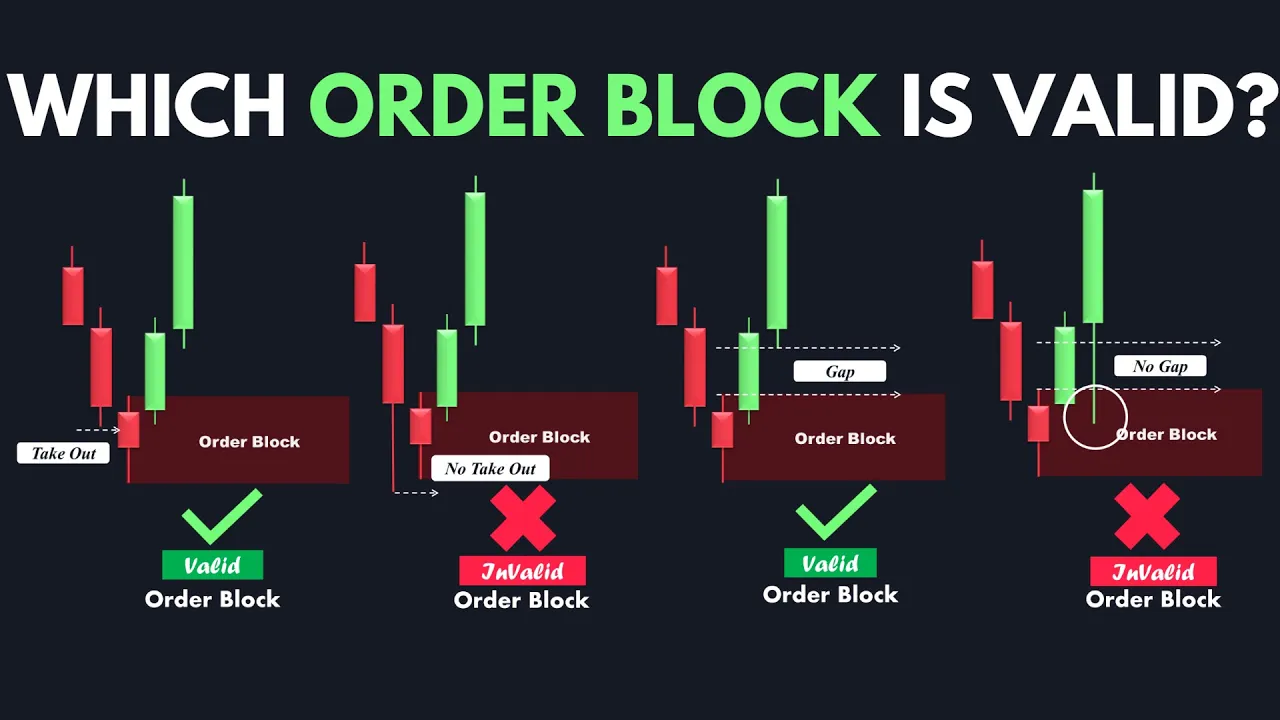
- Price must sweep liquidity above or below the previous candle to form a valid order block.
- There should be inefficiency left behind near the order block area; without this imbalance, it cannot be deemed valid.
- An unmitigated status is essential; once an order block has been mitigated (used), it loses its validity for future trades.
- A high-quality order block must result in either a break of structure or change of character in the market.
Examples and Analysis
Validating Order Blocks with Examples
- A series of candles illustrates how market momentum shifts from bearish to bullish after forming specific candles that meet criteria for valid order blocks.
- Gaps between candles indicate imbalances necessary for confirming an identified order block's validity.
Further Illustrations
- Another example shows how certain candles take out liquidity while creating gaps that validate them as potential reversal points when price pulls back down.
- A red candle fails to qualify as an order block because it does not sweep below the previous low despite being positioned correctly within market movements.
Understanding Order Blocks in Price Action Trading
Identifying Valid Order Blocks
- The price has taken the low of the previous candle, indicating a sweep of liquidity with a bearish inverted hammer candle. This suggests a potential order block candidate, but lacks noticeable imbalance among the three candles. Thus, it is not valid as it is mitigated by the upper wick of the bullish candle.
- An order block cannot be considered valid if it does not meet necessary criteria for validation. In cases where liquidity is swept but no inefficiency is created, the subsequent candlestick should be designated as the valid order block instead.
Recognizing Bullish Candles as Order Blocks
- A bullish candle can be identified as a valid order block when it creates proper inefficiency or imbalance after sweeping liquidity below its preceding candle. This indicates that price action may push significantly higher following this pattern.
- Despite identifying a bullish candle as an order block, if there’s no discernible imbalance and it's mitigated by another wick, it cannot serve as a demand area. The latest bearish candle before significant upward movement must also be analyzed for validity.
Criteria for Valid Order Blocks
- A bearish candle that surpasses and sweeps liquidity below its previous counterpart meets all criteria for being recognized as a valid order block due to creating an appropriate gap without mitigation from other candles.
- These principles apply across various timeframes and market conditions, emphasizing their versatility in trading strategies regardless of market direction (bullish or bearish). Subsequently transitioning to real charts allows practical application of these concepts discussed earlier in theory.
Practical Application on Euro Dollar Chart
- On analyzing the Euro Dollar 15-minute chart during an uptrend, we observe that price breaks structure by closing above major highs—indicating potential areas to identify relevant order blocks associated with this break of structure (BOS).
- The last bearish candle before significant upward movement serves as an initial candidate for an order block; however, upon closer inspection, it's found to be mitigated by its upper wick and thus invalidated. Another nearby bearish candle should then be evaluated instead for validity based on similar criteria regarding liquidity sweeps and imbalances.
Mitigation and Subsequent Identification
- If identified candles are mitigated by wicks from subsequent candles within sequences, traders should consider moving to analyze further candlesticks until they find one that qualifies under established rules—this process continues until finding a suitable candidate like the red hammer which appears later on in analysis despite initial reactions failing to respect it fully at first glance.
- It’s crucial always to wait for price action to take out inducements before executing trades; this principle reinforces patience in trading strategy development while ensuring better entry points into positions based on validated setups rather than impulsive decisions influenced solely by immediate market movements or reactions observed previously within charts analyzed over time frames discussed throughout sessions covered here today!
Final Considerations on Trade Execution
- After observing downward momentum pulling into our identified valid order blocks followed by reversals leading back upwards again signifies great opportunities arise when executed correctly—highlighting importance placed upon waiting patiently through changes occurring within character patterns formed along paths traveled during trades undertaken regularly!
Understanding Entry Models in Trading
Overview of Order Blocks and Market Entry
- The discussion begins with the importance of identifying order blocks for entering long positions in the market when prices tap into these zones.
- Four primary entry models are introduced, which traders can utilize based on insights from order block analysis, influenced by market factors like movement, sessions, and volatility.
Types of Entry Methods
1. Wix Entry Method
- This method involves placing buy/sell orders directly on the Wix after identifying a valid order block; stop loss is set above the higher Wix for sell positions.
- While this setup offers a wider stop loss margin affecting the reward-to-risk ratio negatively, it increases the likelihood of triggering orders as price may just touch the Wix before moving favorably.
2. Body Entry Method
- In this approach, entries are placed based on the body of the candle once an order block is identified; stop loss remains above the higher Wix for sell positions.
- Although this method typically provides a better reward-to-risk ratio due to tighter stop losses, it carries a risk of missing profitable trades if price only touches the Wix without triggering orders.
3. Midpoint Entry Method
- This preferred method places entries at the midpoint of an identified order block zone; for bearish scenarios, stop loss is positioned above the highest point of that block.
- It offers a significantly improved reward-to-risk ratio compared to other methods due to refined entry points and smaller stop losses, enhancing potential profitability while managing risk effectively.
4. Candle Body Based Entry
- The final entry type involves placing entries based on candle bodies with stop losses touching higher Wixes within an order block zone.
- This method is riskier as it may trigger stops if price fully reverses through the order block; careful consideration is advised regarding its fit within individual trading strategies.
Conclusion
Turn any video into a summary like this
YouTube links, meetings, lectures — with transcripts, search, and chat.