ITIL4 - Service Value Chain
New Section
In this section, the instructor introduces the concept of the service value chain and its significance in enhancing organizational productivity and service delivery.
Service Value Chain Introduction
- The service value chain is distinct from the service value system but complements it by working in conjunction with all components.
- Activities within the service value chain utilize various IT practices to transform inputs into outputs through engagement and planning activities.
Exploring Service Value Chain Components
This part delves into the six key activities of the service value chain, emphasizing their interconnected nature and transformative role in creating value for organizations.
Six Value Chain Activities
- Plan activity ensures a shared understanding of vision, current status, improvement direction across all dimensions, products, and services.
- Improve activity focuses on continuous improvement of products, services, and practices while considering stakeholder feedback and performance information.
Key Inputs and Outputs of Value Chain Activities
This segment highlights the essential inputs and outputs associated with each value chain activity, underscoring their role in driving improvement initiatives and performance enhancements.
Inputs and Outputs Analysis
- Improve activity receives product/service performance information from deliver & support as an input for continuous improvement.
- Engage component provides a comprehensive understanding of stakeholder needs, continual engagement, transparency, and relationship maintenance.
Detailed Requirements for Services and Products
The discussion focuses on the detailed requirements for services and products provided by internal and external customers, emphasizing the interaction between customer inputs and various components within the system.
Inputs from Customers
- Detailed requirements come from both internal and external customers.
- Customer inputs include incident reports, feedback, service requests, user information, marketing opportunities, and feedback from partners and suppliers.
Interfacing with Real Inputs
This section delves into how the Engage component interacts with real inputs from outside the system, highlighting the significance of external feedback in enhancing operations.
Key Inputs
- Engage component interfaces with real external inputs such as corporation opportunities, partner feedback, contract requirements, and knowledge about new products.
- These inputs play a crucial role in shaping operational strategies.
Improvement Component Contributions
Exploring how the Improvement component contributes to the system by providing valuable insights and data to enhance overall performance.
Contribution of Improvement Component
- Improvement component injects information about third-party services, product performance data, improvement initiatives into the system.
- It also receives status reports from other components like Improve.
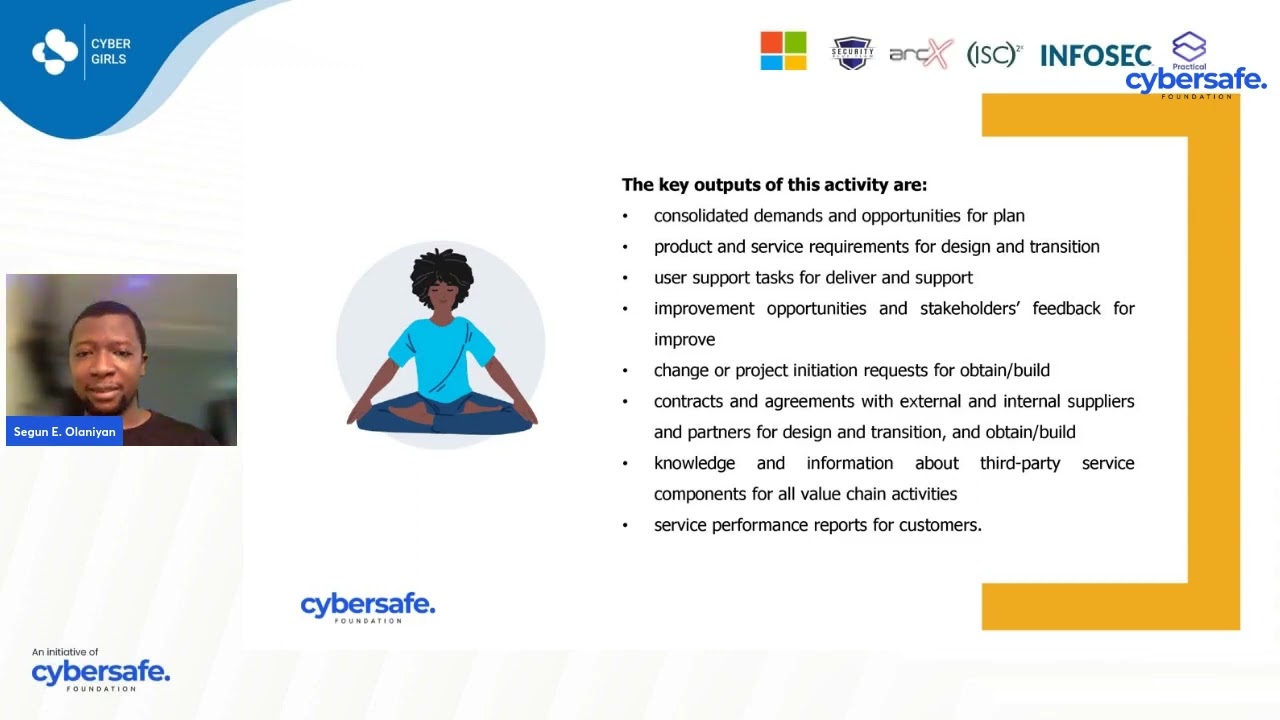
Consolidated Demand and Operations
Discussing how activities within different components lead to consolidated demand and operational opportunities for planning future actions effectively.
Outputs of Activities
- Activities result in consolidated demand for operations.
- Opportunities are identified for planning future actions based on these consolidated demands.
Collaboration Among Components
Emphasizing collaboration among various components to ensure seamless operations that meet stakeholder expectations efficiently.
Collaboration Insights
- Components inject input into each other while also providing outputs.
- Knowledge sharing ensures service performance reports align with customer expectations across all value chain activities.
Design & Transition Significance
Highlighting how Design & Transition plays a pivotal role in ensuring products continually meet stakeholder expectations regarding quality, cost-effectiveness, and timeliness.
Key Inputs
- Portfolios, architectures, product/service requirements are essential inputs received by Design & Transition.
Service Value Chain Overview
In this section, the speaker discusses the importance of checking if all specifications have been met and ensuring that the delivery aligns with stakeholders' requirements. The concept of the service value chain and its components are introduced as essential for creating value.
Understanding Service Value Chain Components
- All components are checked to verify if specifications are met and if the delivery aligns with stakeholders' needs.
- Learning about the service value chain is crucial for creating value effectively.
- The service value chain comprises various components that work together to deliver value.
- Emphasis is placed on understanding how each component contributes to overall value creation.