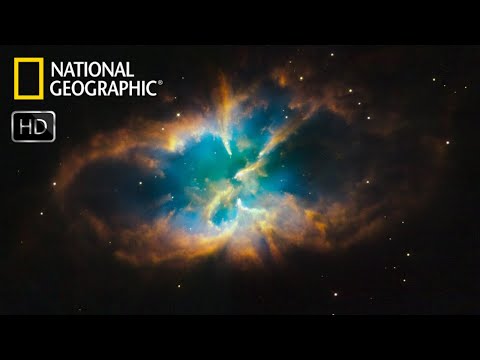
Documental HD - Los límites del universo (National geographic)
Introduction
The video begins with a brief introduction.
Introduction
- The video starts with applause and music playing in the background.
Our Place in the Universe
The narrator reflects on our place in the universe and poses questions about its nature.
Reflection on our Place in the Universe
- Our world is described as warm, comfortable, and familiar. However, when we step away from our daily lives, we start to question our significance in the vastness of the universe.
- The narrator wonders if the universe is a hospitable or hostile place and ponders whether we should stay within our comfort zone or venture out to explore its wonders. -
- Beautiful new worlds and dark malevolent forces are mentioned, hinting at both the potential marvels and dangers that await us beyond Earth. -
- The narrator questions whether we would have the courage to face these unknowns or if we would retreat back to our familiar home. -
Journey to the Limits of the Universe
The focus shifts to embarking on a journey to explore the boundaries of the universe.
Exploring Beyond Earth
- It is mentioned that just 100 kilometers away from home lies the limit of space, which can be reached within an hour's drive.
- Life on Earth continues as usual, with traffic, commerce, and even the TV show Star Trek still airing.
- Despite the familiarity of our daily lives, there is a call to leave everything behind and delve into the vast and dark ocean of space. -
The Moon
The focus turns to our closest celestial neighbor, the Moon.
Observing the Moon
- The Moon is described as a battlefield-like landscape bombarded by meteoroids and asteroids. However, it is noted that no major collisions have occurred for millions of years. -
- References are made to the Apollo 11 lunar module and Neil Armstrong's historic footsteps on the Moon's surface. It is mentioned that these footprints will likely last for millions of years due to the absence of air on the Moon. -
Venus
The focus shifts to Venus, exploring its potential as a habitable planet.
Exploring Venus
- Venus is introduced as a dazzling planet from Earth but is revealed to have lethal sulfuric acid clouds and a carbon dioxide-filled atmosphere. It is described as an inhospitable place with extreme temperatures and poisonous air. -
- The Soviet Venera probe is mentioned, which was destroyed by Venus' extreme atmosphere. -
The Future of Earth
Speculation arises about the potential future of Earth based on the conditions observed on Venus.
Speculating Earth's Future
- It is suggested that if Venus was once a tranquil place like Earth, its current state could be a glimpse into our own planet's future. -
Mercury
The focus shifts to Mercury, exploring its harsh conditions and violent past.
Exploring Mercury
- Mercury is described as a planet with extreme temperature variations, ranging from freezing cold to scorching hot. Its scarred surface indicates a turbulent history. -
- The Messenger spacecraft provides insights into Mercury's dense core and suggests that it may have been part of a larger planet that collided with another celestial body in the past. -
The Power of the Sun
The focus turns to the sun and its influence on our lives.
The Sun's Influence
- The sun is portrayed as both captivating and powerful, controlling our light, lives, and everything we do. References are made to various mythological figures associated with the sun. [0:09;49] (589 s)-
Conclusion
The video concludes with a reflection on the distance between Earth and the sun.
Reflection on Distance from the Sun
- It is mentioned that the sun is 150 million kilometers away from Earth, and if it were to suddenly go out, it would take us 8 minutes to realize it. (t=616s
The Sun: A Turbulent Star
This section explores the intense activity and extreme conditions on the surface of the sun.
The Sun's Intense Activity
- The sun is a turbulent star, with temperatures reaching 5 million degrees Celsius at its surface.
- It releases more energy in one second than all of humanity's energy production combined.
- The sun's surface is filled with electrically and magnetically active regions, such as prominences and sunspots.
- Prominences are huge circles of incandescent gas that release more energy than millions of volcanoes.
- Sunspots are cooler areas surrounded by hotter regions, appearing dark but still much hotter than anything on Earth.
Solar Eruptions and Future Implications
- Solar eruptions release superheated streams of electrified gas into space, carrying metal radiations.
- However, one day the fuel of the sun will run out, leading to its demise and ultimately affecting Earth as well.
- If a comet or asteroid were to impact Earth like it did with dinosaurs, it would have catastrophic consequences.
- Finding a new habitable planet among billions in the universe becomes crucial for our survival.
Comets: Seeds of Life?
This section discusses comets as potential carriers of water and organic material necessary for life on Earth.
Comets: Icy Messengers from Deep Space
- Comets are icy remnants from deep space that can approach the Sun and develop tails extending millions of kilometers.
- They contain frozen materials, including organic compounds preserved in ice since the early solar system formation.
- If a comet collided with Earth billions of years ago, it could have provided water and organic matter for life to emerge.
Protecting Our Planet
This section highlights the importance of protecting our planet from potential threats and the search for a new habitable world.
The Fragility of Earth
- If life on Earth were destroyed, we would be left homeless in a hostile universe.
- Finding another habitable planet becomes crucial for our survival among the countless planets in the universe.
Mars: The Red Planet
This section explores the possibility of finding extraterrestrial life on Mars.
Mars: A Fascinating Destination
- Mars has captured our imagination as a potential habitat for extraterrestrial life.
- Despite being currently inhospitable, signs of past geological activity suggest it may have once been habitable.
Challenges and Possibilities
- Martian air is too thin and filled with carbon dioxide to sustain human life.
- However, extremophile organisms on Earth prove that life can adapt to extreme conditions.
- The presence of water ice on Mars raises the possibility of microbial life existing beneath its surface.
Mount Olympus: A Giant Volcano
This section focuses on Mount Olympus, an enormous extinct volcano on Mars.
Mount Olympus: A Geological Wonder
- Mount Olympus is three times taller than Mount Everest and as wide as Spain.
- Although considered extinct, there are indications of recent geological activity on its slopes.
New Section
This section discusses the possibility of life on Mars and the search for signs of ancient lakes or oceans that could have supported life.
Signs of Life on Mars
- There are signs of erosion and dry riverbeds in the Grand Canyon-like structure on Mars, suggesting past volcanic activity may have melted ice and created water channels.
- The presence of flowing water increases the possibility of finding living organisms.
- NASA's Opportunity rover explores the desolate landscape in search of evidence that these plateaus were once ancient lakes or oceans that could have harbored life.
New Section
This section explores the theory that life may have originated on Mars before migrating to Earth, as well as the fascination with Mars as a potential ancestral home.
Life Originating from Mars
- The theory suggests that an asteroid impact on Mars ejected fragments containing microorganisms into space, which eventually landed on Earth and seeded life.
- If true, it would mean that humans are descendants of Martians.
- Mars is a captivating planet due to its potential connection to our origins.
New Section
This section highlights the mysteries yet to be discovered about Mars and other secrets waiting to be uncovered in the universe.
Unexplored Secrets
- Despite extensive study, there is still much we don't know about Mars, making it likely that there are more secrets waiting to be revealed.
- The universe is full of contradictions and surprises, urging us to continue exploring for new discoveries.
New Section
This section delves into meteorites as remnants from the birth of our solar system and their role in understanding planetary formation.
Meteorites as Birth Certificates
- Meteorites found on Earth provide valuable insights into the birth of our solar system, including the formation of planets.
- However, some rocks did not form into planets due to external factors or powerful forces.
New Section
This section focuses on Jupiter's influence in preventing asteroids from forming a planet and its violent nature.
Jupiter's Impact
- Jupiter's immense size and gravity prevent asteroids from coalescing into a planet.
- Despite its beauty, Jupiter is a gas giant with extreme violence, including high-speed winds and the legendary Great Red Spot storm.
New Section
This section emphasizes that appearances can be deceiving in space and highlights the dangers posed by radiation around Jupiter.
Deceptive Appearances
- The universe is full of contradictions and traps, challenging our understanding of what we see.
- Even seemingly beautiful phenomena like auroras are generated by lethal radiation absorbed from space by Jupiter's powerful magnetic field.
New Section
This section explores Europa, one of Jupiter's moons, as a potential refuge but reveals its volatile nature.
Europa's Volatility
- Europa resembles the Arctic with ice formations and cracks, potentially indicating liquid water beneath the surface.
- However, Europa is not a safe haven as it exhibits volcanic activity and extreme conditions.
New Section
This section reflects on the familiarity yet alienness of distant places like Europa and their potential for harboring life.
Familiar Yet Alien Worlds
- Despite being millions of kilometers away from Earth, places like Europa still hold elements that feel strangely familiar.
- The search for life continues as we explore these distant worlds in the hope of discovering new forms of life.
The summary has been organized into meaningful sections based on the content of the transcript. Each section provides a concise overview and bullet points with key insights, linked to their corresponding timestamps.
Europa: The Possibility of Extraterrestrial Life
This section discusses the potential for life on Jupiter's moon, Europa, and the mysteries surrounding it.
Europa's Potential for Life
- Europa may have a deep ocean beneath its icy crust where life could potentially develop.
- The presence of Jupiter's gravity might prevent the moon from completely freezing over, creating conditions suitable for life to thrive in the water.
Exploring Europa
- To confirm the existence of extraterrestrial life on Europa, a spacecraft would need to be sent to drill through its icy surface.
- Until such a mission is undertaken, Europa remains one of the greatest mysteries in our solar system.
Saturn: The Jewel of Our Solar System
This section focuses on Saturn and its captivating features.
The Enchanting Saturn
- Saturn is a massive gas giant that is so light it could float in water.
- Its magnificent rings are almost as long as the distance between Earth and the Moon and only a few hundred meters deep.
- The Cassini spacecraft orbits Saturn, collecting radio emissions generated by auroras around its poles.
The Magic of Saturn's Rings
- It is believed that Saturn's rings are remnants of a moon that was shattered by Saturn's gravitational force.
- Billions of ice fragments collide, break apart, and rejoin each other in an intricate dance influenced by gravity.
Titan: A Potential New Home?
This section explores Titan, one of Saturn's moons with intriguing characteristics.
Titan's Unique Features
- Titan has an atmosphere with wind, rain, seasons, rivers, lakes, and oceans.
- Although it resembles Earth in some ways, there is no water on Titan; instead, it has liquid methane and ethane.
- The abundance of gas on Titan could potentially provide a vast source of energy for future colonization.
Beyond Saturn: Exploring the Outer Limits
This section delves into the challenges of exploring beyond Saturn and reaching the outer limits of our solar system.
The Vastness of Space
- As we venture further from Earth, our visual connection with our home planet diminishes.
- Standing at the edge of our solar system, we face the mysteries that lie ahead.
Neptune: Unveiling Another Giant
This section focuses on Neptune and its enigmatic nature.
Neptune's Stormy Atmosphere
- Neptune is a gas giant surrounded by an atmosphere primarily composed of methane.
- Mysterious storms, driven by winds up to 1500 km/h, rage across its surface.
Triton: A Moon in Reverse Orbit
This section explores Triton, Neptune's moon with peculiar characteristics.
Triton's Unique Behavior
- Triton orbits Neptune in the opposite direction compared to most moons.
- Geysers on Triton spew out material into space due to its unstable nature.
- Eventually, Triton will be destroyed by Neptune's gravitational forces.
Beyond Neptune: The Icy Realm
This section discusses the icy objects beyond Neptune in our solar system.
Pluto and Its Neighbors
- Pluto was once considered alone but is now known to be part of a region filled with icy objects.
The Distant Objects in the Solar System
This section discusses the discovery of a distant object called Sedna, which is an icy world that takes 10,000 years to orbit the Sun and can reach a distance of 130 billion kilometers from it.
Sedna: A Distant Icy World
- Sedna is an icy world discovered in 2003.
- It takes 10,000 years to complete one orbit around the Sun.
- After its orbit, it can reach a distance of 130 billion kilometers from the Sun.
Voyager One: Exploring Faraway Planets
This section highlights the Voyager One spacecraft and its significance in capturing images of giant planets and providing insights about their moons. It also mentions the golden record on board containing greetings in different languages and a map to find our solar system.
Voyager One: Fast and Communicative
- Voyager One travels 20 times faster than a bullet.
- It captures images of giant planets and provides information about their moons.
- The spacecraft carries a golden record with greetings recorded in different languages.
- The record also includes a map showing how to find our solar system.
Cosmic Icebergs and Potential Origins of Life
This section discusses cosmic icebergs and their potential role in bringing water and organic molecules to Earth. It speculates that these icebergs may have originated from distant celestial machines made of ice.
Cosmic Icebergs: Possible Originators of Life
- A cosmic iceberg cloud extends seemingly infinitely into space.
- These icebergs resemble comets that may have started life on Earth by delivering water and organic molecules.
- Water on Earth, including oceans, coffee, and even our bodies, could have come from these celestial ice machines.
The Vastness of Space and the Need to Explore
This section emphasizes the immense scale of the universe and encourages us to look beyond our own planet. It mentions billions of stars, many with planets, and the need for a significant acceleration to explore interstellar space.
The Immensity of Space
- Billions of stars, like our Sun, exist in the universe.
- Many stars have planets, some potentially with life-supporting conditions.
- Exploring interstellar space requires a substantial acceleration.
Interstellar Space: Beyond Our Solar System
This section introduces interstellar space as an area beyond our solar system that contains billions of stars similar to our Sun. It highlights the vast possibilities and infinite directions for exploration.
Interstellar Space: A World of Infinite Possibilities
- Interstellar space is much larger than our solar system.
- It contains billions of stars like our Sun, many with their own planets.
- The direction for exploration in interstellar space is virtually limitless.
Searching for Habitable Systems
This section discusses the search for habitable systems similar to ours. It mentions Alpha Centauri as another star system with three stars orbiting each other and emphasizes the challenges in finding mature and developed solar systems.
The Quest for Habitable Systems
- Alpha Centauri is a star system with three stars orbiting each other.
- Finding mature and developed solar systems is challenging due to their vast numbers and complexity.
Distances in Light Years: Beyond Comprehension
This section explores distances in light years and how they are used to measure astronomical distances. It mentions Epsilon Eridani, a star located 10 light years away from Earth, where planets may be forming.
Distances in Light Years
- One light year is the distance light travels in one year, approximately 10 trillion kilometers.
- Epsilon Eridani is a star located 10 light years away from Earth.
- Planets may be forming around Epsilon Eridani.
Speculating Life on Distant Planets
This section speculates about the possibility of life on distant planets and the potential for them to receive our television signals from the past. It also acknowledges that we may never know if there was or currently is life on these planets.
Speculating Life on Distant Planets
- If life exists on distant planets, they could potentially receive our television signals from 20 years ago.
- However, communication across vast distances remains a challenge.
- The existence of life on these planets may remain unknown unless it has disappeared.
Comets: Creators and Destroyers
This section discusses comets as both creators and destroyers. It mentions their role in delivering water and organic molecules to young planets, similar to how they might have contributed to the origin of life on Earth.
Comets: Agents of Creation and Destruction
- Comets played a role in delivering water and organic molecules to young planets.
- They could have contributed to the origin of life on Earth.
- Comets are both creators and destroyers, just like the dinosaurs experienced their destructive power 65 million years ago.
The transcript provided does not cover all sections mentioned in the prompt.
New Section
This section discusses the discovery of the planet Velero Phone and the challenges of observing distant planets from Earth.
Discovery of Velero Phone
- The planet Velero Phone was discovered in the 1990s, opening doors to the discovery of other distant planets.
- Planets like Velero Phone are difficult to observe from Earth due to being obscured by the brightness of neighboring stars.
- Scientists were able to detect Velero Phone by measuring its tiny gravitational force on nearby stars.
New Section
This section explores a star located 60 light-years away from Earth and the signals it receives.
Signals from a Distant Star
- A star located 60 light-years away called Sintonizamos is receiving television signals from the Berlin Olympics during Hitler's time.
- These signals were transmitted using basic technology, such as sticks.
New Section
This section discusses twin stars and their intriguing behavior.
Twin Stars
- Twin stars, known as Al Gol, have been feared since ancient times due to their sinister behavior.
- When one star passes in front of the other, they appear to blink. The gravitational force between them causes one star to be pulled towards the other.
New Section
This section explores a distant star that receives faint radio transmissions.
Faint Radio Transmissions
- A star located nearly 100 light-years away picks up one of the first radio transmissions, a weak whisper.
- After the initial transmission, there is silence, as if Earth never existed.
New Section
This section emphasizes the importance of appreciating the wonders of the universe and our place within it.
Appreciating the Universe
- We should focus on marveling at the wonders of the universe rather than solely focusing on our own world.
- The Milky Way galaxy contains countless stars, each with its own story to tell.
- Notable celestial objects include the Pleiades (Seven Sisters), which were transformed into stars to assist their father Atlas in holding up the heavens, and Betelgeuse, a giant star over 600 times wider than our sun.
New Section
This section introduces an enigmatic object known as the Dark Cloud of Orion.
The Dark Cloud of Orion
- The Dark Cloud of Orion is not a star or a planet but something entirely different and unlike anything seen before.
- It appears as a ghostly specter over 1,300 light-years away from Earth.
- The cloud is composed of dense dust and gas that isolates us from the outer universe.
New Section
This section explores how stars are born within the Dark Cloud of Orion.
Birth of Stars
- Within the Dark Cloud of Orion, there is a ball of light that attracts dust and gas towards itself, heating up in the process.
- Inside this ball, nuclear reactions occur, similar to those in our sun, releasing energy and creating a star.
- The Dark Cloud of Orion serves as a stellar factory, witnessing the birth of future universes.
New Section
This section highlights the violent yet awe-inspiring nature of star formation.
Violent Star Formation
- Gas jets explode at speeds of 200,000 kilometers per hour, propelling dust and gas millions of kilometers away.
- These explosions result in the formation of nebulae, large bright clouds of gas that take thousands of years to disperse.
- The nebulae appear to shape vast stellar sculptures, showcasing nature's artistic prowess on a grand scale.
New Section
This section explores the life cycle and remnants of stars.
Life Cycle and Remnants
- Stars are born, grow, and eventually die or disappear quietly into the night.
- Luminous clouds surround what was once a star like our sun, thousands of light-years away.
- The colorful gases emitted by dying stars contain elements crucial for life on Earth: helium, hydrogen, nitrogen, oxygen.
- Our existence is intertwined with the nuclear waste products from these ancient stars that died long before Earth's formation.
New Section
This section reflects on our cosmic origins and connection to stars.
Cosmic Origins
- We are made up of stellar nuclear waste. Our family tree begins with these remnants.
- The ghost of a star, a white dwarf, is incredibly dense and hot, with atoms fused together.
- These dense remnants weigh tons, even though they are small in size.
The transcript provided does not include timestamps for every line.
The Birth of the Universe
This section explores the birth of the universe and the mysteries that surround it.
The Nebula of the Crab
- The remnants of a dead star, known as the Crab Nebula.
- Located 6000 light-years away from Earth.
- It is a stellar nursery where we have witnessed incredible phenomena.
The Pulsar
- A rotating and oscillating star fragment, only 20 kilometers in diameter.
- Incredibly dense, weighing hundreds or even millions of tons.
- Spins faster and emits energy and radiation at an astonishing rate.
Radiation and Dangers
- The pulsar emits intense radiation, even more than our own sun.
- It is one of the most lethal phenomena encountered so far.
- However, these dangers also bring wonders and dreams.
Confronting Extinction
This section delves into the discovery of a black hole and its implications for humanity.
Black Hole
- A black hole possesses such intense gravity that not even light can escape it.
- It defies all known laws of physics, including time and space.
Existential Questions
- Are we living inside a vast black hole?
- Contemplating this possibility can be mind-boggling.
Journey to the Edge of the Galaxy
This section focuses on exploring our own galaxy, the Milky Way, and venturing towards its outer limits.
Complexity and Danger
- Our galaxy is more complex and dangerous than previously imagined.
Secrets Beyond
- Countless wonders, dangers, and secrets lie beyond our galaxy's boundaries.
The Pillars of Creation
This section highlights the beauty and challenges encountered within our own galaxy.
The Pillars of Creation
- A colossal cloud crowned by towering dust structures.
- Each pillar contains embryonic star systems.
- Despite their captivating beauty, we must move on to reach the outer limits of the galaxy.
Hypernova
This section explores the death of massive stars and the violent phenomenon known as a hypernova.
Stellar Death
- A massive star millions of times brighter than our sun is nearing its end.
- As fuel depletes, nuclear reactions weaken, leading to an implosion.
Hypernova
- The result is a hypernova, hundreds of times more violent than a supernova.
- We find ourselves witnessing one of the most extreme stellar deaths imaginable.
The Expanding Universe
This section discusses the expansion of the universe and its impact on stars and planets.
The Impact of Stellar Explosions
- The expanding shockwave from a stellar explosion can strip away the outer layers of a star, causing catastrophic radiation.
- These lethal radiations can have devastating effects on nearby planets.
- Various celestial bodies such as deadly novas, frozen comets, scorched planets, white dwarfs, and red giants exist in our galaxy, the Milky Way.
Our Insignificant Home
- Earth is a tiny planet orbiting an insignificant star in the vastness of space.
- Despite this insignificance, we have not found another habitable place to live.
- We are just beginning to realize our true place in the universe.
Searching for Life Beyond Earth
This section explores the search for extraterrestrial life and the possibility of other advanced civilizations.
The Quest for Other Civilizations
- Despite extensive searches, we have not yet found extraterrestrial life.
- However, there is no reason to believe that life doesn't exist elsewhere in the universe.
- An equation has been developed to estimate the number of advanced civilizations in our galaxy alone, suggesting there could be millions.
Venturing into Intergalactic Space
This section delves into intergalactic space exploration and our ability to observe other galaxies.
Leaving Our Galaxy
- We are now ready to leave our solar system and galaxy behind and venture into intergalactic space.
- Beyond our galaxy lies a vast expanse with no visible horizon. Even nearby galaxies are millions of light-years away.
The Mystery of Dark Matter
This section discusses the enigmatic nature of dark matter and its prevalence in the universe.
The Elusive Dark Matter
- Dark matter is a mysterious substance that cannot be seen, felt, or measured.
- It may constitute up to 90% of all matter in the universe.
- Its existence is inferred from its gravitational effects on galaxies, such as the Great Magellanic Cloud.
Supernovas and the Birth of Elements
This section explores supernovas and their role in creating elements essential for life.
The Power of Supernovas
- Supernovas are massive explosions that forge new elements through nuclear reactions.
- These explosions can propel elements like gold, silver, and platinum across vast distances in space.
- Even the gold in our jewelry was formed billions of years ago in a distant supernova.
Our Connection to the Universe
This section emphasizes our interconnectedness with the universe as we venture further into space.
A Reminder of Our Place
- As we journey deeper into space, it's important to remember that the history of the universe is intertwined with our own story.
- We are part of something much larger than ourselves.
Exploring Galaxies and Time
This section highlights our ability to explore galaxies across vast distances and time.
Journeying Through Space and Time
- We can observe galaxies millions or even billions of light-years away, allowing us to glimpse into their past.
- The destruction and rebirth of galaxies are complex processes driven by interactions with other galaxies and cosmic forces.
The Beauty of the Universe
This section celebrates the awe-inspiring beauty and wonders of the universe.
A Celestial Wonderland
- The universe is a vast astronomical mansion filled with breathtaking phenomena.
- From shimmering galaxies to explosive supernovas, it is a testament to the grandeur and diversity of our cosmos.
The Vastness of the Universe
This section explores the vastness of the universe and the number of stars that exist.
The Number of Stars
- There may be more stars in the universe than grains of sand on all the beaches on Earth.
- All existing stars today are just a fraction of those that have existed in the past.
- We contemplate whether our species will still exist when a message reaches a galaxy 27 million light-years away.
Journeying Through Time
This section discusses traveling through time and space, exploring distant galaxies and reaching the limits of the known universe.
Traveling Through Time
- We travel back in time to when dinosaurs roamed and even further back to when life first emerged on Earth.
- Our journey takes us two billion light-years away from home, approaching the edge of the universe.
- We encounter a galaxy that shines brighter than hundreds of others combined, possibly a quasar, one of the most powerful objects in existence.
The Power of Quasars
This section delves into quasars, incredibly powerful and destructive objects in the universe.
The Power of Quasars
- Quasars are spiral cauldrons of superheated gas, brighter than hundreds of galaxies combined.
- Their power comes from massive black holes at their core, devouring entire stars and leaving them lost forever to the visible universe.
Reaching the Limits
This section focuses on reaching the limits of our exploration and understanding.
The Limits Explored
- We have witnessed some of the most powerful forces in the universe and now approach the boundaries of the known universe.
- We need to go farther and faster if we want to reach the farthest corners of the known universe.
- More galaxies come into view, appearing different and closer together, as we travel billions of light-years away from home.
The Beginning of Everything
This section explores the origin of the universe and its creation.
The Birth of Our Universe
- We have arrived at the edge of the universe, 130 billion trillion kilometers away, where everything began with the Big Bang.
- All that has happened since then is a result of that momentous event.
- Despite reflections from various religions and cultures, we still do not fully understand what triggered this act of creation or why it occurred.
Riding on Waves
This section discusses riding on waves through time and space, witnessing remnants from the Big Bang.
Riding on Waves
- We continue our journey through time, riding on an expanding wave that carries sparks from galaxies, stars, planets, and even remnants from the Big Bang itself.
- Everything we have seen during our journey is now a jumble of debris.
- We trace our path back to Earth as it cools down in the aftermath of the Big Bang.
Looking to the Future
This section looks ahead to future events in cosmic history.
Looking Ahead
- To see into the future, we must look back in time. In three billion years, Andromeda will collide with our galaxy.
- A new galaxy will be born while our sun becomes a red giant and engulfs Venus and Mercury before scorching Earth's surface.
The transcript provided was not in English, so the summary is based solely on the timestamps and does not include any additional information.
The Dying Universe
In this section, the speaker discusses how the universe has been slowly dying since the Big Bang.
The Slow Death of the Universe
- Since the Big Bang, the universe has been gradually fading away.
- It is not an abrupt end but a long and silent demise.
A Glimmer of Hope
This section introduces the possibility of finding an escape from our dying universe.
Finding a Way Out
- There might be a way to escape our dying universe.
- Our distant descendants could potentially discover a shortcut through space and time, such as a wormhole.
- If there are other universes, this wormhole could lead our descendants from our doomed universe to another parallel one where they would find another thriving Earth.