Part 5 - Biomass, Biogas & Other Fuels in RETScreen Expert
Detailed Analysis of Combined Power Heating and Cooling Feasibility
This section delves into the exploration of various examples within the combined power heating and cooling feasibility analysis using the RETScreen Expert software.
Large Steam Turbine Cogeneration System
- The large steam turbine cogeneration system introduces a more complex system compared to previous examples, offering additional operating strategies.
- By selecting a specific example from the case studies and templates section, users can access detailed information on a cogeneration system with cooling capabilities located in the USA.
- The system utilizes natural gas and oil as fuels, with varying costs for natural gas. Imperial units are used due to the project's location in the USA.
- Two high-pressure steam boilers feed the steam turbine, one being oil-fired and the other using natural gas for most of the year. The model calculates power capacity with extraction options affecting both power and heating capacities.
- Operating strategies include full capacity output, power load following, and heating load following. Utilizing extraction ports impacts heating load variations based on electricity rates.
Small-Scale User Defined Biogas Cogeneration System
- This example focuses on a user-defined biogas cogeneration system that considers process eating loads.
- By selecting a specific biogas project from case studies, users can explore how biogas production is calculated based on waste decomposition, such as pig waste in this instance.
- Emission factors need manual input for emission analysis. The model calculates biogas production based on waste quantity and composition.
- Process eating loads are defined within the model to simulate energy consumption patterns accurately for efficient system design.
Detailed Method for Load Adjustment
In this section, the detailed method for load adjustment is discussed, allowing for variations in load on a monthly basis to cater to seasonal changes in energy demand.
Standard vs. Detailed Load Adjustment
- The standard method maintains a constant load throughout the year.
- The detailed method offers the flexibility to adjust the load monthly based on varying energy needs.
Load Profile Visualization
- Processed load profiles are visualized in monthly graphs, depicting variations in energy consumption.
- Power load is assumed constant at 30 kilowatts annually for simplification purposes.
Equipment Selection and Financial Implications
- A 30-kilowatt capstone turbine is chosen from the product database for the project.
- The financial viability of the project is influenced by factors such as fuel consumption and emission analysis.
Biogas Utilization and Emission Reduction
This segment delves into utilizing biogas for energy production, emission reduction benefits, and financial viability assessment.
Energy Generation and Consumption
- Turbine-generated electricity covers over 76% of total energy needs on-site.
- Remaining energy requirements are met by an existing biogas boiler, ensuring sustainable energy sourcing.
Environmental Impact Assessment
- Project analysis indicates a substantial reduction in greenhouse gas emissions.
- Landfill gas utilization presents an alternative option with its own calculators and benefits.
Ground Source Heat Pump Project Analysis
Exploring a ground source heat pump installation project focusing on heating and cooling applications through detailed cost analysis and equipment selection.
Feasibility Study Setup
- Initiating a ground source heat pump project involves selecting power eating cooling as facility type.
- Cost analysis includes evaluating ground exchanger sizing and associated expenses for efficient system design.
Virtual Energy Analyzer Application
- Utilizing virtual tools like VA streamlines project setup with location selection (e.g., Toronto).
Detailed System Design Overview
The transcript delves into the detailed system design process, focusing on aspects like entering costs, system characteristics, and electricity consumption by the heat pump for heating and cooling seasons.
Entering Costs and System Characteristics
- A peak eating load is observed after entering the cost of the ETM into the cooling equipment section.
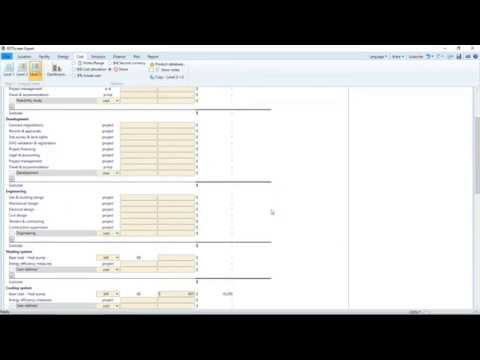
- In level 3 of the cost sheet, VA automatically selects the cooling system subsection. A cost is entered for the heat pump only in this section.
Ground Heat Exchanger Calculation
- The ground heat exchanger tool assists in sizing and costing for a ground system with options like horizontal closed-loop, vertical closed-loop, and groundwater heat exchanger.
- Specific project details like pump capacity, average load, site conditions are inputted. In this case study, a vertical closed-loop option was chosen.
Calculations and Results
- The tool calculates parameters such as pump size, quantity of circulating fluid, pipe size, and land area required for installation.