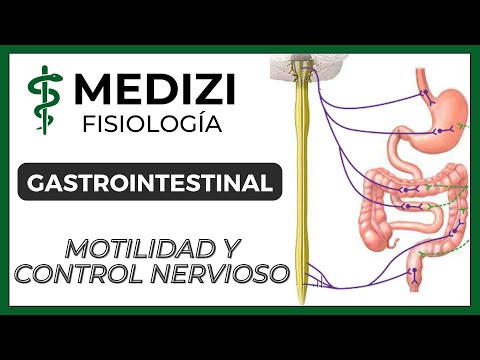
Clase 43 Fisiología Gastrointestinal - Motilidad y Control Nervioso (IG:@doctor.paiva)
Introduction to Gastrointestinal Physiology
Overview of the Class
- The 43rd class on gastrointestinal physiology is introduced by Eduardo Paiva, focusing on motility and nervous control.
- Key topics include general principles of gastrointestinal anatomy, nervous control, and types of movements within the digestive tract.
Functions of the Digestive System
- The digestive system provides continuous supplies of water, electrolytes, vitamins, and nutrients through various functions: movement of food, secretion of digestive juices, digestion, absorption of nutrients, circulation for substance transport, and nervous/hormonal regulation.
Anatomy and Structure of the Digestive Tract
Pathway Through the Digestive System
- Food travels from the mouth through the esophagus to the lower esophageal sphincter into the stomach; then it moves through various sections including duodenum and ileum before reaching the large intestine.
Layers of Intestinal Wall
- The intestinal wall consists of several layers: serosa (outer), longitudinal muscle layer, circular muscle layer, submucosa, and mucosa which contains smooth muscle called muscularis mucosae.
Muscle Function in Digestion
Cellular Connections in Muscle Layers
- Muscular layers are interconnected via gap junctions allowing ion passage between cells; this creates a functional syncytium essential for coordinated contractions.
Electrical Activity in Smooth Muscle
- When stimulated electrically via gap junction connections (formed by connexins), all muscle cells depolarize simultaneously leading to coordinated contraction.
Types of Electrical Waves in Smooth Muscle
Slow Waves vs. Spike Potentials
- Gastrointestinal smooth muscle exhibits two types of electrical activity: slow waves (not action potentials but oscillations in resting potential) and spike potentials (true action potentials that lead to contraction).
Frequency Variation Across Regions
- The frequency of slow waves varies across different regions: approximately 3 per minute in the stomach to about 12 per minute in the duodenum.
Role of Interstitial Cells
Pacemaker Functionality
- Interstitial cells of Cajal act as pacemakers for gastrointestinal smooth muscle similar to how cardiac pacemakers function; they generate slow waves that regulate spike potentials leading to contractions.
Differences Between Action Potentials
Duration and Mechanism Differences
- Action potentials in smooth muscle last significantly longer than those in nerve fibers (10–40 times longer); they can last up to 20 milliseconds due to slower calcium/sodium influx rather than rapid sodium entry seen in nerve fibers.
Factors Influencing Muscle Excitation
Understanding the Role of Noradrenaline in Gastrointestinal Function
The Mechanism of Noradrenaline and Adrenaline
- Noradrenaline has a higher inhibitory capacity compared to adrenaline due to its greater affinity for alpha receptors, which are abundant in smooth muscle.
- This inhibition leads to hyperpolarization of gastrointestinal action potentials, effectively paralyzing smooth muscle by preventing contraction and depolarization.
Calcium's Role in Smooth Muscle Contraction
- Upon reaching an action potential, calcium enters the cell while sodium exits; calcium is also released from the sarcoplasmic reticulum.
- Calcium binds with calmodulin, activating myosin kinase, which phosphorylates the light chain of myosin, resulting in smooth muscle contraction.
Effects on Membrane Potential and Muscle Tone
- In normal conditions, slow waves generate membrane potentials that increase with stimulation; this results in heightened muscle tone and rhythmic contractions.
- When inhibited by sympathetic stimuli, there is a significant reduction in membrane potential activity and muscle tone becomes nearly nonexistent.
The Enteric Nervous System: Structure and Function
Overview of the Enteric Nervous System
- The gastrointestinal tract possesses its own nervous system known as the enteric nervous system (ENS), consisting of two main plexuses: Auerbach's (myenteric) plexus and Meissner's (submucosal) plexus.
Functions of Auerbach’s Plexus vs. Meissner’s Plexus
- Auerbach's plexus primarily controls gastrointestinal movements while Meissner's plexus regulates secretion and local blood flow.
- The ENS can operate independently but is influenced by both sympathetic (inhibitory effects on GI functions) and parasympathetic systems (activating GI functions).
Sympathetic vs. Parasympathetic Control of Gastrointestinal Activity
Pathways of Autonomic Nervous System Influence
- The parasympathetic system innervates the intestines via cranial nerves (vagus nerve) and sacral segments, enhancing enteric function through acetylcholine release.
- Conversely, sympathetic innervation arises from thoracic-lumbar segments affecting gut function through prevertebral ganglia like celiac ganglion.
Impact on Gastrointestinal Motility
- Sympathetic stimulation inhibits enteric activity predominantly through noradrenaline release which can paralyze gastrointestinal motility entirely under strong stimuli.
- Notably, while sympathetic activation suppresses most smooth muscle activity within the GI tract, it paradoxically stimulates mucosal muscles.
Inervación y Reflejos del Sistema Digestivo
Estímulos del Sistema Nervioso en el Tubo Digestivo
- El sistema nervioso parasimpático tiene un estímulo más intenso en ciertas zonas del tubo digestivo, mientras que el simpático actúa de manera uniforme a lo largo de todo el tubo.
- Las neuronas del sistema simpático son principalmente ganglionares, mientras que las del parasimpático son pre-ganglionares. Esto se explorará con más detalle en la clase sobre el sistema nervioso autónomo.
Sensibilidad y Reflejos Gastrointestinales
- Las fibras nerviosas sensitivas en el tubo digestivo tienen sus cuerpos celulares en el sistema nervioso entérico y los ganglios de la raíz dorsal de la médula espinal.
- Estas fibras pueden ser estimuladas por irritaciones, distensión o sustancias químicas específicas, provocando excitación o inhibición dependiendo del tipo de reflejo.
Tipos de Reflejos Gastrointestinales
- Existen tres tipos principales de reflejos gastrointestinales:
- Integrados dentro del sistema nervioso intestinal.
- Que van desde el intestino a los ganglios simpáticos prevertebrales y regresan al tubo digestivo.
- Que van hacia la médula espinal o tronco encefálico y vuelven al tubo digestivo.
Reflejos Integrados
- Los reflejos integrados controlan la secreción digestiva, contracciones de mezcla y efectos inhibitorios locales. Se estudiarán más a fondo en clases futuras.
Reflejos Específicos
- El reflejo gastro-cólico proviene del estómago e induce evacuación colónica; mientras que el reflejo entero-gástrico inhibe la secreción gástrica desde el colon.
- Los reflejos dolorosos causan una inhibición general del aparato digestivo; cuando hay dolor, se paraliza el peristaltismo.
Control Hormonal de la Motilidad Digestiva
- Las principales hormonas involucradas son: gastrina, colecistoquinina (CCK), secretina y péptido inhibidor gástrico (GIP). Cada una tiene funciones específicas relacionadas con la motilidad.
Gastrina
- La liberación de gastrina es estimulada por proteínas, distensión e irritación. Su función principal es estimular la secreción ácida gástrica.
Colecistoquinina (CCK)
- CCK se libera ante proteínas, grasas y ácidos; estimula secreciones pancreáticas y contracción vesicular biliar mientras inhibe vaciamiento gástrico.
Secretina
Digestive Hormones and Their Functions
Role of Bicarbonate in Digestion
- The release of bicarbonate, which is alkaline, helps to neutralize excess gastric acid. This process is stimulated by the presence of acids.
- Bicarbonate also plays a role in stimulating the growth of the exocrine pancreas and inhibiting gastric acid secretion.
Gastric Inhibitory Peptide (GIP)
- GIP is released in response to proteins, fats, and carbohydrates. It stimulates insulin release while inhibiting gastric acid secretion.
- Insulin secretion from the pancreas is enhanced by GIP, highlighting its importance in glucose metabolism.
Motility and Its Regulation
- The stimulus for motility includes fats and acids; motilin specifically promotes gastrointestinal motility.
- Motilin is secreted primarily during fasting periods but increases upon food intake.
Digestive Movements: Propulsion vs. Mixing
- The digestive tract exhibits two main types of movements: propulsion (moving food along at an appropriate speed for digestion) and mixing (keeping intestinal contents well mixed).
- Peristalsis is identified as the basic movement within the digestive system, driven by smooth muscle contractions.
Mechanisms Behind Peristalsis
- Distension serves as a primary stimulus for peristalsis; it triggers contractions that create a ring-like contraction around distended areas.
- Effective peristalsis requires an active myenteric plexus, which generates necessary contractions.
Understanding Intestinal Movement Dynamics
- Peristaltic movements generally progress from mouth to anus; depolarization leads to coordinated contractions that push content forward.
- The combination of proximal contraction and distal relaxation facilitates effective movement towards the anus.
Types of Mixing Movements
- Two forms of mixing exist: those caused by peristaltic contractions and local constriction contractions that help break down food particles.