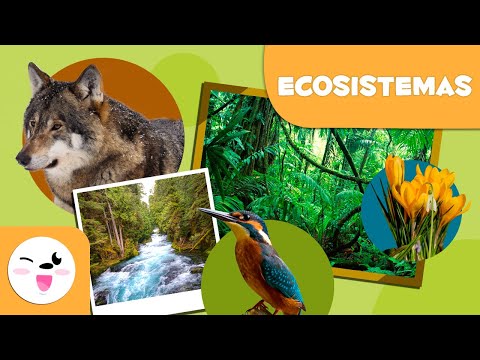
¿Qué son los ecosistemas? - Tipos de ecosistemas para niños
What is an Ecosystem?
Introduction to Ecosystems
- The video introduces the concept of ecosystems, explaining that they consist of a community of living beings and the physical characteristics of their natural environment.
Types and Sizes of Ecosystems
- Ecosystems vary in size; they can be vast like the Sahara Desert or smaller and more defined like the Dead Sea.
- Each ecosystem has specific flora and fauna adapted to its unique characteristics and resources, leading to diverse types.
Components of Ecosystems
- Ecosystems are made up of two main components: biotopes (physical environment) and biocenosis (living organisms).
- Biotopes include non-living elements such as soil, water, air, wind, light, and temperature.
- Biocenosis refers to all living organisms within that environment including microorganisms, plants, and animals.
Natural vs. Artificial Ecosystems
- There are two primary types of ecosystems: natural ecosystems (developed without human intervention) and artificial ecosystems (created by humans).
- Natural ecosystems exhibit diversity due to varying climates and resources.
Adaptations in Natural Ecosystems
- Organisms in natural ecosystems have developed adaptations for survival; for example, polar bears are white for camouflage in Arctic environments.
Categories within Natural Ecosystems
- Natural ecosystems can be classified into terrestrial (e.g., deserts, forests) or aquatic systems (e.g., rivers, oceans).
Aquatic Ecosystem Types
- Aquatic ecosystems are categorized based on water type:
- Freshwater ecosystems include rivers and lakes.
- Saltwater ecosystems encompass seas and oceans.
Importance of Relationships in Ecosystems
- Artificial ecosystems include urban areas, agricultural lands, agro-pastoral systems, and reservoirs—spaces not found naturally.
Conservation Message