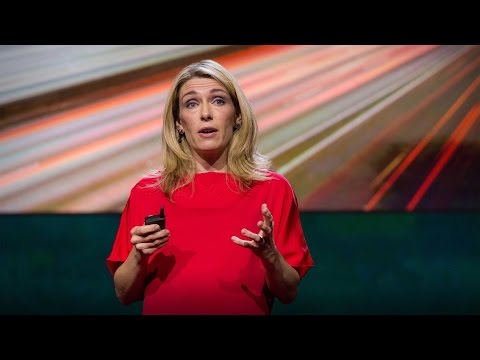
Why some people are more altruistic than others | Abigail Marsh
The Power of Altruism
In this section, the speaker shares a personal experience of being saved by a stranger and expresses curiosity about the causes of altruistic behavior.
Understanding Altruism
- Altruism is the voluntary, costly behavior motivated by the desire to help another individual.
- The speaker wonders what forces within people lead them to make selfless choices and risk their own lives to save others.
- The roots of extraordinary acts of altruism need to be explored to understand why some individuals engage in such behaviors.
A Life-Changing Event
The speaker recounts a car accident that led to their life being saved by an unknown stranger.
The Accident
- While driving, the speaker swerved to avoid hitting a dog but ended up causing a car accident.
- Their car spun across the freeway and faced oncoming traffic before coming to a stop with a dead engine.
- They believed they were about to die until a brave man pulled over, ran across four lanes of traffic, and rescued them.
- After fixing the car and ensuring their safety, the stranger left without revealing his name.
Gratitude and Inspiration
The speaker expresses gratitude towards the stranger who saved their life and explains how it influenced their career path.
Expressing Gratitude
- The speaker takes a moment to express gratitude towards the stranger who rescued them.
- They acknowledge that they forgot to say thank you at that time.
Life's Course Changed
- This life-saving event had a profound impact on the speaker's life.
- It inspired them to become a psychology researcher focused on understanding human capacity for caring for others.
Exploring Human Nature
The speaker discusses common beliefs about human nature and introduces questions about altruism and its extreme forms.
Human Nature and Altruism
- Many people believe that human nature is fundamentally selfish, motivated solely by self-interest.
- The speaker questions why some individuals, like the stranger who rescued them, engage in selfless acts at great risk and cost to themselves.
- Understanding the causes of altruism is crucial for comprehending basic aspects of human social nature.
Extraordinary Acts of Altruism
The speaker highlights the need to study extraordinary acts of altruism and explores potential differences between highly altruistic individuals and others.
Studying Altruistic Acts
- To understand why people care about others, it is important to study those who engage in extraordinary acts of altruism.
- Psychopaths, who lack the desire to help others, are often studied to gain insights into basic aspects of human nature.
Characteristics of Psychopaths
- Psychopathy is a developmental disorder with genetic origins that leads to cold and uncaring personalities.
- Psychopaths exhibit three characteristics: insensitivity to signs of distress in others, difficulty recognizing fearful facial expressions, and smaller amygdalas (the brain region responsible for recognizing fear).
Understanding Compassion
The speaker discusses compassion as a key driver of altruism and suggests that highly altruistic individuals may have different brain structures.
Compassion and Altruism
- Compassion plays a significant role in motivating altruistic behavior.
- The speaker raises the question of why some individuals seem to possess more compassion than others.
Brain Differences
- Highly altruistic individuals may have brains that differ fundamentally from those less inclined towards altruism.
- The speaker started their research on understanding compassion by studying psychopaths from the opposite end.
Starting with Psychopaths
The speaker explains their approach of studying psychopaths to understand the roots of altruism.
Studying Psychopaths
- Psychopaths, who lack the desire to help others, provide insights into understanding why some individuals exhibit altruistic behavior.
- Brain imaging research on psychopathic adolescents has revealed interesting findings.
Characteristics of Psychopaths
- Psychopaths are generally insensitive to other people's emotions and have difficulty recognizing fearful facial expressions.
- Their amygdalas, responsible for recognizing fear, show underreactivity or no reaction at all.
- The amygdalas of psychopaths are smaller than average.
Understanding Altruism
The speaker emphasizes their main interest in understanding why people care about others rather than focusing solely on those who lack compassion.
Main Interest
- While studying psychopaths provides valuable insights, the speaker's primary focus is understanding the causes behind caring for others.
The Altruistic Act that Changed My Life
In this section, the speaker shares a personal experience of being saved by a stranger and expresses gratitude towards him. This incident sparked the speaker's interest in understanding altruism and its causes.
The Life-Saving Incident
- A man resembling actor Idris Elba saved the speaker's life after a car accident.
- The man ran across four lanes of freeway traffic to bring the speaker back to safety.
- The speaker was deeply shaken but also curious about what motivated the man to risk his own life for a stranger.
Understanding Altruism
The speaker reflects on their burning desire to understand why people engage in selfless acts of altruism.
Curiosity about Altruistic Behavior
- After the life-saving incident, the speaker felt compelled to explore the causes of altruism.
- They became a psychology researcher dedicated to studying human capacity for caring for others.
- Questions arise regarding where altruism comes from, how it develops, and its extreme forms.
The Car Accident
The speaker recounts the car accident that led to their life being saved by a stranger.
Near-Fatal Accident
- While driving home at 19 years old, the speaker swerved to avoid hitting a dog.
- This caused their car to spin across the freeway and face oncoming traffic.
- In that moment, they believed they were going to die.
Gratitude towards the Stranger
The speaker expresses gratitude towards the stranger who rescued them and acknowledges forgetting to thank him properly.
An Unforgettable Act of Kindness
- A brave man made a split-second decision to pull over and save the speaker's life.
- He fixed their car, ensured their safety, and left without revealing his name.
- The speaker regrets not expressing their gratitude adequately.
Devoting Life to Understanding Altruism
The speaker explains how the life-saving incident influenced their career path and research focus on understanding altruism.
A Life-Changing Event
- The events of that night altered the course of the speaker's life.
- They became a psychology researcher dedicated to studying human capacity for caring for others.
- Questions about the origins, development, and extreme forms of altruism became central to their work.
Challenging Assumptions about Human Nature
The speaker challenges the common belief that human nature is fundamentally selfish and explores why some individuals engage in selfless acts.
Questioning Selfishness as Human Nature
- Many people believe humans are primarily motivated by self-interest.
- However, this contradicts observations of individuals performing selfless acts at great personal risk or cost.
- Exploring extraordinary acts of altruism can shed light on what sets these individuals apart from others.
Exploring Altruism through Psychopathy
The speaker discusses their approach to understanding altruism by studying psychopaths who lack empathy and compassion.
Studying Psychopathy
- To understand why some people lack compassion, the speaker started by studying psychopaths.
- Psychopathy is a developmental disorder characterized by coldness, uncaring behavior, and antisocial tendencies.
- Brain imaging research revealed three characteristics commonly exhibited by psychopathic individuals.
Insensitivity to Distress Signals
The speaker explains how psychopaths exhibit insensitivity towards signs of distress in others.
Lack of Recognition for Fearful Expressions
- Psychopaths struggle to recognize fearful facial expressions indicating distress in others.
- These expressions typically elicit compassion and a desire to help in healthy individuals.
- The amygdala, a brain region crucial for recognizing fear, is underreactive in psychopaths.
Smaller Amygdalas in Psychopaths
The speaker highlights the smaller size of the amygdala in psychopathic individuals.
Structural Differences in the Brain
- Psychopaths' amygdalas are smaller than average by approximately 18 to 20 percent.
- The amygdala plays a vital role in processing emotions, including fear and compassion.
- These findings suggest that structural differences in the brain may contribute to reduced empathy and altruism.
Understanding Altruism, Not Lack of Compassion
The speaker emphasizes their main interest lies in understanding why people care about others rather than focusing solely on those who lack compassion.
Shifting Focus from Lack of Compassion
- While studying psychopathy provides insights into empathy deficits, the speaker's primary focus is understanding altruistic behavior.
- By exploring extraordinary acts of altruism, they aim to uncover what motivates individuals to care for others.
New Section
This section discusses the special characteristics of extraordinary altruists and their ability to recognize fear in others.
Extraordinary Altruists
- Extraordinary altruists are individuals who have voluntarily donated one of their kidneys to a complete stranger through major surgery.
- These individuals have certain special characteristics that set them apart.
- They are better at recognizing other people's fear and distress.
- Their amygdala, the part of the brain associated with emotions, is more reactive to expressions of fear.
- The amygdalas of extraordinary altruists are larger than average by about eight percent.
New Section
This section explores the compassionate nature of extraordinary altruists and their ability to extend compassion beyond their inner circle.
Compassion and Altruism
- Extraordinary altruists not only show compassion towards people in their innermost circle but also extend it to strangers.
- Their circles of compassion do not have a center; they do not consider themselves as more important or worthy than others.
- Humility plays a significant role in their lack of self-centeredness.
- When asked why they donate their kidneys, they often respond that it is not about them but about helping others.
- This lack of self-centeredness allows them to care for and show compassion towards total strangers.
New Section
This section highlights the increasing trend of altruism and compassion in society.
Increasing Altruism
- Societies becoming wealthier and better off contribute to an increase in outward focus and altruistic behavior towards strangers.
- People are becoming less accepting of suffering, leading to declines in cruelty and violence.
- Acts such as donating blood or bone marrow to strangers have become more normal and ordinary today compared to a hundred years ago.
- It is possible that in the future, donating a kidney to a stranger may also become a common act of altruism.
New Section
This section discusses the perception that the world is becoming more cruel despite evidence of increasing altruism and compassion.
Perception vs. Reality
- Despite significant improvements in societal compassion and decreases in cruelty and violence, there is a common perception that the world is becoming worse.
- This perception may be due to increased awareness of suffering in distant places, leading to greater concern for the suffering of strangers.
- Altruism and compassion are inherent parts of human nature, and while some individuals may be more sensitive to the suffering of others, these qualities can be cultivated by many people.
New Section
This section explores the root causes behind the increase in altruism and compassion.
Root Causes
- Increases in wealth and standards of living contribute to an outward focus and increased altruistic behavior towards strangers.
- As societies become better off, people tend to care more about the well-being of others outside their immediate circles.
- The roots of altruism and compassion are deeply ingrained in human nature, alongside cruelty and violence.
- The ability to remove oneself from being at the center allows for equal care and compassion towards all individuals.
The transcript provided does not cover additional sections beyond this point.
Turn any video into a summary like this
YouTube links, meetings, lectures. With transcripts, search, and chat.