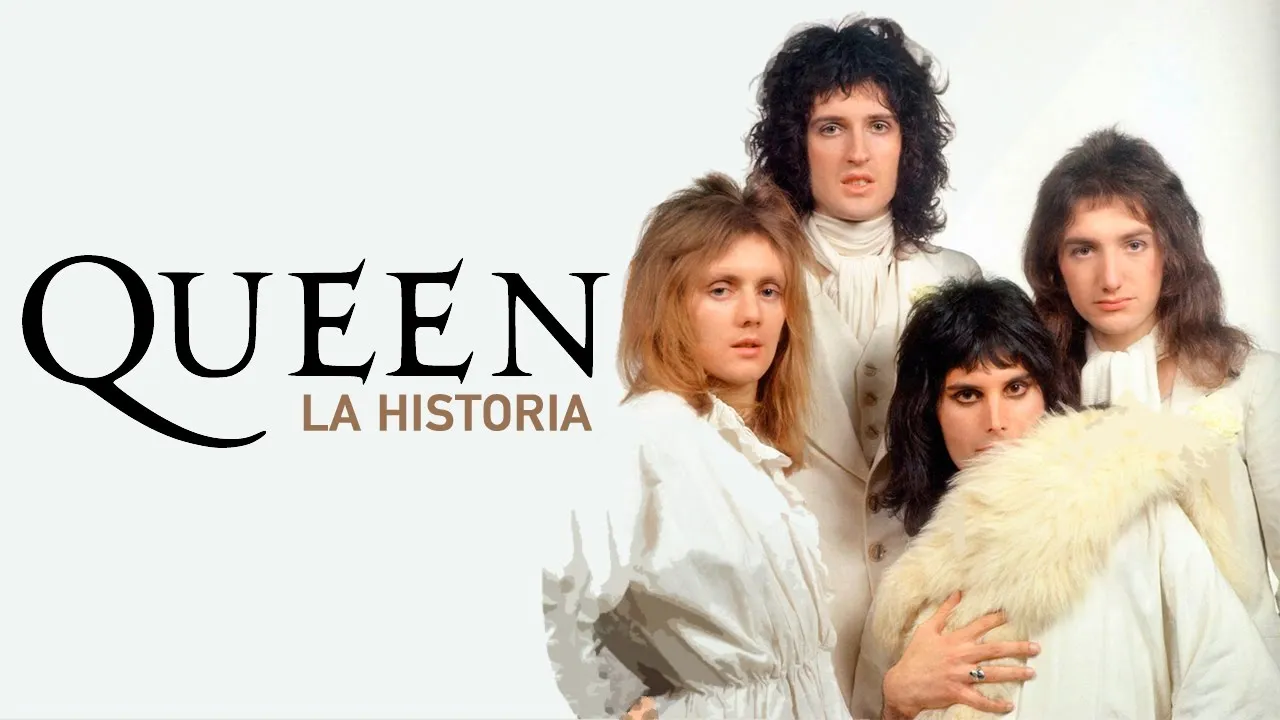
QUEEN: LA HISTORIA MEJOR CONTADA
Introduction to Queen
This section provides an introduction to the band Queen and their significance in music history.
Formation of Smile and the Birth of Queen
- Smile, a university group formed in 1968 by Brian May and Tim Staffell, began performing live and gained popularity.
- Roger Taylor joined Smile, and they played at prestigious venues like Royal Albert Hall.
- In 1970, Tim Staffell left Smile, leading Brian May and Roger Taylor to search for a new vocalist.
- Freddie Mercury, who was already a fan of Smile, joined as the lead vocalist, prompting a name change to Queen.
Early Performances and Lineup Finalization
- Queen started playing songs from other bands but soon decided to revamp their own compositions from Smile.
- They went through various bassists until John Deacon joined the band in July 1971.
- Influenced by zodiac signs, Freddie Mercury designed the band's logo with two lions representing Brian May and Roger Taylor (both Leos), a crab for John Deacon (Cancer), and fairies for himself (Virgo).
Recording Challenges and First Album Release
- Despite regular performances, Queen struggled to secure a record deal initially.
- Trident Studios engineers were impressed with the band's sound due to their previous work with Smile.
- After signing with Trident Studios in 1972, they negotiated contracts for publishing rights, recording, and representation.
- With support from Trident Studios' manager Norman Sheffield, Queen recorded their self-titled debut album throughout mid-1972.
Release of Queen's Debut Album
- In July 1973, Queen released their debut album influenced by heavy metal and progressive rock genres.
- The album received positive reviews from critics but did not gain significant attention initially.
- The lead single "Keep Yourself Alive" had limited success, with only Radio Luxembourg showing support.
- Despite not reaching the top 10 in the UK charts, Queen gained new fans through live performances and small tours.
Recording Second Album
This section focuses on Queen's journey to record their second album.
Continuing Tours and Recording Process
- While touring with Mott the Hoople, Queen began working on their second album in mid-1973.
Formation of Queen Fan Club
This section discusses the official formation of the Queen fan club in February 1974, which is recognized by the Guinness World Records as one of the largest fan clubs in the world. It also mentions how Ron and Flower, directors of EMI's promotion department, helped Queen debut on Top of the Pops.
Official Formation and Guinness World Record
- In February 1974, the Queen fan club was officially formed.
- The fan club is recognized by the Guinness World Records as one of the largest fan clubs in the world.
Ron and Flower's Role
- Ron and Flower, directors of EMI's promotion department, played a significant role in helping Queen debut on Top of the Pops.
Debut on Top of the Pops
- Queen made their first appearance on Top of the Pops, a popular television show.
- The song they performed on television became their chosen single that entered and remained on the British charts for 10 weeks.
Success with "Seven Seas of Rhye"
This section highlights Queen's success with their single "Seven Seas of Rhye" after their debut on Top of the Pops. It discusses its entry into both British and American charts and its impact on Queen's rising popularity.
First Television Appearance Success
- After their first television appearance, Jack Nelson quickly promoted a single called "Seven Seas of Rhye."
- The song they had performed on television was chosen as their single.
- "Seven Seas of Rhye" entered and remained on the British charts for 10 weeks, reaching number ten.
Rising Popularity
- With "Seven Seas of Rhye," Queen began to gain momentum and rise in popularity.
Release of "Queen II" and Success
This section discusses the release of Queen's second album, "Queen II," and its success. It mentions the album's chart positions in both Britain and the United States, as well as its impact on Queen's career.
Release of "Queen II"
- On March 8, 1974, Queen released their second album, "Queen II."
- The album faced several delays but eventually reached number five on the British charts.
- It remained on the charts for 30 weeks.
Gold Certification and US Reception
- "Queen II" became their first gold-certified album.
- In the United States, the album had a slightly higher impact, reaching number 49 on the charts.
Album Artwork
- The album featured a black side and a white side with cover art by Mick Rock.
Transition and Maturity with "Sheer Heart Attack"
This section highlights how Queen's third album, "Sheer Heart Attack," marked a transition for the band in terms of sound and maturity. It also mentions their first music video for "Bohemian Rhapsody."
Transition and Maturity
- "Sheer Heart Attack" showcased a notable difference in sound and maturity compared to their previous albums.
- The album introduced operatic vocals that would become a signature element for Queen.
First Music Video - "Bohemian Rhapsody"
- The success of the single "Bohemian Rhapsody" led to its iconic music video.
- The music video was considered groundbreaking at the time, using special effects and setting artistic standards for future promotional videos.
Headlining Tours and Debut in America
This section discusses Queen's first headlining tour in the United Kingdom and their debut as an opening act in the United States.
Headlining Tour in the UK
- Queen embarked on their first headlining tour in the United Kingdom.
- They also made their debut as an opening act in the United States, supporting Mott the Hoople.
"Killer Queen" and "Sheer Heart Attack" Album Release
This section focuses on Queen's release of the single "Killer Queen" and their album "Sheer Heart Attack." It mentions their chart positions and critical reception.
Release of "Killer Queen"
- On October 11, a preview of their next album was released with the single "Killer Queen."
- The single became a success, reaching number two on the British charts and entering the American charts.
Release of "Sheer Heart Attack" Album
- On November 1, 1974, Queen released their third studio album, "Sheer Heart Attack."
- The album reached number two on the British charts.
- The song "Now I'm Here" from this album entered and remained on the British charts for seven weeks.
- Critics considered it better than its predecessors.
European Tour
This section briefly mentions Queen's European tour that took place from October to November 1974.
European Tour
- In October to November 1974, Queen went on a successful tour across Europe.
US Tour and Vacation in Hawaii
This section highlights Queen's first headlining tour in the United States and their vacation in Hawaii before embarking on a tour of Japan.
First Headlining US Tour
- In 1975, Queen embarked on their first headlining tour in the United States.
- The tour received massive support from fans and the music industry.
Vacation in Hawaii
- After the intense US tour, the band members took a vacation in Hawaii before their upcoming tour of Japan.
Working on "A Night at the Opera"
This section discusses Queen's work on their next album, "A Night at the Opera," including experimentation with different sounds and resolving internal issues.
Experimentation and Sound Exploration
- Queen invested a significant amount of time experimenting with different sounds for their upcoming album.
- They explored various genres such as metal, pop, country music, and progressive rock.
Internal Issues Resolved
- Despite facing problems with their former manager, Queen resolved these issues by parting ways with him.
- With a fresh start, they focused on working on their new album.
Release of "Bohemian Rhapsody" and Success
This section highlights the release
New Section
This section discusses Queen's song "Don't Stop Me Now" and their extravagant lifestyle during that time.
Queen's Excessive Lifestyle
- The band's parties, such as the one in New Orleans on October 31, 1978, showcased their excessive lifestyle.
- The press covered these parties and highlighted the band's extravagant way of living.
New Section
Brian May reflects on Queen's success and how it took a toll on the band members' mental health.
Success and Mental Health Struggles
- Queen was a wonderful vehicle for their music but almost destroyed them all.
- They were at the peak of their success, adored by fans worldwide, but it caused mental disorder to some extent.
- Despite being surrounded by people who loved them, they felt out of control.
New Section
Queen releases their first live album "Live Killers" and starts working on their next studio album "The Game."
Live Album and Studio Work
- In June 1979, Queen released their first live album called "Live Killers," which was recorded during the European leg of the Jazz Tour.
- In the same month, they traveled to Musicland Studios in Munich, Germany to start working on their next studio album.
New Section
Queen begins recording "The Game" with engineer Reinhold Mack in Munich.
Recording "The Game"
- In June 1979, while in Munich, Queen started working on "The Game."
- Their first single from the album was "Crazy Little Thing Called Love," which became their first number one hit in the US.
- The recording process was challenging and creative tensions arose within the group.
- Brian May mentioned that they all considered leaving the band at some point.
- Despite the difficulties, "The Game" was released on June 30, 1980, and became a huge success worldwide.
New Section
Queen faces creative struggles during the recording of "The Game" but achieves massive success with its release.
Creative Struggles and Success
- The recording process for "The Game" was complicated, and the band faced creative struggles.
- However, the album's success was enormous, reaching number one in the UK and US charts.
- The song "Another One Bites the Dust," written by John Deacon, became their second number one hit in the US.
- Despite initial doubts about the song's quality, it gained popularity due to airplay on black music radio stations.
New Section
Queen experiences a decline in popularity in the US but releases successful albums and soundtracks.
Decline in Popularity
- Despite their overall success with "The Game" and its tour, Queen started losing ground in the US.
- Their soundtrack for "Flash Gordon," released in December 1980, received a poor reception.
New Section
Queen records their album "Hot Space" with David Bowie as a guest artist.
Recording "Hot Space"
- In 1981, Queen visited Montreux Studios in Switzerland to record their next album titled "Hot Space."
- During this time, they had an impromptu meeting with David Bowie at a nearby studio which led to collaboration.
- Their collaboration resulted in a hit song and marked Queen's first recording with a guest artist.
New Section
Queen faces criticism for their change in musical style with the release of "Hot Space."
Change in Musical Style
- "Hot Space," released in 1982, had a different sound compared to their previous albums.
- The album incorporated more disco and dance-pop elements, replacing Brian May's traditional guitar sound with synthesizers.
- The change in musical style received mixed reviews from fans and critics.
New Section
Queen takes a break from touring and faces administrative changes but continues releasing new music.
Break from Touring
- In 1983, Queen decided not to perform live shows for a year and took a sabbatical.
- During this time, there were rumors of administrative changes within the band.
- Despite the break, Queen released a new album titled "Works" in February 1984.
New Section
Queen's album "Works" receives positive reception and they embark on their first tour with keyboardist Spike Edney.
Album Reception and Tour
- "Works" was generally well-received by critics and achieved good sales worldwide.
- The singles "Radio Ga Ga" and "I Want to Break Free" were successful, with memorable music videos accompanying them.
- Queen's tour during this period featured elaborate stage setups and lighting effects.
- Notable performances included two shows at Wembley Stadium, which provided material for future releases.
New Section
Queen performs at Live Aid in 1985, gaining renewed popularity despite internal tensions.
Live Aid Performance
- On July 13, 1985, Queen performed at Live Aid in front of 72,000 people at Wembley Stadium.
- This performance is considered one of the greatest live performances in rock history.
- Despite tensions within the band, Freddie Mercury's charisma helped Queen regain popularity.
New Section
Queen releases the album "A Kind of Magic" and continues to have success in Europe.
"A Kind of Magic" Album
- "A Kind of Magic" was released on June 2, 1986, reaching number one in the UK.
- While their popularity declined in the US, they remained successful in Europe.
- The album produced several singles that reached the top ten charts.
New Section
Queen's final tour with Freddie Mercury takes place, and they release a live album called "Live Magic."
Final Tour and Live Album
- In December 1986, Queen embarked on their final tour with Freddie Mercury.
- The tour included notable performances in Vienna and Budapest.
- In December of that year, they released the live album "Live Magic," featuring recordings from Wembley and Budapest concerts.
Queen's Solo Career and Reunion
This section discusses Queen's solo career and their reunion in 1988.
Queen's Solo Career
- Freddie Mercury had a successful solo career before the band reunited in 1988.
- In 1989, they released a new album which reached number 1 in the UK charts and stayed there for 32 weeks.
- Despite their success, Queen did not give any interviews during this time.
Reunion and New Work
- In 1988, the band regrouped to prepare for their new work.
- They were contacted for an interview with Mike Wright, which took place on May 29, 1989.
- During the interview, Freddie mentioned their refusal to go on tour as they wanted to change the cycle of album tours.
- They also changed their record label from Capitol to Hollywood Records in the US.
Mercury's Health and Last Album
This section focuses on Freddie Mercury's health issues and the release of Queen's last album.
Mercury's Health Issues
- Despite his declining health, Freddie Mercury was determined to continue making music.
- On February 4, 1991, their last album was released but only reached number 30 in the US charts. However, it became number one again in the UK.
- The album received mixed reviews from critics but still achieved commercial success.
Autobiographical Lyrics
- The lyrics of this album were generally autobiographical from Freddie Mercury's perspective.
- Songs like "Teaser" and "Days of War" reflected his personal experiences.
Announcement of Freddie Mercury's Illness
This section covers Freddie Mercury publicly announcing his illness.
- On November 23, 1991, Freddie Mercury called his manager to discuss a public matter.
- The next day, an announcement was made on behalf of Freddie confirming that he had AIDS.
- This announcement followed weeks of speculation from the press.
Freddie Mercury's Passing and Tribute
This section discusses Freddie Mercury's passing and the tribute concert held in his honor.
- Just one day after the announcement, Freddie Mercury passed away at his London mansion at the age of 45.
- His remains were cremated on November 27, 1991, at West London Crematorium.
- The song "Bohemian Rhapsody" was reissued as a single after his death and reached number one. All proceeds were donated to charity.
- A tribute concert for Freddie Mercury was held at Wembley Stadium, featuring artists like Annie Lennox, David Bowie, Elton John, and more.
Queen's Legacy and Hall of Fame
This section highlights Queen's legacy and their induction into the Hall of Fame.
- In 1995, Queen released the album "Made in Heaven," which reached number one in the UK and number 58 in the US. It became their best-selling studio album.
- The album featured recordings of Freddie Mercury's vocals from his last year of life.
- In 2001, Queen was inducted into the Hall of Fame.
Post-Mercury Era and Current Lineup
This section discusses Queen's post-Freddie Mercury era and their current lineup.
- Since 2004, Roger Taylor and Brian May have been touring with Paul Rodgers as lead vocalist.
- John Deacon declined to participate and has since retired from public life.
- In 2011, Adam Lambert joined Queen as a replacement for Paul Rodgers.
- The current lineup of Queen continues to tour and carry on the band's legacy.
Conclusion
This section concludes the transcript by acknowledging Queen's impact and inviting suggestions for other essential bands or artists.
- Queen is considered one of the greatest and most important bands in history.
- Their legacy continues to grow, and they are still celebrated worldwide.
- The discussion is open for suggestions on other bands or artists that should have a similar chapter in musical history.