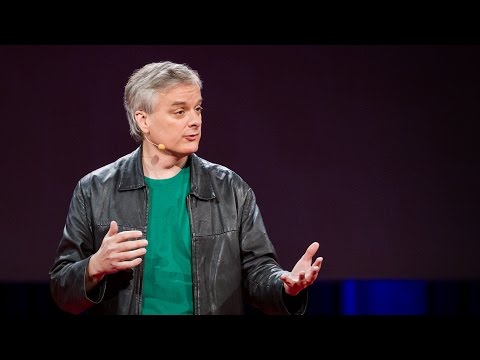
How do you explain consciousness? | David Chalmers
The Mystery of Consciousness
The Inner Movie of Consciousness
- Your mind is like a multi-track movie with 3D vision and surround sound, encompassing not just sights and sounds but also smells, tastes, emotions, and bodily sensations.
- This "movie" represents your stream of consciousness, which is the direct experience of your mind interacting with the world. Each individual has their own unique inner narrative.
- Consciousness is fundamental to human existence; it gives life meaning and value. However, its nature remains one of the greatest mysteries in the universe. Why do we have consciousness?
Challenges in Understanding Consciousness
- There are significant challenges in integrating consciousness into scientific study due to its subjective nature versus science's objective approach. Many believe that a true science of consciousness may be impossible.
- Historically, psychology focused on behavior while neuroscience studied brain functions without addressing consciousness directly until recent decades when interest began to grow significantly.
Scientific Exploration of Consciousness
- Recent efforts by neuroscientists like Francis Crick and physicists such as Roger Penrose have led to an increase in scientific research on consciousness, revealing correlations between brain areas and conscious experiences (e.g., seeing faces or feeling pain).
- Despite these advancements, current neuroscience primarily identifies correlations rather than providing explanations for why certain brain activities correspond with conscious experiences. This distinction highlights the difference between "easy problems" (behavior) and "hard problems" (subjective experience).
The Hard Problem vs Easy Problems
- While neuroscience can explain behaviors associated with consciousness (like walking or talking), it struggles to address why these behaviors are accompanied by subjective experiences—this is termed the "hard problem." Traditional paradigms fail to adequately explain this phenomenon.
- The speaker expresses frustration over reductionist approaches that focus solely on physical explanations without accounting for subjective experience; this leads to an impasse in understanding how consciousness fits into our scientific worldview.
Radical Ideas Needed for Progress
- To resolve the anomaly posed by consciousness within scientific frameworks, radical ideas may be necessary—potentially even those that seem initially implausible or crazy could lead us toward a better understanding of consciousness scientifically.
Exploring Radical Ideas on Consciousness
The Illusion of Reductionism
- The speaker discusses the challenge of explaining consciousness solely through brain functions, suggesting that a purely reductionist approach may overlook the essence of conscious experience.
- Acknowledges the need for radical ideas in understanding consciousness, indicating a shift away from traditional explanations.
Consciousness as a Fundamental Element
- Proposes that consciousness could be considered a fundamental aspect of nature, akin to space and time.
- Argues that if existing fundamentals cannot explain consciousness, it is logical to expand our understanding by including consciousness as a fundamental building block.
- Emphasizes the importance of discovering simple laws governing consciousness that can be easily articulated.
Panpsychism: Universal Consciousness
- Introduces panpsychism, the idea that all systems possess some degree of consciousness, extending beyond humans and animals to elementary particles like photons.
- Clarifies that this does not imply intelligence or complex thought in non-human entities but suggests they may have basic subjective experiences.
Cultural Perspectives on Consciousness
- Notes that while panpsychism may seem unconventional in some cultures, it aligns with views where human minds are seen as interconnected with nature.
Information Processing and Consciousness
- Suggests linking consciousness to information processing; more complex systems exhibit higher degrees of consciousness based on their information integration capabilities.
- Highlights Giulio Tononi's mathematical theory (phi), which quantifies information integration and correlates it with levels of consciousness across different organisms.
Implications for Understanding Reality
- Discusses how Tononi's theory proposes a fundamental law: higher phi corresponds to greater levels of consciousness.
- Points out the potential for panpsychism to bridge gaps between physics and our understanding of reality by framing physical equations as descriptions of conscious processes.
Ethical Considerations Arising from Panpsychism
Exploring Panpsychism and Consciousness
The Nature of Consciousness
- The speaker discusses the implications of panpsychism, suggesting that it may lead to a scarcity of resources for those who adopt this view. Ethical considerations focus more on the complexity and degree of consciousness rather than its mere existence.
- The conversation shifts to artificial intelligence, specifically referencing the character Samantha from the movie "Her." If one adopts an informational, panpsychist perspective, Samantha's complex information processing suggests she is likely conscious.
- This raises significant ethical dilemmas regarding the development and termination of intelligent computer systems, highlighting the moral responsibilities involved in creating such entities.
Collective Consciousness
- The speaker poses questions about collective consciousness, asking whether groups (like an audience at a TED conference) possess a shared consciousness distinct from individual experiences. This concept invites deeper exploration into group dynamics and shared experiences.
- While expressing uncertainty about these ideas, the speaker emphasizes that they are worth serious consideration. They express greater confidence in the notion that consciousness is fundamental rather than universal.
Challenges in Understanding Consciousness
- The discussion acknowledges numerous challenges associated with understanding how simple forms of consciousness can combine to create complex experiences. Addressing these questions is crucial for developing a comprehensive theory of consciousness.
Turn any video into a summary like this
YouTube links, meetings, lectures. With transcripts, search, and chat.