Bumi Sedang Demam, Sudahkah Semua Paham? - Afutami | Endgame #80
Introduction to Public Policy
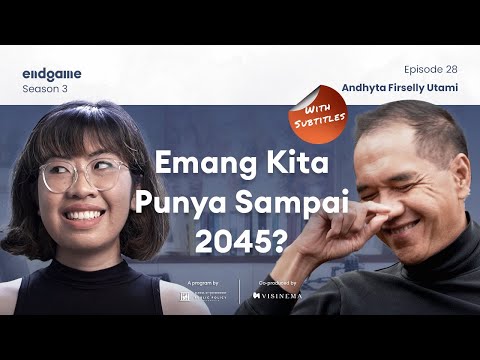
In this section, Gita Wirjawan introduces Andhyta Firselly Utami (Afu), an economist from the World Bank and founder of Think Policy. Afu discusses the importance of public policy and how it can be used to effect change.
Background
- Afu was born in Cianjur in 1992 and grew up in Bogor.
- She went to a Turkish International School where English was the language of instruction.
- SGPP Indonesia is now open for admissions for the new batch.
Importance of Public Policy
- Understanding policy analysis enables us to actualize solutions to various problems.
- Structural changes are necessary not only within government but also businesses and non-profits.
- Prominent figures such as Ban Ki-Moon, Lee Hsien Loong, and Rachel Maddow have graduated from public policy programs.
Conclusion
- For further details about the program or inquiries about future career plans, contact SGPP Indonesia through the links in the description.
Choosing International Relations
In this section, the speaker talks about how they became interested in International Relations and their passion for social science.
Debate Culture and Family Influence
- The speaker attributes their love for debate to their parents who encouraged them to speak up and disagree with them without fear of punishment.
- The speaker's father was particularly active in inviting his children's perspectives.
- The speaker chose International Relations because it allowed them to see that there is much more going on in the world than what we can see.
Interest in Environmental Issues
- The speaker found environmental issues, particularly climate change, interesting after being exposed to it during high school.
- From an International Relations perspective, each country has its own method of producing various energies. However, if we continue to produce energy the way we do now, all pollution will be released, causing natural disasters to become more common.
- The problem is coordinating between countries and making an agreement together to produce energy that is not polluting but profitable for countries.
Youth Delegation for G20
- In 2013, Indonesia was looking for a youth delegation to be sent as part of the youth delegation for the G20.
- During Y20 (Youth 20), one of the topics discussed was sustainable development.
Importance of Environmental Economics
In this section, the speaker discusses the importance of understanding how economics and the environment interact with each other.
The Interaction between Economics and Environment
- Economic models have an impact on the environment.
- There is a research organization dedicated to finding solutions that advance economic prosperity while remaining within environmental sustainability's bounds.
- The speaker worked for three years at the World Resources Institute, which is an institute for environmental economics research.
Becoming an Environmental Ambassador
In this section, the speaker talks about his journey towards becoming an environmental ambassador who can speak both languages of economics and environment.
Studying Public Policy
- The speaker felt stuck because no one cared about environmental issues.
- He decided to study public policy from a theoretical standpoint to make recommendations to public policymakers.
- He took a Master's degree in Public Policy at Harvard University.
Learning Economics Language
- During his studies, he deepened his understanding of economics to figure out how he could use economics' language to get economists to care more about the environment.
- He realized that he had only been playing with environmentalists or conversing with economists using environmental language, which doesn't connect because the languages are different.
Becoming an Environmental Economist
- His goal was to become an environmental ambassador who speaks both languages of economics and environment.
- He became an environmental economist specifically so that he could talk to economists and translate the concerns of environmental friends.
Paris Agreement
In this section, the speaker talks about his views on the Paris Agreement.
The Importance of the Paris Agreement
- The Paris Agreement is the first time that countries agree globally that all countries must contribute to the problem of climate change.
- Before the Paris Agreement, there was still a phrase "Common but Differentiated Responsibilities" in previous agreements where it was not agreed that everyone had to contribute.
- Each country may contribute according to its financial resources. In his opinion, it's progress that needs to be celebrated because there was progress from those who were still pointing at each other.
Understanding Climate Change
In this section, Mr. Gita and the speaker discuss the impact of climate change on the earth's temperature and how it affects our lives.
The Impact of Climate Change
- The earth's temperature has already risen past the target set by the Paris Agreement.
- The increase in temperature must be limited to 1.5 degrees Celsius to prevent disastrous consequences.
- The frequency and intensity of natural disasters such as floods, droughts, heat waves, and forest fires are increasing due to climate change.
- It is important to take action now to prevent further damage from climate change.
Language Barrier in Discussing Climate Change
In this section, the speaker discusses how language barriers can hinder discussions about climate change.
Language Barriers
- There are many technical terms and abbreviations used when discussing climate change that can be difficult for people to understand.
- This makes it hard for people to engage in discussions about climate change.
- Environmental activists need to use simpler language when discussing climate change so that everyone can understand its importance.
- With so many issues competing for attention on social media, it is challenging to get people interested in discussing climate change.
Importance of Simplifying Language When Discussing Climate Change
In this section, the speaker emphasizes the importance of using simple language when discussing climate change.
Simplifying Language
- Using simple language is crucial because everyone needs to understand how pollution affects us and how we can produce energy sustainably.
- Simplifying language is necessary to get people interested in discussing climate change and taking action to prevent further damage.
Importance of Urgency in Addressing Climate Change
In this section, the speaker discusses the importance of urgency in addressing climate change and how it is still not being felt by the wider community.
The Urgency of Climate Change
- Urgency is key to addressing climate change as we only have 8 years to limit the fever to 1.5 degrees Celsius.
- Progress has been slow since the Kyoto Protocol was signed in 1992, and we only have 8 years left to make significant changes.
- A recent survey showed that while many people know about climate change, they do not feel it is urgent enough to take action.
Connecting Disasters with Climate Change
- Disasters such as floods and droughts are often seen as natural or given from God, but it is important to connect them with how much carbon we emit into the atmosphere.
- The narrative must be constructed in such a way that it is clear that these disasters have something to do with how high our carbon emissions are.
Greta Thunberg's Popularity on Instagram
In this section, the speaker discusses Greta Thunberg's popularity on Instagram and compares it to Kylie Jenner's following.
Social Media Influence
- Greta Thunberg has around 18-20 million followers on Instagram while Kylie Jenner has around 250-300 million followers.
- It is difficult for Greta's message about climate change to be as popular as Kylie's due to the lack of urgency felt by the wider community.
Carbonizing vs Decarbonizing Lifestyles
In this section, the speaker discusses how carbonizing and decarbonizing lifestyles represent different philosophies of life.
Different Lifestyles
- Carbonizing and decarbonizing lifestyles represent different philosophies of life.
- These lifestyles are a pulse from the generation Z or younger about our future.
Urgency in Addressing Climate Change
In this section, the speaker emphasizes the importance of urgency in addressing climate change.
The Urgency of Climate Change
- Urgency is key to addressing climate change as we only have 8 years to limit the fever to 1.5 degrees Celsius.
- Progress has been slow since the Kyoto Protocol was signed in 1992, and we only have 8 years left to make significant changes.
- A recent survey showed that while many people know about climate change, they do not feel it is urgent enough to take action.
Actionability and Concern
In this section, the speaker talks about how actionability must be ensured and not just measured. They also discuss the lack of concern people have towards environmental issues.
Lack of Concern
- People don't seem to understand or care about the severity of environmental issues.
- The speaker has been teaching about this issue for 8 years but hasn't seen much change in people's attitudes.
- It's important to find a way to make people care without being overly dramatic.
Personal Reflections on Environmental Issues
In this section, the speaker reflects on their personal journey towards caring about environmental issues and discusses how they try to get their students to care as well.
Journey Towards Caring
- The speaker first learned about environmental issues 10 years ago but didn't immediately care.
- It took them 2-3 years before they started taking action.
- The speaker has been talking about environmental issues in class at least twice a week for several years.
Getting Students to Care
- The speaker asks Mr. Gita when he feels compelled to care about environmental issues.
- By reflecting on personal journeys towards caring, we can help others start caring as well.
Indonesia's Energy Needs
In this section, the speaker discusses Indonesia's energy needs and how they relate to becoming a modern nation.
Electrification Needs
- Indonesia needs to increase its electrification from 1,000 kwh per capita to a minimum of 5,000 kwh per capita if it wants to become a modern nation.
- Singapore currently has 10,000 kwh per capita.
- To achieve these goals, Indonesia needs another 400-500 thousand megawatts of power plants.
Fossil Fuels and Alternatives
- The majority of the 3,500 megawatts of power plants that are built each year in Indonesia are fossil fuels.
- Solar power is a natural alternative, but the technology isn't efficient or effective enough to scale up quickly.
- A study by Bappenas compares the cost-effectiveness of various alternative energy sources in Indonesia.
Cost-Effectiveness of Alternative Energy Sources
In this section, the speaker discusses a study by Bappenas that compares the cost-effectiveness of various alternative energy sources in Indonesia.
Study Findings
- Solar power production is more expensive in Indonesia than internationally and isn't yet competitive with coal.
- The current price of coal may not accurately represent its actual cost.
- Cheap coal can be supplied through DMO policy, which indirectly subsidizes coal production.
Externalities
- Health costs from air pollution near coal plants are borne directly by communities rather than generators.
- Carbon emissions have been externalized so far and need to be internalized.
Dislocation of Pre-existing Business Models
In this section, the speaker discusses the dislocation of pre-existing business models and whether we are prepared to take a political stance on it. The speaker also talks about the need to frame ideas or steps that can complement and replace pre-existing models.
Implications of Political Stance
- The implication of taking a political stance is dislocation related to pre-existing business models.
- It may be necessary to frame ideas or steps that are incremental forward but can complement, replacing the pre-existing model.
Alternative Energy Sources
- Solar power, hydropower, or geothermal could be alternative energy sources.
- However, the tariff structure for geothermal is not quite attractive compared to other countries like Japan and the Philippines.
- Entrepreneurs are not incentivized to do business in such sectors due to low economic viability.
Nuclear as an Alternative Solution
- Nuclear energy is a taboo topic but could be a solution for Indonesia's energy demand.
- Nuclear has no carbon emissions at all and is scalable.
- While nuclear may not be the most ideal solution for energy sovereignty due to limited supply in Indonesia, it could still be considered as an alternative option.
Debating Solutions for Energy Demand
In this section, the speaker talks about why they enjoy debates and international relations (IR). They discuss how there can be many solutions when it comes to prioritizing cost-effectiveness and visibility.
Importance of Debates in IR
- Debates in IR allow for discussions on different solutions based on various criteria such as cost-effectiveness and visibility.
Prioritizing Alternatives
- From existing alternatives today, it is necessary to prioritize solutions for Indonesia's energy demand.
- Different sources have their own specialization of knowledge, making it difficult to discuss.
Multilateralizing the Conversation
In this section, the speaker talks about how it might be time for us to start multilateralizing the conversation again like what we saw maybe 10 years ago.
Importance of Multilateral Conversations
- It might be time for us to start multilateralizing the conversation again like what we saw maybe 10 years ago.
- The stake is too high for every person of the existing 7.8 billion when it comes to saving the planet.
- We need to start thinking beyond saving just one province or country and focus on a global solution.
Nuclear as a Scalable and Environmentally Safe Solution
In this section, the speaker discusses why nuclear energy could be a scalable and environmentally safe solution for Indonesia's energy demand.
Nuclear vs Fossil Fuels
- Nuclear has a death rate of only 3,000-4,000 per year compared to fossil fuels which cause 7-8 million deaths per year due to pollution.
- If fossil fuels are agreed not to be used, then alternative solutions such as nuclear need more discussion.
Challenges with Alternative Energy Sources
- Solar power still has a land use problem because it needs space on land or in sea.
- One megawatt requires one hectare but in future one hectare could produce up to three-five megawatts.
Energy Supply in Indonesia
In this section, the speaker discusses the energy needs of Indonesia and how they differ across different regions. The speaker also talks about the need to promote a paradigm shift towards renewable energy sources.
Energy Needs Across Different Regions
- Indonesia's energy needs vary across different islands due to its archipelagic nature.
- The potential for renewable energy sources such as solar, wind, or micro-hydro power depends on the setup of each region.
- The speaker advocates for promoting a paradigm shift towards renewable energy sources rather than relying solely on existing ones like coal plants.
New Paradigm for Renewable Energy Sources
- The pre-existing energy sources should not be tampered with to treat political inertia properly.
- A new paradigm is needed to achieve modernization or modernity in just 30 years.
- Policy frameworks must incentivize entrepreneurship rather than disincentivize it as if it must be protected.
Game-changing Posture for Renewable Energy
In this section, the speaker emphasizes the need to change our posture towards renewable energy and democratize access to it.
Changing Our Posture Towards Renewable Energy
- Changing our posture towards renewable energy is more fitting for Generation Z and beyond.
- We should not mortgage the future by wasting it for today's pleasure.
Democratizing Access to Renewable Energy
- Coal gasification could be reasonable in terms of operational cost as long as profit is better but democratizing access to renewable energy is ideal.
- The carbon costs must be internalized for whatever energy source is used as long as it is proportional to the carbon emissions and costs incurred.
Conclusion
In this section, the speaker concludes that there should be no hidden cost in using renewable energy sources and that we should think big when it comes to renewable energy.
No Hidden Cost in Using Renewable Energy Sources
- There should be no hidden cost in using renewable energy sources.
Think Big When It Comes to Renewable Energy
- We should think really big when it comes to renewable energy.
- If the cake is bigger, every ant gets a piece.
Energy and Land Management in Indonesia
In this section, the speakers discuss the challenges of energy and land management in Indonesia. They talk about how subsidies can distort production costs and how deforestation is a major contributor to emissions in Indonesia. They also explore the potential for nature-based solutions to help reduce emissions.
Subsidies and Production Costs
- Subsidies can be a distraction and distortion to actual production costs.
- The dream economy is efficient when everything is transparently priced according to internalized and externalized costs.
Deforestation in Indonesia
- More than half of Indonesia's emissions come from the land sector due to deforestation.
- Deforestation makes it challenging for Indonesia to achieve its Paris target of reducing emissions by one-third.
- Nature-based solutions such as trees, mangroves, and peatlands must be properly managed to reduce emissions.
Opportunities for Nature-Based Solutions
- Nature-based climate solutions have the same production costs as traditional methods but are more cost-effective in tropical countries like Indonesia.
- Managing natural resources through carbon markets or international cooperation can help compensate for past sins while providing low-cost solutions for reducing emissions.
- Private sectors can play a significant role in supplying carbon offsets through practical restoration efforts that absorb carbon emissions.
The Role of Indonesia in Global Climate Solutions
In this section, the speakers discuss how Indonesia has an opportunity to supply nature-based climate solutions globally. They explore how managing forests can be an effective way of reducing global carbon emissions while also creating economic opportunities for Indonesians.
Supplying Global Public Goods
- According to some studies, nature-based solutions are essential for achieving the Paris target of reducing global temperatures by one-third.
- Indonesia has the potential to supply nature-based climate solutions globally, making it an opportunity for economic growth.
- Managing forests can be a cost-effective solution to reducing emissions while also creating economic opportunities for Indonesians.
The Role of Private Sectors
- Private sectors can play a significant role in supplying carbon offsets through practical restoration efforts that absorb carbon emissions.
- Independent verifiers can check and confirm the reduction of carbon emissions, which can then be sold internationally or domestically.
Conclusion
In this section, the speakers conclude their discussion by emphasizing the importance of managing natural resources in Indonesia. They highlight how nature-based solutions can help reduce global carbon emissions while also providing economic opportunities for Indonesians.
Managing Natural Resources
- Managing natural resources is crucial to reducing global carbon emissions and achieving the Paris target.
- Nature-based solutions such as trees, mangroves, and peatlands must be properly managed to reduce emissions effectively.
- By managing forests effectively, Indonesia has an opportunity to supply nature-based climate solutions globally while also creating economic opportunities for its citizens.
Compensation for Forest Protection
In this section, the speaker discusses the importance of compensating those who protect forests instead of converting them into other plantations. This could be an opportunity for the green economy.
Protecting Forests
- Compensation should be given to those who help protect forests.
- Converting forests into other plantations is not sustainable.
- This could be an opportunity for the green economy.
Technology vs Policy in Reducing Carbon Emissions
The speaker expresses skepticism about reducing carbon emissions by 50% by 2030 through policy alone and suggests that technology may be a more effective solution.
Reducing Carbon Emissions
- Speaker is skeptical about reducing carbon emissions by 50% by 2030 through policy alone.
- Technology may be a more effective solution than policy.
Multilateralism in a Multipolar World
The speaker discusses how multilateralism has changed in recent years due to shifts in global power dynamics and rising inequality.
Multilateralism Today
- Multilateralization has been discounted in recent years.
- The world has shifted to a multipolar system with different interests.
- Amplification of algorithms on social media polarizes conversations, making multilateralization difficult.
- Rising inequality exacerbates these issues.
Climate Change as an Intersectional Issue
The speaker highlights how climate change intersects with various issues such as economic inequality and gender disparities.
Intersectionality of Climate Change
- Climate change intersects with economic inequality, exacerbating natural disasters and their impact on communities.
- Gender disparities are also affected differently between women and men living around forests.
Urgency and Creativity in Addressing Climate Change
The speaker discusses the need for creativity in addressing climate change and increasing urgency by visualizing the consequences of failure.
Addressing Climate Change
- Creativity is needed to address climate change.
- Environmental activists must expand their vocabulary to reach a wider audience.
- Visualizing the consequences of failure can increase urgency.
Changing Identities to Become Environmentally Conscious
In this section, the speaker discusses how changing identities is key to inviting people to change their habits. He suggests that instead of making to-do lists or setting goals, people should change their identities. The fear of changing one's identity is what prevents most people from becoming environmentalists.
The Imperfect Environmentalist
- Most people are afraid to change their identity to environmentalists.
- People are afraid of being extreme and not perfect in their efforts.
- A new identity can be formed where individuals don't have to be perfect environmentalists.
- This new identity could be called "the imperfect environmentalist."
Efficiency as an Entry Point
- Efficiency is a core value that can help invite more people into the conversation about the environment.
- Being efficient with resources doesn't have to be excessive; it's about optimizing happiness.
- The speaker's father instilled efficiency as a core value in him, which has become his entry point into the conversation about the environment.
Democratizing Discourse
- To make progress on environmental issues, discourse needs to be democratized or language needs to change so that more people feel comfortable discussing it.
- Making it difficult, taboo, exclusive or elite only serves as a barrier for many individuals.
Balancing Efficiency and Productivity for a Cool Nation
In this section, the speaker talks about balancing efficiency and productivity while also considering increasing education levels and culture of reading books. He emphasizes incrementalism as a way forward and highlights how stability must accompany progress.
Increasing Productivity
- Indonesia's productivity is only 24 thousand dollars per person per year on a PPP adjusted basis, adjusted for purchasing power.
- Singapore's productivity is 170 thousand dollars per person per year on a PPP adjusted basis.
- Increasing productivity requires education, culture of reading books, electrification, financial inclusion, money supply, internet penetration and more.
Incrementalism
- Change must be incrementalist to move forward with stability.
- The speaker highlights how the Paris Accord or Paris Agreement has not resulted in decreased carbon emissions but rather an increase of 35% since the early 2000s.
- Developing countries need to develop and common and differentiated responsibilities must make sense.
Importance of Education and Communication
In this section, the speakers discuss the importance of education and communication in enabling people to become technologists and bring about change.
Education is Key
- The structural issue that allows for the emergence of technologists is education.
- Language is the most important thing when it comes to education and communication.
- If people can communicate, they can educate themselves and become beacons for their communities.
Access to Resources
- To enable any change, resources are needed. However, often brilliant ideas do not turn into anything because there is no capital to push them forward.
- More capital is outside Indonesia than domestically. To attract capital, Indonesia needs to narrate its need for money and channel it into climate change narratives and organizations.
Attracting Capital through Public Policy
In this section, the speakers discuss how public policy can help attract more capital to Indonesia.
Money Supply in Indonesia
- The M2 ratio in Indonesia is only 45% of GDP compared to developed countries where it ranges from 125% - 250%.
- Hosting G20 presents an opportunity for Indonesia to attract more capital by highlighting its need for money.
Importance of Public Policy
- Public policy should be important when encouraging transformation on a large scale. It should incentivize businesses to transition towards a lower carbon direction while accommodating transparency.
- Singapore's success in attracting international capital is due to its strong rule of law. Other countries must follow suit if they want similar success.
Conclusion
- Human capital through education, financial capital through resources, and public policy are the three key factors that can help Indonesia attract more capital and bring about change.
Public Policy and Individual Action
In this section, the speakers discuss the role of public policy in addressing climate change and how individual actions can also contribute to mitigating its effects.
The Impact of Public Policy on Individual Actions
- Changes in public policy can immediately impact millions of people's consumption behavior.
- It is difficult to rely solely on individual changes to address climate change.
- Framing a policy framework is easy, but enforcing it is difficult.
The Importance of Emotional Intelligence
- Emotional intelligence plays a crucial role in changing behavior towards environmental issues.
- Leaders who demonstrate emotional intelligence can inspire others to follow suit.
Policy Framework and Enforcement
In this section, the speakers discuss the importance of creating a strong policy framework for addressing climate change and the challenges associated with enforcing it.
Creating a Strong Policy Framework
- Technological advancements can help address environmental problems more effectively than policies alone.
- Policies must be combined with incrementalism and political ownership to achieve realistic goals.
- Political ownership is necessary for resolving climate change issues.
Automotive Industry and Climate Change
In this section, the speakers discuss how technological advancements in the automotive industry can help mitigate climate change.
Electric Cars as an Alternative
- Electric cars are already cheaper per kilowatt hour than combustible cars.
- If 40 million or 50 million electric cars were produced annually, it would significantly reduce environmental problems associated with the automotive industry.
- Technological advancements can help address environmental problems more effectively than policies alone.
Understanding Public Policy
In this section, the speakers discuss the importance of young people taking ownership of climate change and how public policy can be a tool for achieving this. They also talk about the founding of Think Policy, an organization that aims to democratize knowledge about public policy.
The Disconnect Between Young People and Public Policy
- There is a disconnect between young people who care about various issues and the political channel or public policy.
- Many young people care about issues such as corruption, digital economy, and climate crisis but don't understand public policy.
- Public policy is often seen as an incomprehensible black box.
Founding of Think Policy
- The founders of Think Policy felt there was a need to establish an organization that would serve as a forum for democratizing knowledge about public policy.
- Think Policy has three main goals: to democratize knowledge about public policy, to be a bridge for young people with policymakers and politicians, and to inform young people about what's going on in public policy.
Democratizing Knowledge About Public Policy
- Think Policy aims to make public policy education more accessible by contextualizing knowledge from Harvard and other universities into the Indonesian curriculum.
- They make it more bitesized by organizing monthly boot camps limited to 40 participants per class.
- The challenge is scaling up their efforts beyond small classes or events.
Bridging Young People with Policymakers
- Think Policy wants to become bridges on a large scale by exploring digital platforms capable of digitizing young people's aspirations and communicating them on a larger scale.
- They believe that engaging young people as voters and citizens who actively participate in the process is crucial.
The Role of Think Policy
In this section, the speaker discusses the role of Think Policy in designing public policy and how fixing the process can lead to addressing issues such as climate change.
Fixing the Process First
- Think Policy's role is to focus on fixing the process of designing public policy.
- Once the process gets better, addressing issues such as climate change becomes a natural consequence.
Incremental vs Radical Change
- Changes may occur incrementally or through a paradigm shift.
- Kate Raworth suggests changing the purpose from GDP to two goals: social foundation and growth within planetary boundaries.
Challenges in Implementing New Paradigms
- It is difficult to implement new paradigms due to economic, political, geopolitical, and cultural interests.
- Ambition is multidimensional and can be empowered in multiple dimensions. It is difficult to reconcile between theory and reality.
Balancing GDP/GNP with Non-GDP Goals
This section discusses finding a balance between GDP/GNP and non-GDP goals such as social foundation and growth within planetary boundaries.
Bhutan's Example
- Bhutan is an example of balancing GDP/GNP with non-GDP goals.
Timeframe for Change
- Finding a balance between GDP/GNP and non-GDP goals may take 50 years or more.
- Increasing participation of young people gives hope for change.
Optimism vs Pessimism
This section discusses the speaker's perspective on optimism and pessimism regarding the future.
Balancing Optimism and Pessimism
- The speaker feels a moral obligation to be pessimistic when many people are optimistic.
- If everyone thinks that what we have done is enough, then we can't do any better.
Uncertainty of Change
- It is uncertain whether change can happen in the next 10-20 years.
- Finding a balance between GDP/GNP and non-GDP goals may take 50 years or more.
Striving Towards a Better World
In this section, the speaker talks about how to transition towards a more circular and redistributive economic model that uses fewer natural resources and handles waste efficiently. They also discuss the need to question excessive consumption and redefine what is "enough." The speaker emphasizes the importance of building climate-resilient cities and rethinking how we live our lives around low-carbon development.
Transitioning to a Circular Economic Model
- To transition to a more circular economic model, we need to start producing goods using fewer natural resources and handling waste efficiently.
- We can turn production residue into new products through recycling or technology.
- The circular economy in technology can be achieved by designing modular cellphones where only certain parts are replaced each year instead of the entire phone.
- We need to question excessive consumption and redefine what is "enough" for us.
Building Climate-Resilient Cities
- We need to build climate-resilient cities with wider green open spaces that are designed differently from current cities.
- Housing problems cause high emissions because people have to travel far from their homes. We need to redesign how we live our everyday lives around low-carbon development.
- Designers, technologists, energy industrialists, and leaders with emotional intelligence all have an opportunity to encourage new investments in low-carbon ideas.
This transcript was originally in Indonesian but has been translated into English.
Conclusion of Discussion
In this section, the discussion comes to an end and Afu, an environmental economist, thanks everyone for their time.
- Afu confirms that there is nothing else to add to the discussion.
- The host thanks Afu for his contribution and participation in the discussion.
- The host compliments Mr. Gita on leading a very interesting discussion.
- The video ends with the host introducing Afu as an environmental economist and thanking him again for his time.