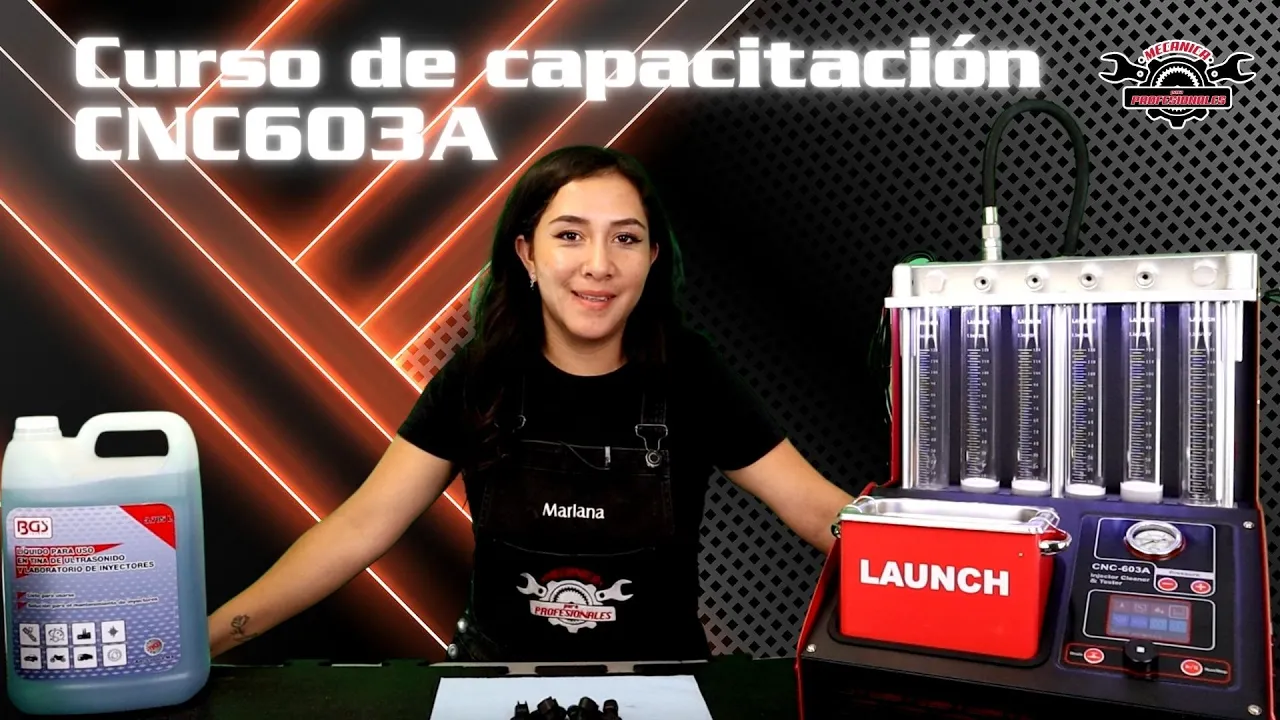
⚡ Como usar un laboratorio de limpieza inyectores automotrices ⚡
Introduction to Using an Injector Laboratory
In this video, Mariana, a mechanic, introduces the use of an injector laboratory for cleaning injectors. She emphasizes the importance of regular injector cleaning to maintain engine performance and prevent issues.
Types of Injector Cleaning Methods
- There are three types of injector cleaning methods:
- Goya cleaning
- Pressurized cleaning
- Cleaning with an injector laboratory (recommended)
Benefits of Injector Cleaning
- Regular injector cleaning helps extend the life of injectors.
- It can help reduce fuel consumption and prevent jerking in the vehicle.
- A clogged injector will not function properly, so it is essential to perform this service periodically.
The Recommended Method: Cleaning with an Injector Laboratory
- Mariana recommends using an injector laboratory for cleaning injectors.
- The laboratory simulates the functioning of a car's fuel system in a controlled environment.
- Proper equipment and recommended liquids, such as ultrasonic cleaner fluid, should be used to avoid damaging the laboratory.
Ultrasonic Cleaning Process
- Injectors should be cleaned before placing them in the laboratory to prevent contamination.
- Ultrasonic cleaning involves placing the injectors in an ultrasonic bath that uses high-frequency sound waves for internal cleaning.
- This method ensures thorough and safe cleaning without damaging the laboratory.
Importance of Maintaining Equipment
- Taking care of equipment is crucial as it is an investment that generates income through services provided to customers.
- After proper injector cleaning, they can be placed in the laboratory for further testing and analysis.
Micro Filter Replacement (if applicable)
- Some injectors have internal micro filters that may need replacement during the cleaning process.
- Replacing these filters ensures uniform functionality and prevents fuel leaks.
Understanding Injector Components
- The injector has components like O-rings and spray nozzles that play vital roles in sealing and fuel delivery.
- Proper placement and functioning of these components are essential for optimal performance.
Laboratory Architecture
- The injector laboratory is designed to accommodate different types of injectors with the help of adapters.
- Adapters ensure a secure fit and prevent leaks during testing.
- The laboratory's pressure should be controlled to avoid any mishaps during the cleaning process.
Overview of Injector Laboratory Architecture
Mariana provides an overview of the architecture and accessories used in an injector laboratory.
Accessories for Different Injectors
- The laboratory includes various adapters to accommodate different injector sizes and types.
- These adapters allow direct placement of injectors on the laboratory rail for testing.
Importance of Adapter Selection
- Selecting the correct adapter is crucial for a proper fit and accurate testing results.
- In this video, four adapters are used as there are four injectors being tested.
Preventing Leaks
- To prevent leaks during testing, special plugs or caps can be used on unused injector ports on the laboratory rail.
Conclusion
In this video, Mariana introduces the use of an injector laboratory for cleaning injectors. She explains the importance of regular cleaning and recommends using an ultrasonic cleaner fluid. Mariana also highlights the significance of maintaining equipment and understanding injector components. Additionally, she provides an overview of the architecture and accessories used in an injector laboratory.
Connecting the Harness and Injector
In this section, the speaker explains how to connect the harness and injector using connectors and adapters.
Connecting the Harness and Injector
- Connectors and adapters are used to connect the harness and injector.
- The connectors are connected directly to the injector pin.
- Adapters are used for extension or adaptation purposes.
- Different types of adapters, such as extensions, are available to ensure proper functioning and testing.
Physical Components of the Lab
This section focuses on the physical components of the lab setup.
Lab Setup Components
- The lab setup includes:
- Probetas (cylinders) for testing six injectors simultaneously.
- Connectors and harnesses for connecting to the injectors.
- A rail for holding the injectors in place during activation.
- A hose for transferring liquid to fill the rail.
- An ultrasonic cleaner for cleaning purposes.
- A tachometer for measuring pressure levels.
- Digital controls for adjusting settings and language preferences.
Liquid Level Measurement in Lab Setup
This section discusses how to measure and maintain an adequate level of liquid in the lab setup.
Liquid Level Measurement
- The liquid level is important for proper injection in the lab setup.
- There is a designated limit indicated by a mark on one side of the container.
- It is necessary to have sufficient liquid in order to perform injections effectively.
Ultrasound Tub Functionality
This section explains how to use ultrasound tub functionality for cleaning purposes.
Ultrasound Tub Usage
- The ultrasound tub can be easily removed and reattached, making it convenient for cleaning purposes.
- It plays a crucial role in cleaning injectors effectively.
Lab Functionality and Testing
This section demonstrates the functionality of the lab setup and how it operates.
Lab Functionality
- The lab setup offers various testing options, including:
- Balance test for injection flow.
- Leak test to detect any injector leaks.
- Injection test to check proper functioning at different RPM levels.
- Automatic tests for comprehensive evaluation.
- The lab setup is user-friendly with a digital interface and language options.
[t=0:15:18] Conclusion and Demonstration
In this final section, the speaker suggests putting the lab setup into operation to observe its functionality.
Putting the Lab Setup into Operation
- The speaker proposes activating the lab setup to witness its performance in action.
New Section
This section discusses the use of a device called "latino ultrasónica" to support and clean injectors. The process involves placing the injectors in a cleaning solution while activating them for more reliable results.
Using Latino Ultrasónica for Injector Support
- The "latino ultrasónica" device is used to provide support to injectors during the cleaning process.
- Injectors are connected on one side of the device to prevent them from falling.
- It is not recommended to submerge the injectors with their harnesses in the cleaning solution as it can damage them.
New Section
In this section, the focus is on connecting and preparing the injectors for cleaning.
Connecting Injectors and Preparing for Cleaning
- All injectors are connected on one side to ensure stability during the cleaning process.
- The device helps provide support so that the injectors do not fall off.
New Section
This section emphasizes the importance of taking care of equipment and explains how to navigate through the menu options.
Taking Care of Equipment and Navigating Menu
- It is important to handle equipment, such as harnesses, with care to avoid damage.
- Focus should be given to navigating through menu options.
New Section
This section covers the steps involved in cleaning injectors using ultrasound technology.
Cleaning Injectors with Ultrasound Technology
- The first step is to clean the injectors before placing them in a test rail.
- A 10-minute ultrasound cleaning cycle is selected by setting it for 600 seconds.
- The ultrasound cleaning process is initiated, and the injectors start to get cleaned.
New Section
This section highlights the progress of the injector cleaning process.
Waiting for Injector Cleaning
- The ultrasound cleaning process is observed in action.
- A time lapse video is shown to fast forward the 10-minute cleaning period.
New Section
This section shows the completion of the injector cleaning process.
Completion of Injector Cleaning
- The injectors are now clean and ready for further testing.
- It is recommended to clean the injectors before placing them in a test rail to avoid any debris or dirt affecting their performance.
New Section
This section focuses on removing the injectors from the cleaning device and preparing them for testing.
Removing Injectors and Preparing for Testing
- The previously cleaned injectors are removed from the cleaning device.
- They are then placed in a laboratory setup for further examination and testing.
New Section
This section explains how to set up a test rail and connect injectors for testing purposes.
Setting Up Test Rail and Connecting Injectors
- A test rail with six openings is used, but only four injectors will be tested.
- Two plugs are used to cover unused openings on the test rail.
- Injectors are connected with their harnesses facing forward or upward for easy connection.
New Section
This section provides additional information about handling equipment during injector testing setup.
Handling Equipment During Testing Setup
- Caution should be taken when handling the test rail, as it contains aluminum parts that can be easily damaged.
- Injectors are connected with their harnesses on one side to ensure proper functioning.
New Section
This section explains the process of connecting fuel supply to the injectors for testing.
Connecting Fuel Supply for Testing
- The fuel supply hose is connected to provide fuel to the injectors during testing.
- A secure connection is ensured by lifting and releasing a safety mechanism on the hose.
New Section
This section demonstrates the automatic testing process of the injectors.
Automatic Testing Process
- The automatic testing process is initiated, and the injectors start functioning according to preset parameters.
- The video shows a demonstration of the automatic testing process in action.
New Section
This section continues with the automatic testing process and observation of injector performance.
Observing Injector Performance
- The automatic testing process continues, allowing observation of injector performance.
- Differences in injection quantity among injectors are noted during specific time intervals.
New Section
This section covers additional steps in the automatic testing process and concludes with applause.
Continuing Automatic Testing Process
- The automatic testing process continues at different engine speeds and pulse durations.
- The video ends with applause.
[Música] Descripción del Laboratorio
Resumen de la sección: En esta sección, se muestra físicamente el laboratorio y se explican los componentes y su funcionamiento.
Componentes del laboratorio
- El laboratorio cuenta con dos arneses o conectores que se utilizan para conectar el pin del inyector y el arnés del laboratorio.
- Se utilizan adaptadores y extensiones para evitar fugas al colocar los conectores en los inyectores.
- El laboratorio tiene probetas para revisar hasta 6 inyectores al mismo tiempo.
- Se utiliza un riel de combustible para alimentar los inyectores con líquido.
- Se utiliza una manguera de alta presión para trasladar el líquido desde el riel hacia los inyectores.
- El laboratorio cuenta con un encendido, un botón de alimentación y una tina ultrasónica para limpiar los inyectores.
- Hay opciones de prueba disponibles, como balanceo en rociada, prueba de fugas y prueba de caudal.
Cómo medir el nivel de líquido
Resumen de la sección: En esta sección, se explica cómo medir el nivel de líquido en el laboratorio.
Medición del nivel de líquido
- El nivel adecuado de líquido es importante para el funcionamiento correcto del laboratorio.
- Se puede medir visualmente a través de una rayita que indica el límite deseado.
- Es necesario tener suficiente líquido para realizar las inyecciones en el laboratorio.
Funcionamiento y configuración del laboratorio
Resumen de la sección: En esta sección, se muestra el funcionamiento y la configuración del laboratorio.
Funcionamiento y configuración
- El laboratorio cuenta con un tacómetro para medir la presión de los inyectores.
- Se puede ajustar la presión desde el panel digital del laboratorio.
- El laboratorio puede ser movido fácilmente gracias a las ruedas que tiene.
- Hay diferentes opciones de prueba disponibles, como prueba de balanceo en rociada, prueba de fugas y prueba de caudal.
- La tina ultrasónica se puede quitar y poner para facilitar su limpieza.
Puesta en marcha del laboratorio
Resumen de la sección: En esta sección, se muestra cómo poner en marcha el laboratorio y comenzar a trabajar.
Puesta en marcha
- Se activa la tina ultrasónica para realizar la limpieza de los inyectores.
- Se utiliza un tacómetro para medir la presión durante las pruebas.
- El panel digital permite seleccionar diferentes pruebas, como balanceo en rociada, prueba de fugas y prueba de caudal.
- El laboratorio está diseñado para facilitar el trabajo con inyectores y ofrece una interfaz amigable en español.
Desmontaje y limpieza de inyectores - Spanish Transcript
En este video se muestra el proceso de desmontaje y limpieza de los inyectores de combustible en un motor. Se explican los pasos necesarios para realizar esta tarea correctamente.
Preparación del equipo
- Se recomienda utilizar un laboratorio de ultrasonido para la limpieza de los inyectores.
- Es importante asegurarse de que no haya presión en las mangueras antes de desconectarlas.
Desmontaje de los inyectores
- Desconectar las mangueras que alimentan los inyectores.
- Retirar las bases que sostienen los inyectores.
- Voltear los inyectores para evitar derrames al desmontarlos.
Limpieza de los inyectores
- Colocar los inyectores en el laboratorio de ultrasonido.
- Utilizar un líquido adecuado para la limpieza ultrasónica.
- Realizar el proceso de limpieza según las instrucciones del fabricante del laboratorio.
Observación y pruebas
- Realizar pruebas a diferentes revoluciones y pulsos para verificar la uniformidad y eficiencia de la inyección.
- Observar el abanico de pulverización y asegurarse de que sea uniforme en todos los inyectores.
Conclusiones y beneficios
- La limpieza adecuada de los inyectores puede mejorar el rendimiento del motor, ahorrar combustible y prevenir fallas o problemas como jaloneos o motor inestable.
- Los inyectores deben ser probados regularmente y limpiados si es necesario para mantener su funcionamiento óptimo.
Conclusión y recomendaciones - Spanish Transcript
En esta parte final del video se concluye el proceso de desmontaje y limpieza de los inyectores, y se brindan recomendaciones adicionales.
Recomendaciones finales
- Utilizar un laboratorio de la marca La Cortina para realizar la limpieza ultrasónica de los inyectores.
- Utilizar un líquido adecuado para la limpieza ultrasónica.
- Realizar pruebas periódicas y limpiar los inyectores si es necesario para mantener su funcionamiento óptimo.
Cierre del video
- Agradecimiento a los espectadores por ver el video.
- Invitación a dar like, suscribirse al canal y activar las notificaciones.
- Compartir el contenido en redes sociales.
Resumen final - Spanish Transcript
En este video se mostró el proceso de desmontaje, limpieza y montaje de los inyectores de combustible. Se resaltaron los beneficios de mantener los inyectores limpios y en buen estado para mejorar el rendimiento del motor. También se dieron recomendaciones sobre el uso del laboratorio de ultrasonido y líquidos adecuados para la limpieza. El video concluyó con un agradecimiento a los espectadores y una invitación a seguir viendo más contenido relacionado con mecánica automotriz.