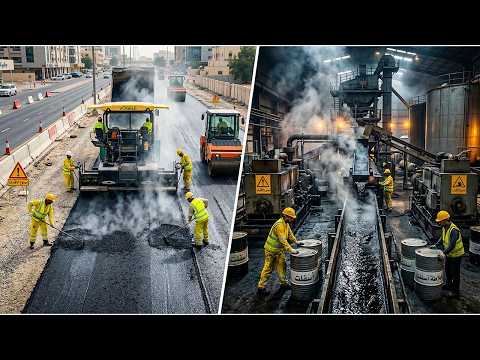
كيفية تصنيع القطران المستخدم في رصف الطرق بالأسفلت
Understanding Tar: A Complex Substance
Introduction to Tar
- Tar is a ubiquitous substance found in everyday life, used in various applications despite its potential toxicity and carcinogenic properties.
- It is a complex mixture of organic compounds, characterized by its viscous texture and dark color, with uses ranging from lubrication to insulation.
Types of Tar
- There are three main types of tar: wood tar, coal tar, and petroleum tar (albumin), each differing in formation process and characteristics.
- Wood tar is derived from the thermal decomposition of wood; coal tar is a byproduct of coke production; petroleum tar results from crude oil distillation.
Production Process
- The extraction process involves heating organic materials without burning them, leading to thermal decomposition where molecules break down and reform.
- Historical methods included Vikings roasting pine wood in sealed pits to produce wood tar for ship preservation.
The Impact of Tar on Society
Historical Significance
- Ancient civilizations utilized tar for various purposes: Egyptians for mummification, Greeks for medicinal treatments, and Vikings for shipbuilding.
- During the Middle Ages, it was used to protect structures against decay; the Industrial Revolution saw an increase in coal tar usage for paints and disinfectants.
Modern Applications
- In contemporary society, bitumen (a form of petroleum tar) plays a crucial role in road construction and roofing materials due to its durability.
- Asphalt roads primarily consist of bitumen which binds materials together while providing insulation against environmental elements.
Health Risks Associated with Tar
Toxic Components
- Tar contains polycyclic aromatic hydrocarbons (PAHs), many of which are recognized as carcinogenic substances posing health risks to those exposed.
- Workers handling or inhaling tar face significant health hazards due to prolonged exposure without adequate protection.
Regulatory Measures
- The European Union has imposed strict regulations on the use of certain forms of tar in medicine and cosmetics due to safety concerns.
Environmental Concerns Related to Tar
Pollution Issues
- Old railway sleepers containing creosote are deteriorating, releasing harmful substances into soil and groundwater systems.
- Governments have banned certain uses of tar-containing materials due to their environmental impact; remediation efforts can be costly.
Future Perspectives on Tar Usage
Innovations in Recycling
- Advances include recycling asphalt through processes that reduce energy consumption while minimizing emissions during production.
Alternative Materials
- Research into bioalbumin—plant-derived substitutes—offers promising biodegradable options that could replace traditional tars over time.
Conclusion
- While challenges remain regarding the safety and environmental impact of traditional tars, ongoing research aims at developing safer alternatives that maintain performance standards.
Turn any video into a summary like this
YouTube links, meetings, lectures. With transcripts, search, and chat.