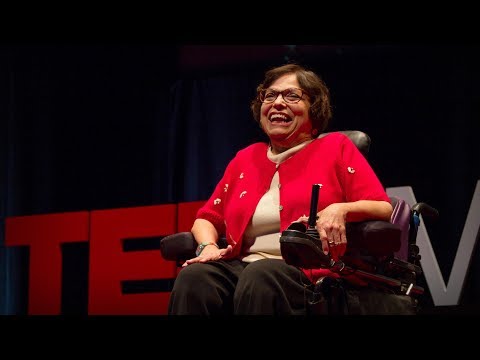
Our fight for disability rights -- and why we're not done yet | Judith Heumann
Personal Journey Through Disability and Advocacy
Early Life and Polio Experience
- The speaker was born in 1947 and contracted polio at 18 months, spending three months in an iron lung and facing hospital visits for three years.
- The community's reaction to disability included fear of contagion, highlighting societal attitudes towards disabilities during that time.
Family Dynamics and Institutionalization
- A conversation with the father revealed a suggestion from doctors for the speaker to live in an institution, which shocked the family.
- The mother validated this story but had kept it hidden from the speaker until adulthood, indicating a protective instinct.
Education Barriers
- At age five, the speaker faced rejection from a local school due to accessibility issues; instead, home instruction was provided for only two and a half hours weekly.
- Eventually attended school at age nine but only with other disabled children; this experience shaped understanding of discrimination.
Parental Advocacy Against Discrimination
- The parents' background as German Jews who escaped the Holocaust influenced their determination to fight against discrimination faced by their child.
- They discovered that no high schools in New York City were wheelchair accessible, prompting them to advocate for change alongside other parents.
College Experience and Challenges
- With advocacy efforts successful, the speaker attended regular high school classes but continued learning about discrimination while preparing for college.
- In college at Long Island University, despite wanting to become a teacher, faced significant barriers including inaccessible exam locations.
Encountering Systemic Barriers
- During licensing exams required for teaching certification, friends assisted with physical challenges posed by inaccessible buildings.
- A particularly invasive medical question during one exam led to denial of teaching license based on disability-related criteria.
Challenging Discrimination Legally
- This moment marked a pivotal point where the speaker decided to challenge systemic barriers actively rather than passively accept them.
- Support came from peers and media attention when a friend connected with "The New York Times" helped publicize the issue surrounding denied licensure.
Media Support and Legal Action
- Following media coverage titled "Heumann v. The Board of Education," public support grew significantly for advocating equal rights in education.
The Journey of Disability Rights Advocacy
The Role of the Judiciary in Disability Rights
- The speaker highlights the significance of having Judge Constance Baker Motley, the first African American female federal judge, presiding over their case, emphasizing her understanding of discrimination.
- After a lengthy process, the speaker finally secured a teaching position at their former school, illustrating personal triumph amidst systemic challenges.
Learning from Civil Rights Movements
- The speaker reflects on how they and others learned to advocate for themselves by drawing inspiration from both the Civil Rights Movement and Women's Rights Movement.
- This advocacy led to the formation of what is now known as the Disability Rights Movement.
Activism and Public Demonstrations
- A humorous riddle illustrates that it only takes one person in a wheelchair to stop a bus when denied access, highlighting individual agency in activism.
- The speaker recounts protests against President Nixon's veto of the Rehabilitation Act, which ultimately led to its signing after public demonstrations.
Milestones in Disability Legislation
- The passage of the Americans With Disabilities Act (ADA), described as an "Emancipation Proclamation Act," was marked by significant public support and culminated with President Bush signing it on July 26, 1990.
- The speaker recalls a time before accessibility laws were enacted, underscoring how far society has come regarding disability rights.
Global Perspectives on Disability Rights
- Despite progress in the U.S., many countries lack similar laws or enforcement mechanisms for disabled individuals; this disparity limits opportunities globally.
- The Convention on the Rights of Persons with Disabilities was adopted in 2006 but remains unratified by the U.S. Senate despite being signed in 2009.
Challenges Faced by Disabled Individuals Worldwide
- Personal accounts reveal severe issues faced by disabled women abroad, including violence and inadequate legal recourse for crimes committed against them.
- Many disabled individuals are offered jobs under quota systems but face exploitation through non-existent work requirements or poor living conditions in institutions.
Call to Action for Collective Advocacy
- The speaker emphasizes recognizing disability as an aspect that can affect anyone at any point in life and encourages collective action against discrimination.
Making a Difference Together
The Power of Collective Action
- The speaker emphasizes the visibility of issues faced by disabled individuals, highlighting the urgency for collective action.
- A call to action is made for everyone present and those watching to unite in advocating for justice.
- The importance of speaking up is underscored as a means to effect change in society.
- The speaker expresses optimism about the potential impact of collaborative efforts on global change.
Turn any video into a summary like this
YouTube links, meetings, lectures. With transcripts, search, and chat.