Puente Baluarte - El Atirantado más Alto del Mundo
The Construction of the World's Tallest Cable-Stayed Bridge
Overview of the Sierra Madre Occidental and the Bridge Project
- The Sierra Madre Occidental is Mexico's most voluminous volcanic chain, featuring the world's tallest cable-stayed bridge that spans a gorge 402 meters high with a central body measuring 520 meters in length.
- Engineers face significant challenges, including transporting heavy bridge components to great heights amidst adverse weather conditions, aiming to connect Pacific and Atlantic roadways and transform international trade routes.
- Stretching over 1,110 kilometers, this mountain range presents both breathtaking landscapes and inhospitable terrains that have deterred exploration for decades.
Challenges in Bridge Construction
- The construction route crosses mountains between Durango and Mazatlán along a narrow road at an elevation of 2,400 meters above sea level.
- The bridge will extend 1,124 meters in total length, combining concrete and structural steel to support four lanes (two in each direction), with a width of 20 meters.
- It will be supported by 152 cables; the longest cable will reach up to 280 meters.
Historical Significance and Complexity
- Once completed, it will surpass France's Viaduc de Millau in height but has greater complexity due to its challenging location.
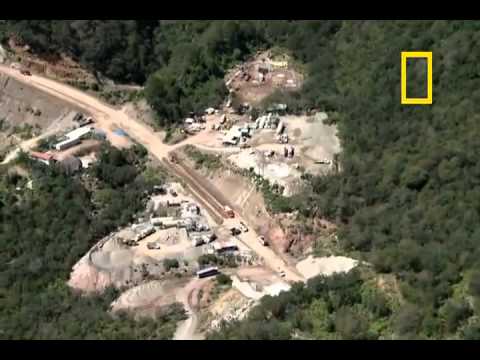
- The project began in Palmito, a small village with fewer than 800 residents. Engineers arrived in late 2007 with local guides to navigate through rugged terrain.
Planning and Design Considerations
- A topographic team identified optimal crossing points for the bridge while considering various loads such as vehicle weight and environmental factors like earthquakes and wind forces.
- Detailed plans were created to avoid design flaws that could lead to structural failures; meticulous attention was given even to minor details during planning stages.
Quality Assurance Measures
- Academics from UNAM continuously verify designs and construction processes for quality assurance on the Baluarte Bridge project.
- They assess material quality including pile sizes, beam dimensions, number of cables needed, ensuring they can withstand expected loads.
Navigating Difficult Terrain
- Engineers must maneuver heavy machinery through treacherous geography previously traversed only by wildlife; this includes transporting large sections of the bridge weighing approximately 120 tons each.
- Access roads totaling 23 kilometers are being constructed alongside explosive rock removal efforts necessary for material transport.
Ongoing Construction Efforts
- Surveyors use flags for aerial photogrammetry studies which help confirm access routes while identifying safe slopes for heavy equipment movement.
Construction of the Baluarte Bridge: A Marvel in Engineering
Overview of Durango and Mazatlán
- The construction site is located at 30 degrees Celsius, where ominous clouds gather, raising questions about building the world's tallest cable-stayed bridge between Durango and Mazatlán.
- Durango is a colonial city nestled between mountains and desert, known for its historical significance and as a hub for American cowboy films.
- Mazatlán, referred to as the "Pearl of the Pacific," boasts beautiful beaches and a vibrant 17-kilometer malecón filled with music and cuisine.
Challenges of Current Transportation
- For 60 years, travel between these two cities has relied on a perilous road that is only 3.5 meters wide with numerous dangerous curves.
- This road is considered one of Mexico's most dangerous due to frequent accidents involving heavy trucks losing brakes amidst foggy conditions.
The New Highway Project
- A new highway spanning 230 kilometers is under construction, featuring 64 tunnels and 57 bridges aimed at improving safety and reducing travel time from six hours to just two-and-a-half hours.
- Progress on the Baluarte Bridge has been slower than anticipated; completing access roads took several months due to challenging terrain.
Construction Techniques
- Access roads required significant earth movement—about one million cubic meters were excavated using limited work fronts.
- Twelve massive columns will support the bridge over a gorge that drops 402 meters deep; these columns also serve as anchors.
Explosive Use in Construction
- A specialized team handles explosives for construction; some members have had an affinity for pyrotechnics since childhood.
- Preparation involves placing explosives in drilled holes (barrenos), ensuring safety by maintaining a distance during detonation events.
Safety Measures During Detonations
- Safety protocols include alarms ten minutes before detonations; major blasts are coordinated with authorities like President Calderón overseeing operations.
- The largest explosion involved five tons of explosives, crucial for creating foundations for bridge columns.
Concrete Supply Logistics
- Two concrete plants near the construction site ensure continuous supply without long-distance transport issues; one plant sources sand while another provides gravel.
- Approximately 98,000 cubic meters of concrete are needed—equivalent to more than twice what was used in Mexico City's Azteca Stadium.
Monitoring Structural Integrity
- As construction progresses on various pillars, particularly pillar nine—the tallest—vibrations from explosions are monitored by seismologists to prevent damage to newly set foundations.
Worker Safety Protocols
- Sustaining pillar structures takes all winter and spring; workers face increasing risks as they operate high above ground level using cranes.
Construction of the Baluarte Bridge
Safety Measures and Worker Conditions
- Workers successfully complete 12 columns at the edge of a ravine without any accidents, highlighting effective safety protocols.
- Working at heights poses significant risks, second only to explosives; over 4.5 million man-hours have been logged without incidents due to comprehensive safety meetings and training.
- As some workers leave to visit families, engineers prepare for the challenging task of placing the central span of the bridge amidst impending storm season.
Weather Challenges and Engineering Solutions
- The upcoming rainy season (July to September) brings critical weather challenges; thunderstorms can form towering clouds that reach up to 14 kilometers high.
- Lightning phenomena are explained as electrical discharges caused by temperature differences within storm clouds, with Mexico having one of the highest lightning fatality rates globally.
- Engineers implement an intricate lightning protection system for the bridge construction site, questioning if these measures will suffice under extreme weather conditions.
Construction Logistics and Techniques
- At dawn near "El Espinazo del Diablo," a large workforce prepares to continue building what is set to be the tallest cable-stayed bridge in the world.
- A fully equipped camp has been established for workers, including dormitories and medical facilities, ensuring their needs are met during this extensive project.
- The superstructure placement occurs at an average height of 402 meters above the ravine floor; each segment (novela) represents approximately 12 meters of bridge construction.
Manufacturing Precision and Quality Control
- Novelas are produced in Guadalajara under strict geometric control standards essential for precise assembly on-site.
- The complexity of constructing Baluarte Bridge involves managing large components with stringent dimensional tolerances to ensure proper fit upon arrival at the site.
Assembly Process and Structural Integrity
- Each novela must meet rigorous specifications before being welded together; incorrect welding sequences can lead to structural distortions that compromise integrity.
- Non-destructive testing methods ensure all weld discontinuities are identified and rectified before final assembly, maintaining compliance with construction standards.
Weight Management and Environmental Considerations
- The combined weight of metal segments reaches 4,500 tons—equivalent to supporting over 20 blue whales—necessitating careful weight distribution strategies during installation.
- Placing each steel novela takes up to two days due to ongoing wind hazards; monitoring systems track wind speeds closely during operations.
Operational Safety Protocol
- Wind patterns in the canyon amplify risks; engineers must halt operations if winds exceed 40 km/h to protect both personnel and structural integrity.
Construction Challenges of the Baluarte Bridge
Critical Moments in Construction
- The construction team faces a critical moment as workers approach the edge of an abyss, maneuvering the dovela (arch segment) during tense nighttime conditions. Any sudden gust could lead to accidents.
- Wind strength is crucial for handling the dovelas; operations are scheduled when wind speeds are below 30 km/h. Nighttime fog reduces visibility, necessitating quick work once conditions improve.
- The impact of wind affects both the already placed structure and the one being transported. If connections do not align perfectly on the first attempt, it can halt assembly.
Structural Integrity and Safety Measures
- Once positioned, the dovela must be secured with a thousand screws, followed by guiding and tensioning cables to ensure precise geometric control.
- The cables consist of twisted steel strands capable of supporting an average weight of 300 tons. This system is adjusted using hydraulic jacks to correct any bridge inclination.
Engineering Tests and Preparations
- Engineers rely on mathematical models to ensure both sides of the bridge meet correctly over a vast canyon; even minor variations could jeopardize structural integrity.
- With 152 cables, Baluarte Bridge becomes Latin America's most cable-supported structure. Regular inspections will be necessary post-completion due to varying loads and forces acting on it.
Unexpected Vibrations and Risks
- After six months of steady progress, unexpected vibrations occur due to winds reaching 60 km/h, causing concerns about potential connection failures between sections.
- Prior to construction, engineers conducted wind tunnel tests in Toronto using a scale model that accurately represented local topography—this was essential for assessing resistance against high winds.
Final Stages and Future Implications
- Testing involved simulating maximum wind speeds equivalent to 150 km/h at the construction site based on prior risk assessments before actual building began.
- As construction nears completion (90% done), engineers remain vigilant about structural failure risks inherent in all bridges despite their low probabilities.
- Once finished, Baluarte Bridge will connect Sinaloa and Durango states while linking two oceans—Pacific and Atlantic—and facilitating trade between Asia and Eastern USA markets.
Weather Challenges Ahead
- Despite four years without interruptions, recent vibrations have put construction on hold temporarily as strong winds pose design challenges affecting operational safety at heights of 400 meters.
- Specialists assess bridge conditions against data collected from wind tunnel tests while workers express concerns about safety amidst ongoing vibrations during high-altitude work.
- The flexibility exhibited by Baluarte Bridge is promising; it’s designed to withstand severe weather events typical along Mexico's Pacific coast where tropical storms frequently develop into hurricanes.
Engineering Innovations for Bridge Stability
Safety Measures and Design Features
- Engineers have implemented various precautions to withstand natural disasters, including stabilizers along the bridge's central span that mitigate wind gusts. These designs are akin to those used in aviation for turbulence resistance.
- The bridge is constructed with stringent safety factors, ensuring it can endure extraordinary wind conditions over a lifespan of at least 100 years. Extreme scenarios were considered during wind tunnel testing.
Final Assembly of the Bridge
- The team prepares for the final maneuver to connect two sections of the bridge using segment 37.
- A unique strategy is employed to align a single launcher beam with both sides of the segment, marking a significant milestone after four and a half years of construction.
Celebration of Completion
- After overcoming challenges posed by nature, teams from both ends meet at the center of the bridge, celebrating their achievement in constructing a 1,124-meter-long structure spanning a 402-meter gorge.
Transformative Impact on Regional Connectivity
Economic and Touristic Development
- This bridge will transform Durango and Mazatlán into a tourist corridor that integrates beach, mountain, and colonial city experiences. It will also serve as part of a major roadway that enhances international trade routes.
Future Monitoring Systems